
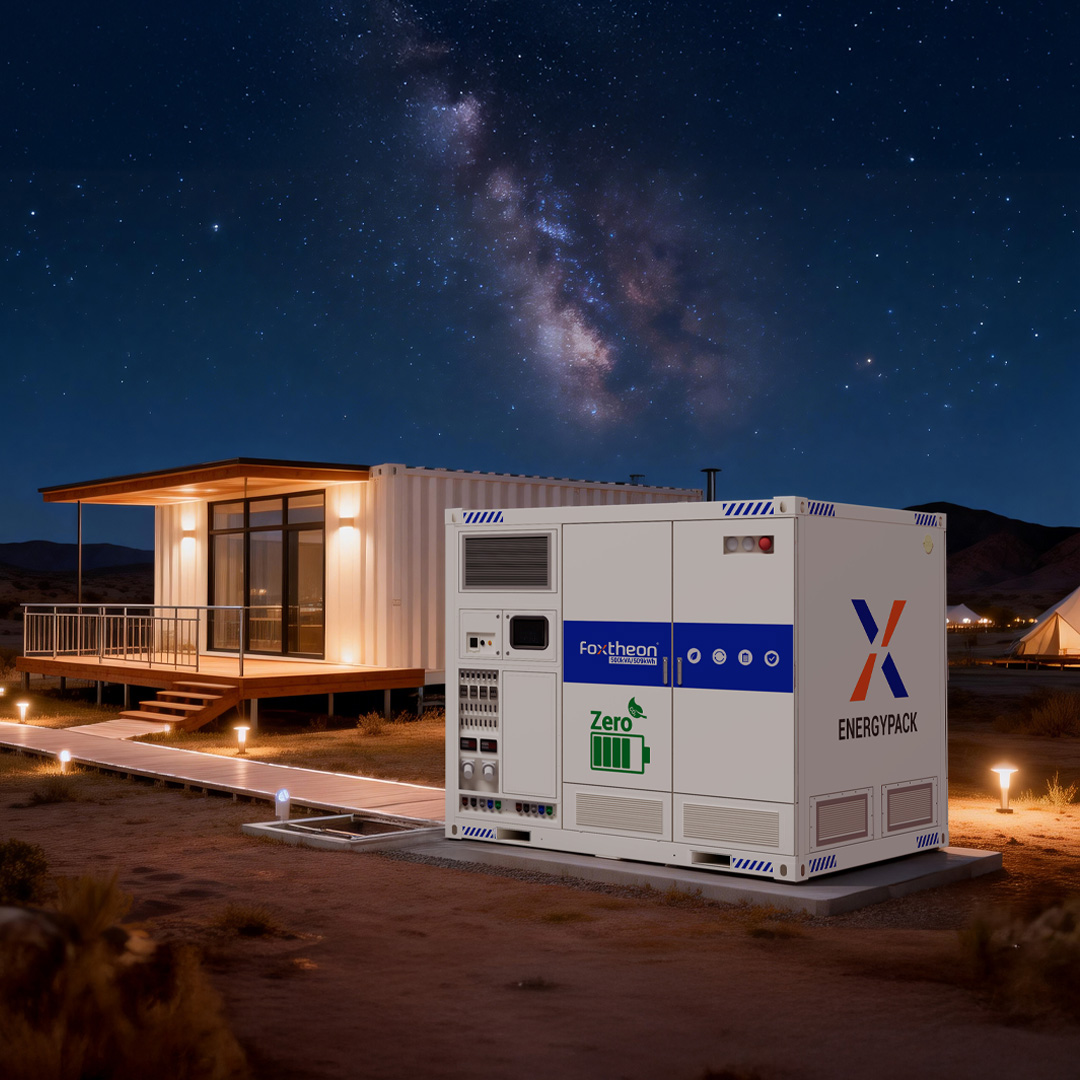
Commercial and industrial facilities are increasingly evaluating energy storage systems to manage utility bills, secure backup power, and integrate renewable energy. When assessing these projects, understanding the exact drivers behind the overall Battery Storage Cost is vital. This investment represents a complex assembly of electrochemical, electrical, and mechanical components rather than a simple commodity purchase. Analyzing these variables allows procurement teams and engineers to make informed decisions that align capital expenditure with performance expectations.
To design an economically viable energy storage system, buyers must look beyond the initial price per kilowatt-hour of the battery cell itself. The true cost of an integrated system involves balancing chemistry performance, thermal management demands, balance-of-system components, and installation labor. Engineering groups such as Foxtheon develop balance-of-system designs that aim to mitigate integration complexities, demonstrating how physical architecture directly impacts the final balance sheet.
The Electrochemistry Factor: Cell Chemistry and Raw Materials
The core of any battery energy storage system (BESS) is the electrochemical cell. The choice of cell chemistry is a primary driver of the initial hardware expense. Currently, the commercial market is dominated by lithium-ion chemistries, with Lithium Iron Phosphate (LFP) and Nickel Manganese Cobalt (NMC) being the standard choices for industrial operations.
LFP has become highly favored in stationary energy storage due to its safety profile, long cycle life, and thermal stability. LFP chemistry does not use cobalt, a material subject to significant supply chain volatility and ethical sourcing challenges. This makes the raw material sourcing for LFP cells more predictable, directly influencing the overall Battery Storage Cost by lowering risk premiums in the supply chain. While LFP has a lower energy density compared to NMC, footprint limitations in stationary industrial installations are rarely severe enough to offset the economic benefits of LFP’s longer cycle life.
Cell manufacturing processes also affect the price structure. High-precision electrode coating, cleanroom manufacturing environments, and rigorous formation and aging testing are required to prevent internal short circuits and ensure cell-to-cell uniformity. Variations in cell quality can lead to premature system degradation, meaning that sourcing cells from Tier-1 manufacturers often commands a premium. This premium is typically justified by more consistent degradation profiles and reliable warranty terms.
Balance of System (BOS) and Power Conversion
While the electrochemical cells represent a significant portion of the expense, the auxiliary hardware required to make the system functional—collectively known as the Balance of System (BOS)—accounts for a major share of the capital outlay. The BOS includes the Power Conversion System (PCS), structural enclosures, fire protection, and low-voltage distribution components.
- Power Conversion System (PCS): The PCS consists of bi-directional inverters that convert direct current (DC) from the battery modules to alternating current (AC) compatible with the facility grid. The cost of the PCS scales with power capacity (kilowatts) rather than energy capacity (kilowatt-hours). High-efficiency inverters featuring wide voltage windows and rapid response times carry higher upfront pricing but minimize conversion losses during operation.
- Thermal Management Infrastructure: Battery degradation is highly sensitive to temperature fluctuations. Active thermal management systems—utilizing either liquid cooling plates or HVAC-driven forced air cooling—maintain the cells within an optimal operating window (typically 15°C to 30°C). Liquid cooling designs often require a higher initial capital outlay than air-cooled systems but offer superior temperature uniformity, which protects long-term capacity.
- Fire Suppression and Safety Systems: Compliance with safety standards such as NFPA 855 requires robust containment and active suppression systems. These systems include gas detection (for off-gas monitoring), deflagration venting, and clean-agent or water-sprinkler fire suppression. Neglecting these specifications during early planning can lead to expensive retrofits during the permitting phase, increasing the final installation budget.
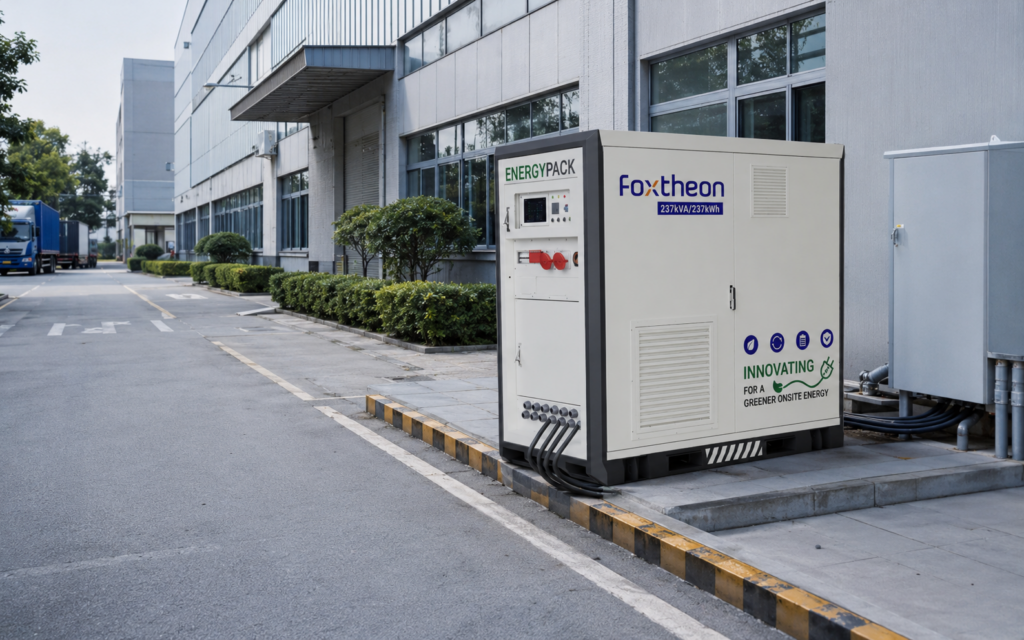
By engineering pre-integrated, modular systems, manufacturers like Foxtheon focus on system integration to minimize onsite wiring and installation labor, thereby controlling the overall hardware and deployment expenditures.
Operational Dynamics and Degradation Economics
The financial viability of a battery system depends heavily on how it is operated. A system’s duty cycle determines its rate of degradation, which directly impacts the long-term Battery Storage Cost metrics. Understanding the relationship between operational parameters and cell health is key to avoiding premature capacity replacement.
The C-rate, which defines the speed at which a battery is charged or discharged, plays a major role. A 1C rate discharges the entire capacity in one hour, while a 0.5C rate discharges it over two hours. High C-rate operations subject the cells to increased mechanical stress and thermal loads, accelerating capacity fade. If an industrial application demands frequent high-power discharge pulses, the system must be designed with enhanced thermal management or oversized capacity, both of which increase the initial equipment price.
Depth of Discharge (DoD) is another key operational variable. Frequently cycling a battery to 100% of its capacity reduces its overall cycle life compared to operating within a narrower band, such as 10% to 90% state of charge (SoC). Energy management software (EMS) plays a key role here by optimizing charge and discharge schedules. A sophisticated EMS helps prevent accelerated degradation, ensuring the system performs reliably throughout its intended service life without requiring early stack replacement.
Application Scenarios and Value Stacking
The specific application of a battery energy storage system dictates its design, sizing, and ultimately its cost structure. Commercial facilities generally deploy battery systems for one of several primary use cases, and often look to stack these values to optimize their return on investment.
In regions with high peak demand charges, peak shaving is a highly effective application. The storage system discharges during periods of peak facility demand, reducing the maximum power drawn from the utility grid. Because peak demand events are often short, these systems require a high-power PCS relative to their total energy capacity (e.g., a 1-hour or 2-hour system duration). The hardware profile for peak shaving focuses heavily on inverter performance and rapid response capabilities.
For microgrid integration and renewable energy coupling, such as pairing storage with an onsite solar photovoltaic (PV) array, the system requires longer duration capabilities (e.g., 4 hours or more). Here, the focus shifts to maximizing energy capacity (kilowatt-hours) rather than instantaneous power. This requires more battery cells per kilowatt of inverter capacity. By storing excess solar generation during the day and discharging it during high-rate evening hours, facilities can lower their volumetric energy charges.
Additionally, stationary battery storage can operate alongside existing onsite generation assets, such as diesel or natural gas generators. Instead of replacing these units, the battery system manages transient load steps and provides immediate power during grid outages while the generators ramp up. This hybrid approach allows generators to run at their most efficient load points, reducing fuel consumption and maintenance wear without requiring oversized battery systems.

Sourcing and Comparing Supplier Pricing
Evaluating proposals for industrial energy storage requires a structured approach to understand what is included in the quoted prices. Comparing quotes on a simple dollar-per-kilowatt-hour basis can be misleading if the scope of supply is not fully defined.
Procurers should request detailed breakdowns that separate the core battery DC block, the AC power conversion system, the energy management software, and the balance of system components. Engineering, Procurement, and Construction (EPC) costs—which include civil works, grid interconnection permits, and physical installation—can represent 20% to 40% of the total project budget. Assessing whether a supplier offers a factory-assembled, pre-commissioned containerized solution or a field-assembled system is highly important, as factory-integrated systems generally reduce onsite labor costs and installation risks.
Furthermore, buyers must evaluate warranty terms, specifically the capacity guarantee. A typical warranty guarantees that the system will retain a specific percentage of its original capacity (usually 60% to 70%) after a set number of years or equivalent cycles, provided the system is operated within agreed-upon temperature and C-rate limits. Understanding these performance boundaries helps organizations accurately evaluate the true Battery Storage Cost before procurement.
Frequently Asked Questions
Q1: What is the primary component of commercial Battery Storage Cost?
A1: The primary hardware cost component is the electrochemical cell pack, typically representing 40% to 60% of the total system cost. The remaining expense is distributed among the Power Conversion System (PCS), thermal management hardware, fire safety containment, energy management software, and onsite integration engineering.
Q2: How does LFP chemistry compare to NMC in terms of cost and longevity?
A2: LFP (Lithium Iron Phosphate) cells generally feature a lower raw material cost because they do not use expensive cobalt or nickel. Additionally, LFP typically offers a longer cycle life (often between 4,000 to 6,000 cycles at 80% Depth of Discharge) compared to NMC, making it highly cost-effective for stationary commercial applications over long operational periods.
Q3: What are the typical installation and soft costs associated with industrial battery storage?
A3: Installation and soft costs include civil engineering, concrete pad preparation, electrical wiring, grid interconnection studies, permitting, and commissioning. These expenses vary by region and site complexity, but they generally account for 20% to 40% of the total initial project budget.
Q4: How does the C-rate affect the degradation of a commercial battery system?
A4: Operating a battery at high C-rates (fast charging or discharging) generates internal heat and mechanical stress within the cells, accelerating chemical degradation and capacity loss. Designing a system with adequate thermal management and capacity sizing is vital to mitigate this degradation when high-power output is required.
Q5: Can battery storage operate alongside existing diesel generator installations?
A5: Yes. Commercial battery systems are frequently integrated with existing generator sets to create hybrid microgrids. The battery system handles transient loads, stabilizes frequency, and provides immediate backup power, allowing the generators to operate at their peak efficiency zones. This collaborative configuration minimizes generator runtime and fuel consumption without requiring the battery to support the entire long-term load independently.
Technical Consultations and Project Engineering
Selecting the appropriate energy storage configuration requires a detailed evaluation of your facility’s load profile, local utility tariffs, and physical site conditions. Standard, one-size-fits-all products rarely deliver optimal financial returns when applied to complex industrial energy demands. Tailoring the battery capacity, power conversion limits, and software integration to your specific operational patterns is the most reliable way to control deployment costs and ensure long-term performance.
To receive a detailed configuration proposal and a precise estimate for your project, please submit your facility load data and operational requirements to our application engineers. You can reach out to the technical team at Foxtheon for tailored specifications and to submit your formal inquiry.