
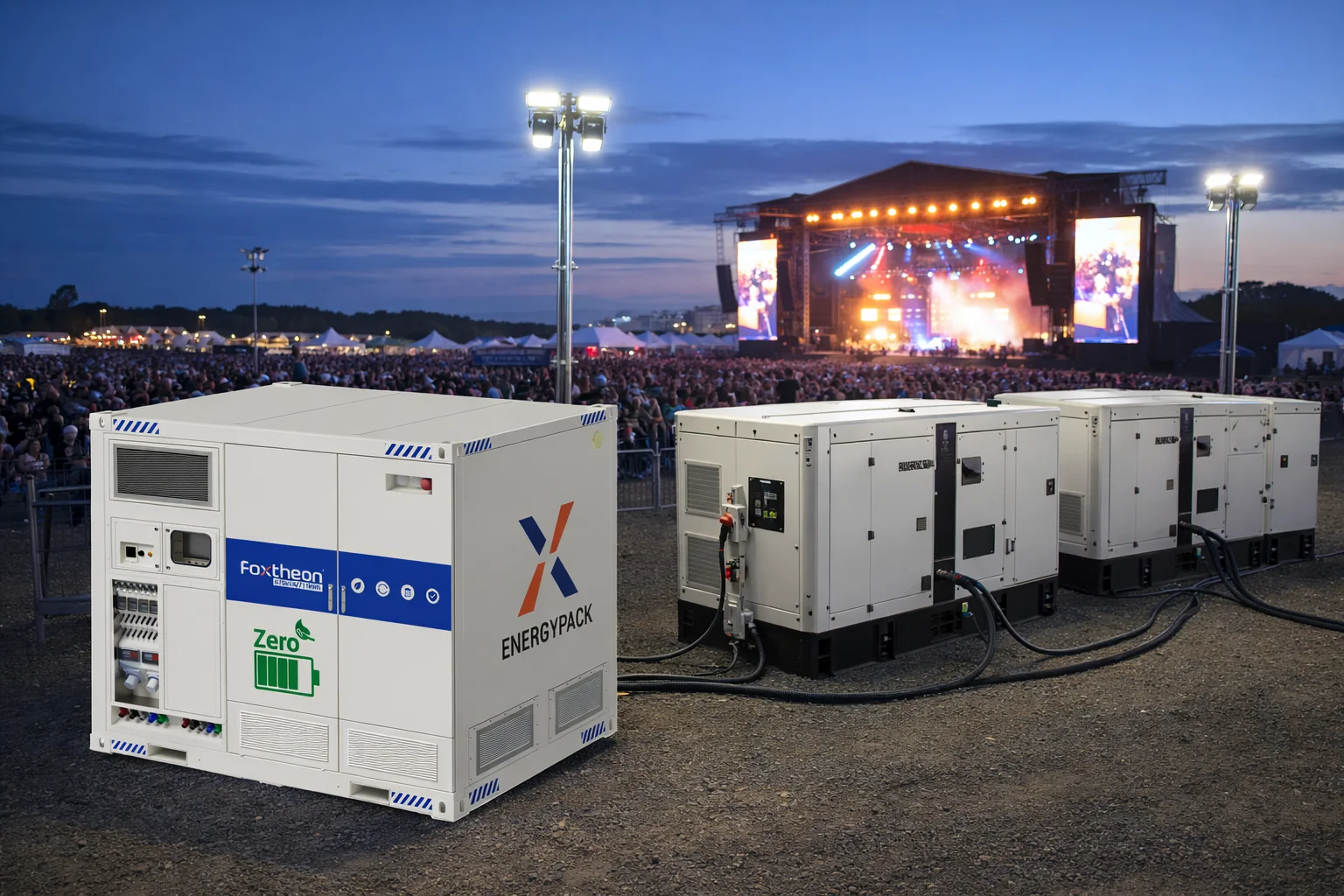
When the grid flickers or fails, businesses and institutions need more than just a temporary patch—they need certainty. For decades, diesel generators and conventional UPS units have been the default. But a smarter, cleaner alternative is now taking centre stage: BESS as uninterruptible power supply. By combining high‑capacity battery storage with intelligent energy management, this approach delivers seamless backup while cutting costs and carbon. Pioneers like Foxtheon are pushing the boundaries, offering modular BESS solutions that integrate with renewables and respond faster than any traditional system. In this article we explore why BESS as uninterruptible power supply is becoming the backbone of modern energy resilience.
What Is BESS as Uninterruptible Power Supply?
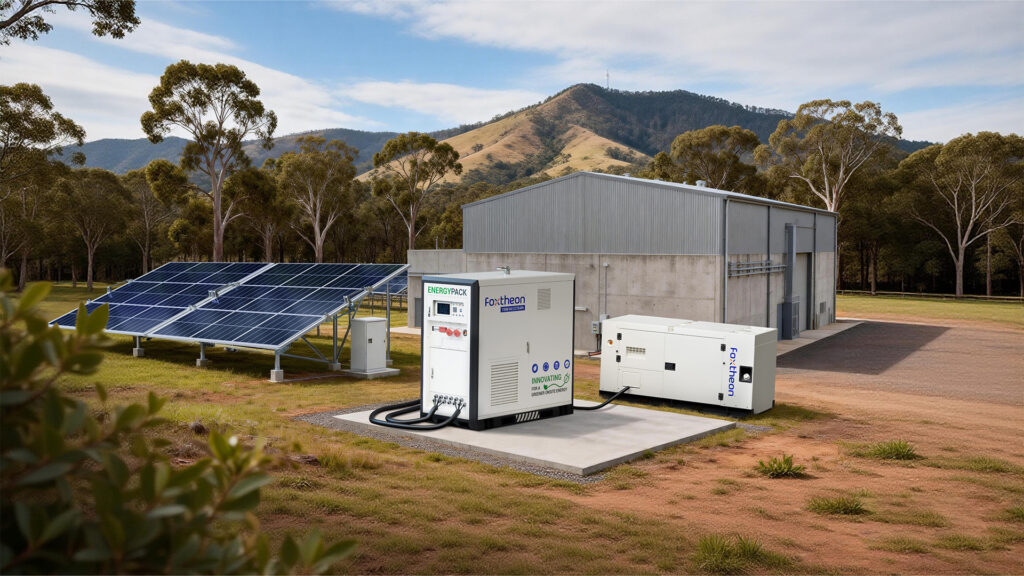
At its core, BESS as uninterruptible power supply refers to a battery energy storage system configured to provide instant backup power when the main supply fails. Unlike a standard UPS that relies on lead‑acid batteries and simple electronics, a BESS uses advanced lithium‑ion or flow batteries, paired with smart inverters and software that constantly monitors grid quality. The transition happens in milliseconds—so fast that connected equipment never notices a flicker.
Key components of a modern BESS‑UPS
- High‑density battery modules: Typically lithium iron phosphate (LFP) for safety and cycle life.
- Bidirectional inverter: Converts DC to AC and vice versa, enabling both charging and discharging.
- Energy management system (EMS): AI‑driven software that predicts outages, optimizes charging, and communicates with the grid.
- Scalable architecture: Containerised or rack‑mounted units that grow with your power needs.
With these elements, BESS as uninterruptible power supply does more than just sit idle—it can also perform peak shaving, frequency regulation, and store cheap solar energy for later use.
Top Benefits of Deploying BESS as Uninterruptible Power Supply
Why are data centres, hospitals, and factories shifting to battery storage for backup? The advantages go far beyond “keeping the lights on.”
1. Instantaneous response & power quality
Traditional generators take seconds to start, and even fast UPS systems can introduce switching noise. BESS as uninterruptible power supply delivers sub‑cycle response, maintaining perfect voltage and frequency. Sensitive IT equipment and medical devices stay protected without any glitch.
2. Lower total cost of ownership
While the upfront investment may be higher, battery storage eliminates fuel costs, reduces maintenance (no engine overhauls), and lasts 10–15 years with minimal degradation. Foxtheon’s modular designs allow you to start small and expand, avoiding over‑capitalisation.
3. Sustainability and decarbonisation
Diesel generators emit CO₂, NOx, and noise. BESS as uninterruptible power supply runs silent and can be charged from solar panels or the grid during off‑peak hours. It’s a direct path to net‑zero operations, which is increasingly demanded by investors and regulators.
4. Grid‑interactive intelligence
When the grid is stable, your BESS can participate in demand response programmes, selling stored energy back during peak hours. This turns a backup asset into a revenue generator—something a passive UPS can never do.
BESS as Uninterruptible Power Supply vs. Conventional UPS Systems
Many facility managers wonder: can a BESS really replace a traditional double‑conversion UPS? The answer depends on the application, but modern hybrid systems often outperform the old guard.
Performance comparison
- Efficiency: Conventional UPS units run at 93–96% efficiency continuously, wasting energy as heat. BESS as uninterruptible power supply operates at over 98% round‑trip efficiency when paired with modern inverters.
- Scalability: A standard UPS is sized for a fixed load. BESS systems are modular—you can add battery cabinets as your load grows, without replacing the inverter.
- Battery chemistry: VRLA batteries in traditional UPS need replacement every 3–5 years. Lithium‑ion BESS often carries warranties of 10 years or more.
- Footprint: For the same runtime, a BESS typically occupies half the floor space of a lead‑acid based UPS, and it can be installed outdoors.
It’s worth noting that Foxtheon offers hybrid systems that combine the best of both worlds: ultra‑fast switching plus deep energy reserves for extended outages.
Critical Applications for BESS as Uninterruptible Power Supply
Virtually any site that cannot tolerate downtime is a candidate. Here are three sectors where BESS as uninterruptible power supply is already making a difference.
Data centres & IT hubs
Hyperscale data centres require 100% uptime. BESS provides not only backup but also power conditioning, smoothing out harmonics and sags. Colocation providers use BESS to offer “green colo” services to tenants with sustainability goals.
Healthcare & hospitals
Operating rooms, life support, and data storage need immediate power. A BESS can be integrated with on‑site solar and ensure that critical loads stay online even during multi‑day grid failures. Several European hospitals now use BESS as uninterruptible power supply to replace dirty diesel backups.
Industrial manufacturing
Production lines with variable frequency drives and robotics are sensitive to even brief interruptions. BESS bridges the gap until generators synchronise, or can act as the sole backup for short outages. Factories also use the battery to reduce demand charges.
Foxtheon’s role in intelligent backup: With deployments in over 20 countries, Foxtheon specialises in containerised BESS solutions that serve as uninterruptible power supply for ports, microgrids, and commercial buildings. Their systems are designed to communicate with existing building management and renewable sources, ensuring seamless autonomy.
Technical Considerations for Implementing BESS as UPS
Deploying BESS as uninterruptible power supply requires careful planning—it’s not a plug‑and‑play swap for a small UPS. But with the right approach, the payoff is substantial.
Sizing and runtime
Determine your critical load (kW) and desired autonomy (hours). BESS can be sized for 30 minutes to 4+ hours. Unlike a generator, you’re not limited by fuel storage; you simply add battery racks. However, cost optimises around 1–2 hours of backup, with generators covering extended events.
Integration with existing infrastructure
Most sites have legacy switchgear. A proper interface—often a static transfer switch—ensures the BESS can isolate from the grid and reclose without causing transients. Foxtheon provides pre‑engineered interconnection cabinets that simplify this step.
Safety and certifications
BESS installations must comply with UL 9540, IEC 62933, or local codes. Thermal management (liquid or air cooling) and fire suppression are essential. Reputable vendors like Foxtheon include these as standard, not options.
Why Foxtheon Leads in BESS as Uninterruptible Power Supply Innovation
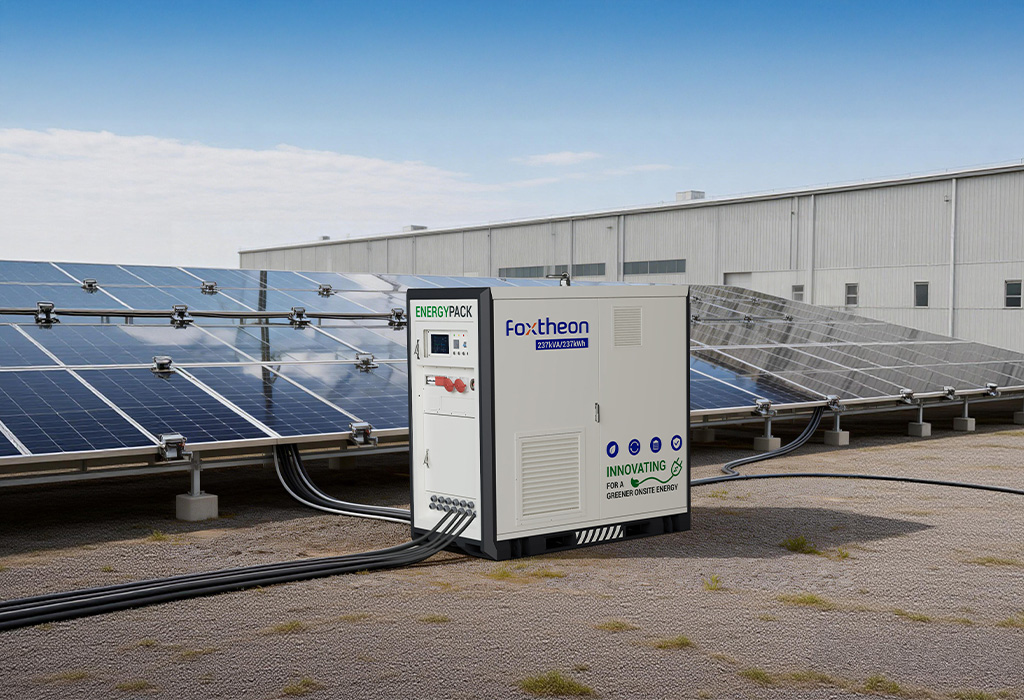
As the market shifts toward intelligent energy storage, one name stands out. Foxtheon has developed a proprietary Energy Operating System (EOS) that optimises battery use in real time, learning from load patterns and weather forecasts. Their BESS as uninterruptible power supply units come with integrated cyber‑security, remote diagnostics, and predictive maintenance alerts. Customers report 40% lower operational costs compared to diesel‑based backup, along with zero emissions during normal operation. Whether you need a 30 kW rack for a small office or a 5 MW container for a manufacturing plant, Foxtheon’s scalable platforms deliver.
And because the system is software‑defined, future upgrades—like new battery chemistries or grid services—can be added over the air. That’s the kind of future‑proofing that traditional UPS vendors cannot match.
Frequently Asked Questions About BESS as Uninterruptible Power Supply
Q1: Can BESS as uninterruptible power supply completely replace a diesel generator?
A1: In many cases, yes—especially if the longest expected outage is a few hours. For multi‑day outages, a hybrid approach (BESS + generator) is cost‑effective: the BESS handles the first hours and the generator runs only if needed. However, with falling battery prices, some sites now use BESS as uninterruptible power supply for 4+ hours and accept a very low risk of longer blackouts. Foxtheon offers both standalone and hybrid configurations.
Q2: How long does a typical BESS as uninterruptible power supply last before needing replacement?
A2: Most lithium‑based BESS are designed for 10 to 15 years of daily cycling. When used primarily for backup (with occasional grid services), calendar life often exceeds 15 years. The battery management system monitors cell health, and modules can be replaced individually—unlike a traditional UPS where the whole unit might be scrapped.
Q3: Is BESS as uninterruptible power supply safe for indoor installation?
A3: Yes, provided the system meets safety standards like UL 9540A. Modern LFP batteries are inherently stable, and enclosures include thermal management and fire detection. Many BESS as uninterruptible power supply units are rated for indoor use (e.g., data centre white space) and are quieter than a diesel generator. Foxtheon units have a small footprint and can be installed in electrical rooms with proper ventilation.
Q4: Can I use BESS as uninterruptible power supply with solar panels?
A4: Absolutely. This is one of the strongest advantages. A BESS can store solar energy during the day and use it as backup at night. It also enables islanding—running on solar+battery during grid outages. Foxtheon’s hybrid inverters natively support PV input, making it simple to create a solar‑fuelled uninterruptible power supply.
Q5: How does Foxtheon’s warranty support BESS as uninterruptible power supply?
A5: Foxtheon offers a standard 10‑year warranty with options to extend to 15 years. Coverage includes battery capacity retention (typically ≥80% at end of term), inverter components, and remote monitoring. Their service network provides 24/7 response, and many customers choose predictive maintenance contracts to maximise uptime.
Q6: What is the payback period when switching from conventional UPS to BESS as uninterruptible power supply?
A6: For sites with high energy costs or demand charges, payback can be as short as 3–5 years when you include peak shaving and demand response revenues. Even for pure backup, the elimination of battery replacements and fuel often yields a positive ROI within 6–8 years. Government incentives for energy storage further shorten the payback.
The energy landscape is shifting toward resilience that is also sustainable. BESS as uninterruptible power supply delivers exactly that—instant, clean, and increasingly affordable backup. Whether you manage a hospital, a data centre, or a manufacturing line, the combination of lithium storage and intelligent software ensures you stay online while reducing your carbon footprint. Foxtheon continues to innovate in this space, providing systems that are not only robust but also grid‑interactive and future‑ready. As power interruptions become more frequent due to climate pressures, adopting BESS as uninterruptible power supply isn’t just smart—it’s essential for long‑term business continuity.
Interested in a custom BESS as uninterruptible power supply for your facility? Foxtheon offers free feasibility assessments and turnkey deployment. Contact their energy specialists today.