
The stabilization of commercial and industrial (C&I) electrical grids requires sophisticated energy buffering solutions. As transient loads increase and localized power quality fluctuates, engineering teams are tasked with designing robust microgrids that mitigate voltage sags and manage peak demand. In these complex electrical architectures, selecting qualified battery storage manufacturers is a primary engineering decision that directly influences system longevity, thermal safety, and overall operational efficiency. Foxtheon provides integrated energy storage systems designed to interface with diverse industrial power sources, ensuring seamless grid synchronization and high operational availability.
Evaluating industrial-grade energy storage involves a granular analysis of electrochemical behaviors, control topologies, and thermal management architectures. Rather than viewing the battery as a standalone static asset, engineers must evaluate how the battery system interacts with existing distribution infrastructure, power conversion systems (PCS), and auxiliary generation assets over multi-decade lifecycles.
1. Electrochemical Formulations and Material Specifications
The foundational performance of any stationary energy storage system is determined by the chemistry of its battery cells. While various chemistries exist, industrial applications predominantly utilize Lithium Iron Phosphate (LFP) and Nickel Manganese Cobalt (NMC) formulations, each presenting distinct thermodynamic and kinetic profiles.
LFP (LiFePO4) has emerged as the preferred chemistry for stationary applications due to its chemical stability. The olivine crystal structure of LFP features strong covalent P-O bonds, which resist oxygen release at high temperatures. This structural integrity minimizes the risk of thermal runaway, with self-heating rates remaining negligible up to approximately 270°C. Furthermore, LFP cells exhibit high cycle life, often maintaining over 80% capacity after 4,000 to 6,000 charge-discharge cycles at a 1C rate and 80% Depth of Discharge (DoD).
In contrast, NMC chemistries offer higher gravimetric and volumetric energy densities, making them suitable for space-constrained installations. However, the layered crystal structure of NMC is prone to oxygen release at lower temperatures (typically starting around 210°C), requiring more complex and rigorous thermal mitigation systems. Industrial battery storage manufacturers must engineer specific electrode structures, incorporating additives such as carbon nanotubes or advanced polymeric separators to prevent internal dendrite formation and prolong the life of the solid-electrolyte interphase (SEI) layer.
To optimize performance, manufacturers continuously refine electrode designs, adjusting variables such as:
- Electrode Coating Thickness: Thicker coatings increase energy density but restrict lithium-ion diffusion rates, whereas thinner coatings support higher C-rates at the cost of volumetric capacity.
- Separator Porosity: Utilizing ceramic-coated polymer separators prevents micro-short circuits caused by localized mechanical stress or localized high-current density.
- Electrolyte Composition: Integrating flame-retardant additives within the organic carbonate solvents reduces the flammability of gas emissions in the rare event of cell venting.
2. Battery Management System (BMS) Architecture and Control Topologies
A battery cell is only as reliable as the electronics that monitor and regulate its state. The Battery Management System (BMS) serves as the primary intelligence layer, protecting the physical cells from operating outside their Safe Operating Area (SOA).
Active vs. Passive Cell Balancing
As battery packs consist of thousands of cells connected in series and parallel, manufacturing tolerances inevitably lead to slight variances in internal resistance and capacity. Over time, these variances cause state-of-charge (SoC) divergence among cells. Passive balancing systems address this by discharging excess energy from higher-voltage cells through resistive heat dissipation. While cost-efficient, this method generates additional heat within the enclosure and is inefficient during active operations.
Active balancing systems, conversely, redistribute charge from stronger cells to weaker cells using capacitive or inductive shuttle circuits. This dynamic charge transfer minimizes energy waste, keeps thermal profiles uniform, and maximizes the usable energy of the entire system throughout its service life.
Multi-Tier BMS Hierarchy
Industrial installations require a decentralized, multi-tier BMS architecture to ensure redundant monitoring and fast fault isolation:
- Level 1 (Slave/Module BMS): Monitors individual cell voltages, localized temperatures, and executes balancing algorithms at the module level.
- Level 2 (Master/Rack BMS): Aggregates data from Level 1 controllers, calculates overall string voltage, current, SoC, and State of Health (SoH) using advanced Kalman filtering algorithms, and controls local contactors.
- Level 3 (System/EMS BMS): Coordinates multiple battery racks, interfaces with the Power Conversion System (PCS), and communicates with the Energy Management System (EMS) via industrial protocols such as Modbus TCP or CAN bus.
3. Thermal Management Dynamics and Mitigation Strategies
Operating temperatures directly dictate the degradation rate and safety profile of lithium-ion systems. Sustained operation above 45°C accelerates capacity loss through SEI layer growth and electrolyte consumption, while temperatures below 0°C risk lithium plating during charging cycles, which can cause internal short circuits.
To address this, battery storage manufacturers employ two primary cooling methodologies: forced-air cooling and liquid cooling.
Forced-air systems utilize ducting and variable-speed fans to circulate conditioned air through the battery racks. While simple to maintain and mechanically robust, air cooling often results in temperature gradients of 5°C to 8°C across a single rack. These gradients lead to uneven aging, as warmer cells degrade faster than cooler ones, reducing the overall capacity of the series string.
Liquid cooling systems utilize closed-loop coolant plates in direct contact with the cells or modules, circulating a mixture of water and ethylene glycol. Due to the high thermal conductivity of liquid compared to air, these systems can maintain internal cell temperature variations within 2°C to 3°C across the entire enclosure. This thermal uniformity extends cycle life, increases system efficiency, and allows for higher C-rate continuous charging and discharging under demanding industrial load profiles.
4. System Integration and Coexistence with On-Site Generation
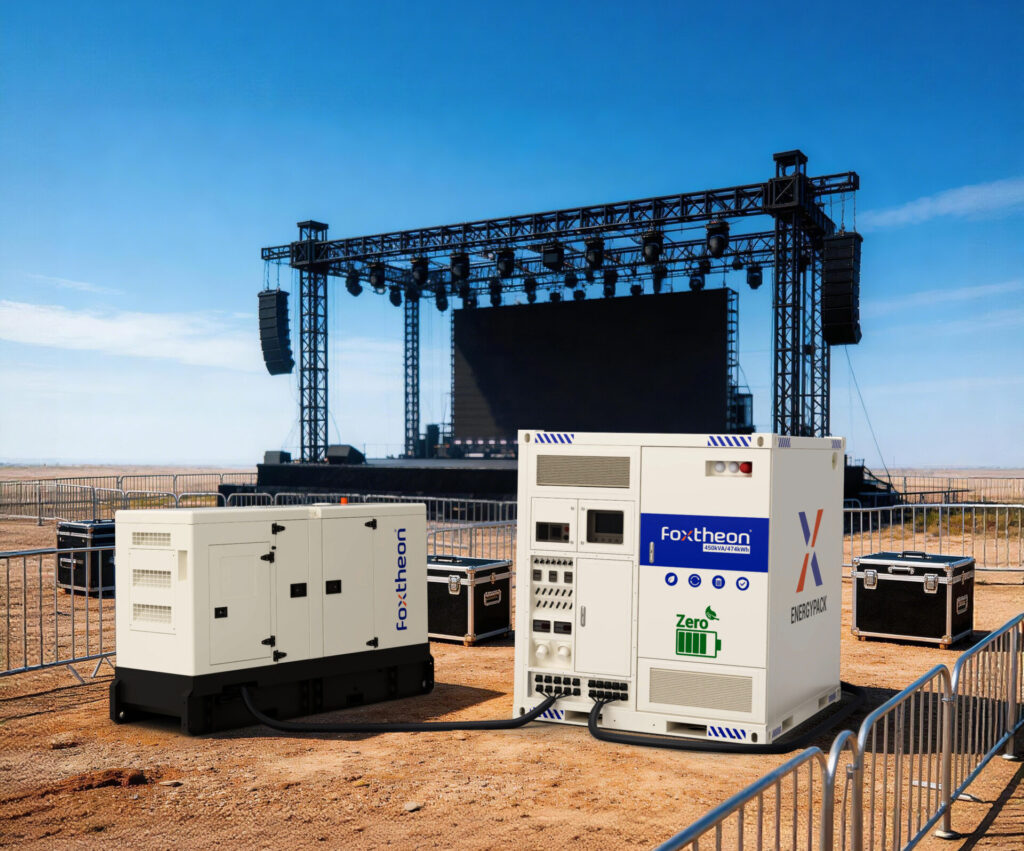
Industrial energy storage systems rarely operate in isolation; they are integrated into complex networks that often include existing on-site generation assets, such as diesel or natural gas generators. To maintain system reliability, the battery storage system must complement these assets without introducing harmonic distortion or frequency instabilities.
Traditional reciprocating engines run inefficiently and suffer from carbon buildup (wet stacking) when operated below 30% to 40% of their rated capacity. Collaborating with specialized battery storage manufacturers allows system integrators to implement fuel-optimization strategies. Under low-load conditions, the battery system absorbs power to keep the generator operating at its peak efficiency curve (typically 70% to 80% load). During sudden peak load steps, the battery discharges instantaneously, providing the necessary transient response and allowing the generator to ramp up smoothly.
By leveraging advanced control algorithms, engineers working with Foxtheon develop microgrid control schemes where the energy storage system serves as the primary voltage and frequency reference (grid-forming mode) during utility outages, seamlessly coordinating with local generator sets to ensure power continuity without voltage dips.
5. Standards, Certifications, and Quality Assurance Protocols
Evaluating and auditing battery storage manufacturers requires a rigorous review of their compliance with international standards. Safety and reliability cannot be verified by visual inspection alone; they must be validated through standardized destructive and non-destructive testing regimes.
Key standards that define a quality-engineered system include:
- UL 1973: Standard for Batteries for Use in Stationary, Vehicle Auxiliary Power and Light Electric Rail Applications, which evaluates the capability of the battery system to safely withstand electrical, mechanical, and environmental abuse.
- UL 9540: Standard for Energy Storage Systems and Equipment, which assesses the safety of the integrated system, including the combination of the battery, BMS, and power conversion system.
- UL 9540A: Test Method for Evaluating Thermal Runaway Fire Propagation in Battery Energy Storage Systems, which quantifies the system’s response to forced thermal runaway at the cell, module, and rack level. This data is necessary for local permitting and code compliance.
- IEC 62619: Safety requirements for secondary lithium cells and batteries for use in industrial applications, ensuring the functional safety of the software controls and physical packaging.
During factory audits, procurement engineers should examine the manufacturer’s cell-grading protocols. Quality-centric production lines implement automated capacity-grading and internal resistance-matching systems. Ensuring that cells placed within the same series-connected module have a capacity variance of less than 1% prevents premature system degradation and minimizes balancing losses.
6. Mechanical Design and Environmental Adaptability
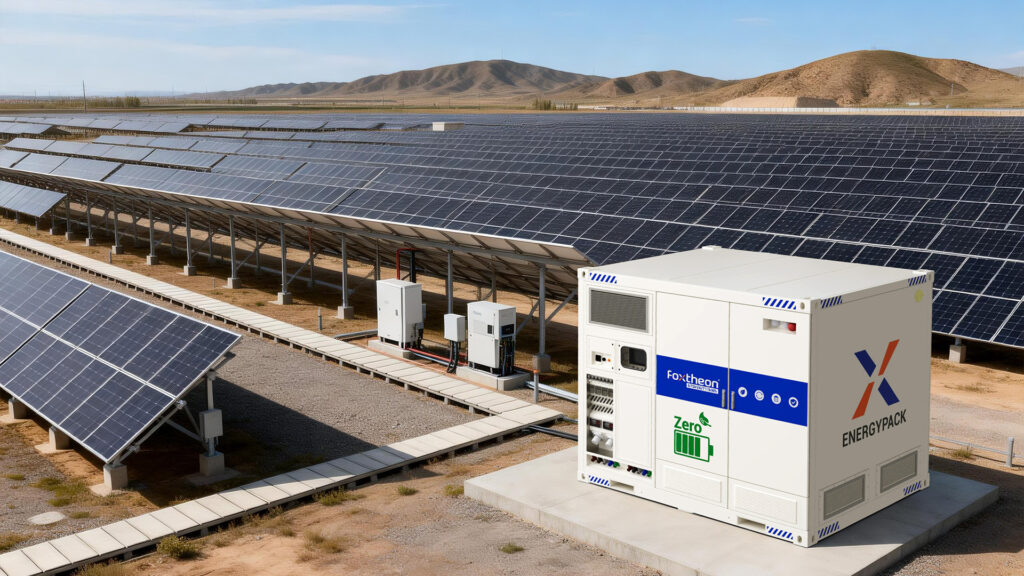
Stationary storage installations are frequently exposed to harsh environmental conditions, ranging from high-humidity coastal sites to high-altitude desert locations. The mechanical enclosure must protect the interior cells and sensitive electronics from particulate ingress and corrosive elements.
Industrial enclosures are designed with NEMA 3R or IP55/IP66 ratings, featuring double-walled insulation to minimize thermal transfer from solar radiation. Internal environmental sensors—including hydrogen gas detectors, aerosol fire suppression systems (such as Novec 1230 or Stat-X), and humidity monitors—provide a multi-layered defense mechanism. Foxtheon engineers climate-controlled enclosures that incorporate active dehumidification and dust filtration, protecting internal power electronics and battery systems from environmental degradation in demanding climates.
Frequently Asked Questions
Q1: Why do industrial applications prefer Lithium Iron Phosphate (LFP) over Nickel Manganese Cobalt (NMC)?
A1: LFP is favored in industrial settings due to its high thermal runaway threshold (around 270°C compared to NMC’s ~210°C) and robust chemical structure, which eliminates the risk of oxygen release during high-temperature anomalies. Additionally, LFP offers a significantly longer cycle life (often 4,000 to 6,000 cycles at 80% DoD) compared to NMC (typically 1,500 to 3,000 cycles), resulting in a more durable asset over extended operational lifespans.
Q2: How does the power conversion system (PCS) interface with the battery storage system?
A2: The PCS acts as the bi-directional interface between the direct current (DC) of the battery bank and the alternating current (AC) of the utility grid or local microgrid. The PCS coordinates with the Level 3 BMS via high-speed industrial protocols (such as Modbus TCP or CAN) to adjust active and reactive power outputs based on real-time voltage and frequency measurements, ensuring smooth power transfer without overloading the battery cells.
Q3: What is the technical difference between passive and active cell balancing in high-voltage battery racks?
A3: Passive balancing dissipates excess charge from higher-voltage cells as heat through resistors, which is cost-effective but generates internal heat and takes longer to stabilize the pack. Active balancing uses specialized capacitive or inductive circuits to transfer charge from stronger cells to weaker cells dynamically, reducing heat generation, conserving energy, and maximizing the usable energy capacity of the complete battery string.
Q4: How do battery storage systems handle the transient load spikes of heavy industrial machinery?
A4: High-capacity systems are designed with high-discharge C-rate capabilities, allowing them to supply several times their nominal current rating for short durations (typically 10 to 30 seconds). By coupling the battery with high-overload-capacity power conversion systems, the system can support the initial inrush currents of large inductive loads, such as industrial motors or compressors, preventing voltage sags across the local network.
Q5: What safety systems are integrated within industrial battery enclosures to manage thermal events?
A5: Modern enclosures utilize a multi-layered safety design. This includes localized temperature monitoring at the cell level via the BMS, off-gas detection sensors that identify volatile organic compounds (VOCs) prior to thermal runaway, automated electrical isolation via motorized contactors, and integrated fire suppression systems (such as clean agents or water-mist systems) configured to deploy if temperature thresholds are breached.
Technical Inquiry and Project Consultation
To assist our engineering team in evaluating your system requirements, please provide the following technical details with your inquiry:
- Required System Capacity (kWh) and Continuous Power Output (kW):
- Nominal DC Bus Voltage Range:
- Target Duty Cycle and C-Rate Requirements:
- Environmental Parameters (Ambient Temperature Range, Humidity, Altitude):
- Existing Generation Infrastructure (Generator Capacity, Fuel Type, Control Protocols):
- Compliance and Certification Standards Required (e.g., UL 1973, UL 9540A, IEC 62619):