
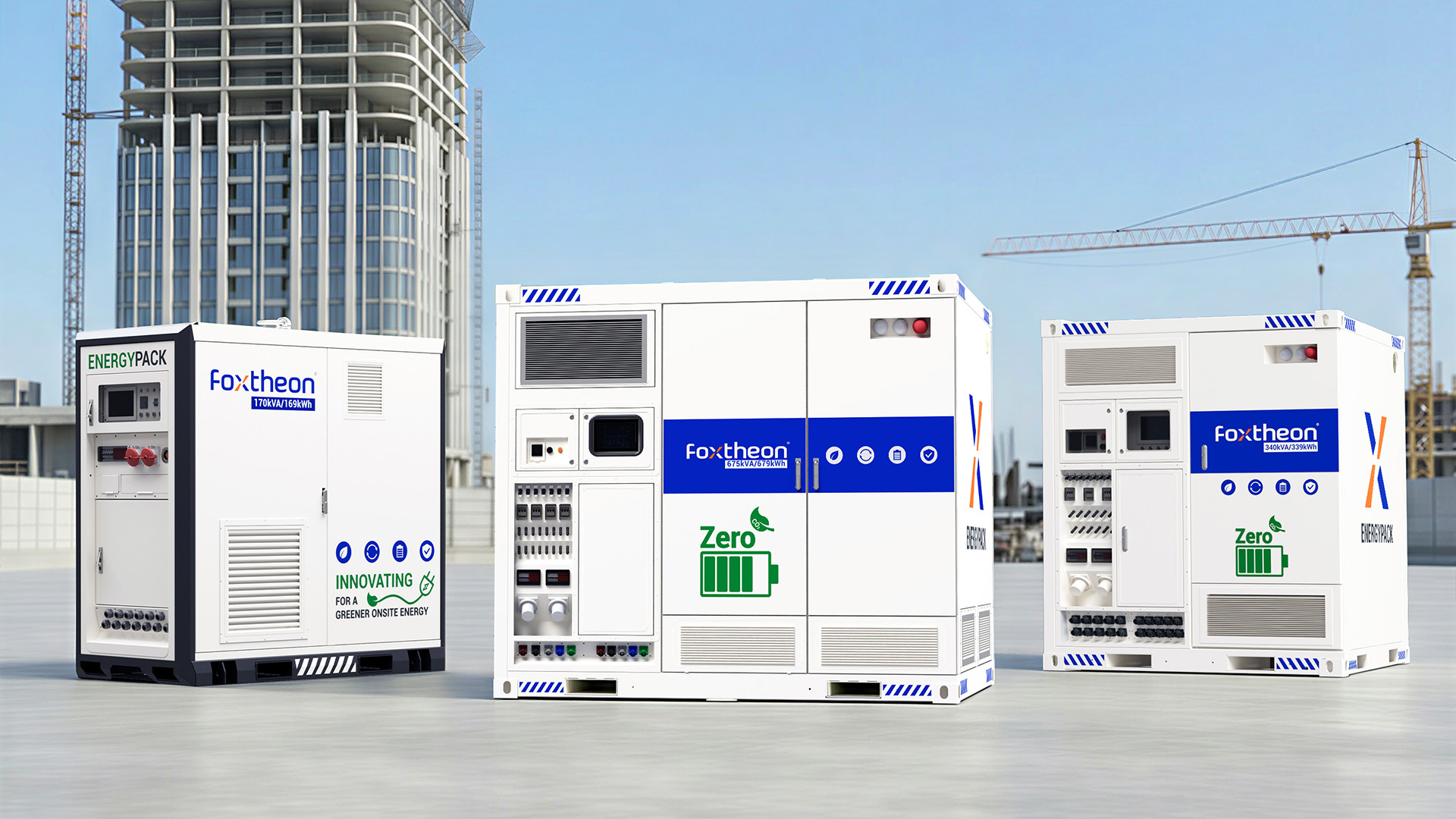
Industrial operations in off-grid environments face persistent challenges regarding power reliability, operational expenditures, and environmental compliance. Traditional power generation methods, relying solely on synchronous internal combustion engines, often run at suboptimal loads, leading to high fuel consumption and increased maintenance cycles. Integrating a modern Hybrid Power Unit into these energy systems offers a practical solution to stabilize local grids and manage operational loads more efficiently.
By pairing energy storage technologies with traditional power generation and renewable inputs, these systems balance supply and demand dynamically. Companies such as Foxtheon develop advanced power integration platforms designed to bridge the gap between legacy thermal assets and modern renewable energy sources, ensuring stable power delivery in demanding environments.
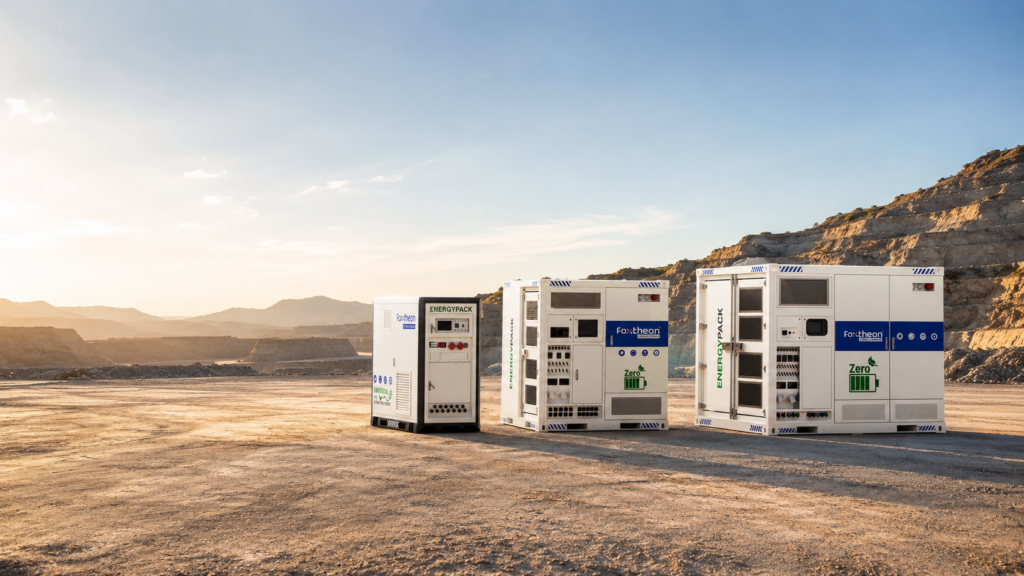
Technical Architecture of a Hybrid Power Unit
A Hybrid Power Unit is not merely a battery coupled to a generator; it is an engineered system of power electronics, thermal management, and intelligent controls. Understanding the individual components and their interaction is necessary for proper system deployment.
1. Power Conversion System (PCS)
The PCS acts as the primary link between the alternating current (AC) bus of the local grid and the direct current (DC) bus of the battery storage system. Modern systems utilize bi-directional inverters that manage active and reactive power flow. Key technical metrics of the PCS include:
- Total Harmonic Distortion (THD): Typically kept below 3% to prevent damage to sensitive downstream electronic equipment.
- Switchover Time: Seamless transition capabilities (often under 10 milliseconds) to maintain power continuity during primary source failure.
- Overload Capacity: The ability to handle high inrush currents from inductive loads, such as large industrial pumps or compressors.
2. Battery Energy Storage System (BESS)
The battery sub-system serves as the energy reservoir, absorbing excess power during periods of low demand and discharging it when load requirements exceed generator capacity. This buffering capacity allows thermal generators to operate at their peak efficiency curve, rather than modulating continuously to match load fluctuations.
3. Energy Management System (EMS) and Microgrid Controller
The EMS is the computational core of the unit. It continuously monitors parameters such as State of Charge (SoC), State of Health (SoH), instantaneous load demand, and generator run hours. Through proprietary algorithms, the EMS determines the most efficient dispatch strategy, predicting load changes and coordinating the startup or shutdown of auxiliary power sources.
Solving Operational Challenges in Demanding Environments
Remote industrial sectors, including mining operations, telecommunications infrastructure, and utility-scale construction, frequently operate under severe environmental conditions where grid connection is unavailable. These scenarios present specific technical issues that a centralized hybrid system can mitigate.
In high-altitude or extreme temperature regions, thermal generators suffer from derating, which reduces their maximum power output. By introducing a Hybrid Power Unit, the system can utilize stored energy to handle peak demands, preventing the generator from operating in an overloaded state. This configuration protects the primary generator from thermal stress and reduces the risk of unplanned shutdowns.
Furthermore, low-load operation—often referred to as “wet stacking” in diesel generators—occurs when an engine runs below 30% of its rated capacity. This leads to incomplete fuel combustion and carbon buildup on engine components. A hybrid system prevents this by shutting down the generator completely during low-load periods, supplying the required power entirely from the battery storage system.
Material Specifications and Chemical Integrity
The durability and operational life of an energy storage system depend heavily on the materials used in its construction. Industrial units must withstand mechanical shock, moisture ingress, and thermal cycling.
Battery Chemistry: Lithium Iron Phosphate (LFP)
Modern hybrid systems widely utilize Lithium Iron Phosphate (LiFePO4) chemistry due to its distinct thermal and chemical stability. Compared to Nickel Manganese Cobalt (NMC) formulations, LFP offers several advantages:
- Thermal Runaway Temperature: LFP exhibits a high thermal runaway threshold (approximately 270°C), reducing fire risks in demanding industrial operations.
- Cycle Life: Capable of delivering between 4,000 to 6,000 charge-discharge cycles at 80% Depth of Discharge (DoD) before capacity degrades to 80% of its original rating.
- Environmental Footprint: LFP cells do not contain cobalt, simplifying recycling processes and aligning with corporate sustainability initiatives.
Photovoltaic Panel Materials for Solar Integration
When integrating solar generation into a Hybrid Power Unit, the choice of photovoltaic (PV) materials is vital for maintaining high energy yield. Industrial-grade PV panels typically employ N-type monocrystalline silicon with Tunnel Oxide Passivated Contact (TOPCon) technology. This structure provides a lower temperature coefficient, meaning energy generation remains efficient even as ambient temperatures rise. The outer protective layers feature double-glass construction with anti-reflective coatings to resist abrasion from sand, dust, and wind-borne debris.
Supplier Selection and Hardware Integration Standards
Procuring industrial energy equipment requires a rigorous assessment of prospective suppliers and their manufacturing standards. Operators must evaluate hardware not only on initial performance metrics but also on compliance with international safety and grid-connection codes.
When analyzing potential suppliers, engineers should verify compliance with the following benchmarks:
- IEC 62619: Safety requirements for secondary lithium cells and batteries used in industrial applications.
- UL 1973: Standards for batteries for use in stationary, vehicle auxiliary power, and light electric rail applications.
- IP65/NEMA 4X Ratings: Enclosure standards that verify protection against water jets, dust ingress, and corrosive substances.
Experienced providers, such as Foxtheon, build systems using modular designs that allow for scaling of both power conversion capacity and energy storage capacity independently. This modularity ensures that if a single battery module requires maintenance, the rest of the unit continues to operate, preserving system uptime.
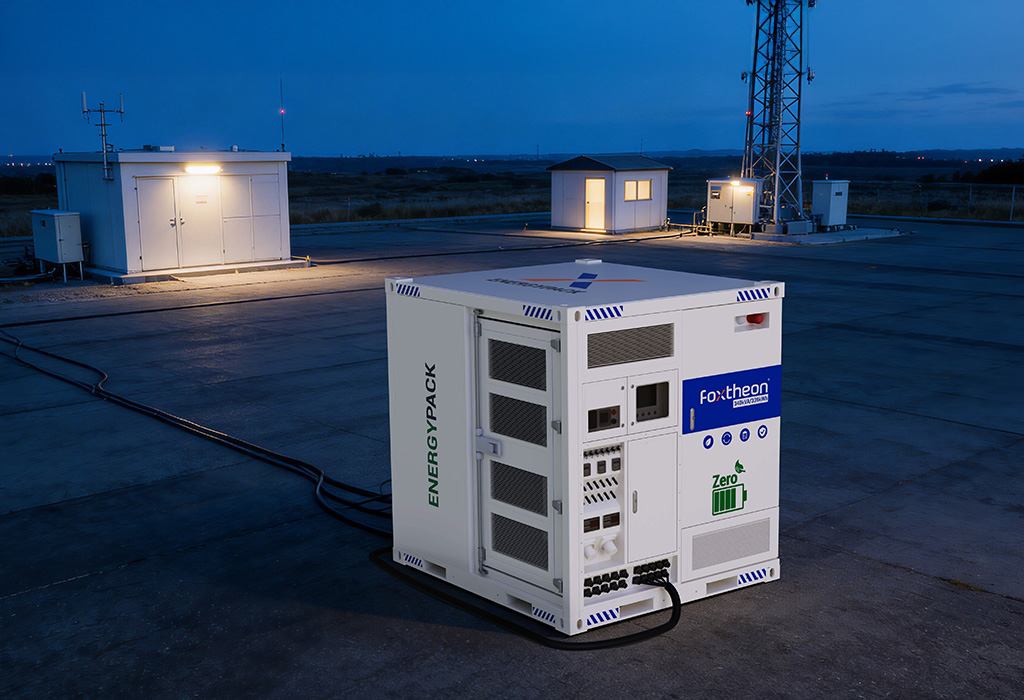
Integrating Hybrid Units with Legacy Generator Assets
Upgrading an existing power station does not require discarding older equipment. Modern hybrid systems are designed to operate in parallel with existing generator assets, protecting previous capital investments.
Through standardized communication protocols like Modbus TCP/IP, CAN bus, and Profibus, the hybrid unit communicates directly with the generator controller. The hybrid controller acts as the master unit, monitoring the total load and signaling the generator to start only when the battery state of charge drops below a pre-configured threshold, or when a sudden surge in load demand occurs. This seamless synchronization prevents voltage and frequency drops, maintaining power quality across the entire distribution network.
Standard FAQ for Industrial Operators
Q1: How does a Hybrid Power Unit handle sudden, high-power load spikes?
A1: The system utilizes its Power Conversion System (PCS) to draw power instantly from the battery sub-system. Because electrochemical storage reacts in milliseconds—compared to several seconds or minutes for a mechanical generator to ramp up—the battery absorbs the transient spike, maintaining voltage stability and preventing microgrid brownouts.
Q2: Can these systems operate in environments with extreme temperatures?
A2: Yes, modern units are equipped with active thermal management systems, incorporating either liquid cooling or forced-air cooling. These systems keep the battery cells within their optimal operating range of 15°C to 35°C, ensuring safety and longevity even when ambient outdoor temperatures exceed 50°C or drop below freezing.
Q3: What maintenance is required for the battery component of the unit?
A3: Unlike mechanical engines, the solid-state battery system requires very little manual intervention. Maintenance primarily involves checking the HVAC air filters, verifying cable connection torques, and monitoring the diagnostic reports from the Battery Management System (BMS) via remote cloud monitoring software.
Q4: How does the system handle solar integration without grid instability?
A4: The integrated Energy Management System (EMS) monitors solar generation and load demand simultaneously. If solar generation drops suddenly due to cloud cover, the unit offsets the deficit instantly from the battery buffer, or initiates a controlled startup of a generator to maintain overall system equilibrium.
Q5: Is it possible to scale up the system if load requirements increase in the future?
A5: Yes, modular systems allow for both parallel and series scaling. Operators can integrate additional battery cabinets or extra PCS units to expand capacity and power output as site demands grow, minimizing the need for complete hardware redesigns.
Technical Inquiry and Custom Engineering Solutions
Implementing a power solution requires precise engineering tailored to your specific load profiles, environmental conditions, and existing power assets. A mismatched system can lead to operational inefficiencies and premature component degradation.
To assist in analyzing your site requirements and selecting the correct equipment configurations, the engineering team at Foxtheon provides comprehensive technical assessments. Please contact our technical sales department to submit your daily load profiles, site environmental data, and current generation specifications. Our engineers will work with your team to develop a robust, custom-engineered energy solution.