
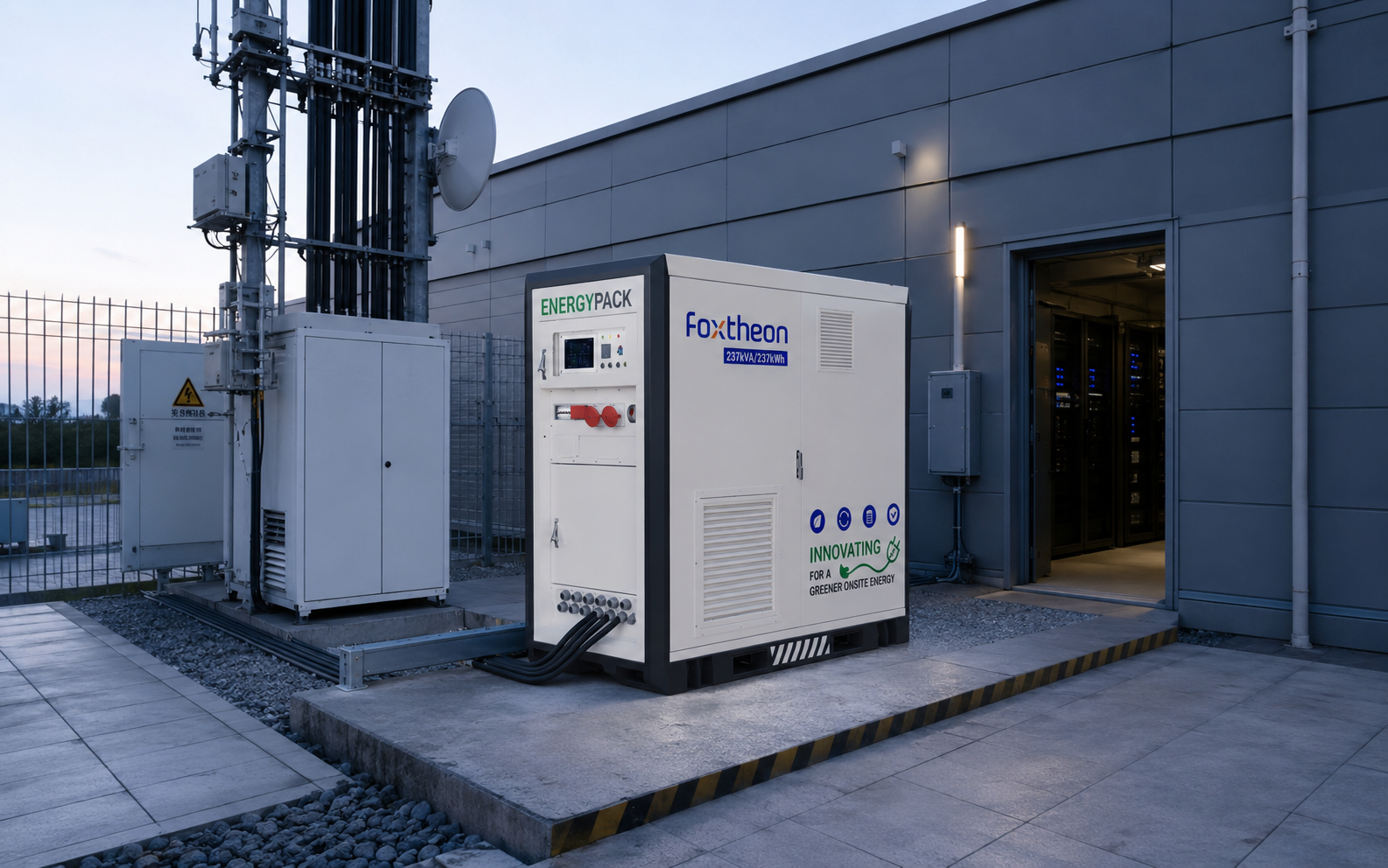
Modern electrical distribution networks require deterministic visibility across all power vectors to stabilize operations and optimize asset performance. An Energy Monitoring System serves as the central data acquisition and telemetry backbone within industrial and commercial topologies. Rather than operating as an isolated software dashboard, this platform represents a multi-tiered architecture of field-level instrumentation, hardened communication gateways, and high-frequency analytical engines designed to capture electrical behavior across millisecond and hour intervals alike.
Data Acquisition Architecture and Field Instrumentation Standards
The integrity of any electrical analytics platform depends strictly on the fidelity of its raw input data. Sensor deployment within medium-voltage (MV) and low-voltage (LV) switchgear requires precise instrument transformer matching based on current magnitude, frequency characteristics, and spatial limits within distribution panels.
Current and Potential Transformers
Current transformers (CTs) convert high-amperage feeder loads into standardized milliamp or 5A secondary outputs suitable for digital input modules. Solid-core CTs provide superior metering accuracy, meeting IEC 61869-2 Class 0.2S or Class 0.5 specifications, which is mandatory for internal sub-billing and contractual compliance. In retrofit scenarios where electrical outages are restricted, split-core CTs and flexible Rogowski coils serve as standard alternatives. While split-core units exhibit slight phase shift variations, Rogowski coils excel in measuring high-frequency transients and non-sinusoidal currents without magnetic saturation.
Edge Gateways and Protocol Translation
Field sensors transmit telemetry through hardware abstraction layers. Microprocessor-driven gateways ingest asynchronous data streams via physical RS-485 serial loops and industrial Ethernet topologies. Field protocols commonly deployed include:
- Modbus RTU/TCP: Remains the standard for register-based register polling from basic power meters, protective relays, and thermal sensors.
- BACnet IP: Utilized primarily when energy data interfaces with broader facility management automation systems.
- DNP3 and IEC 61850: Mandatory in high-voltage substations requiring deterministic event timing and GOOSE messaging.
- MQTT / Sparkplug B: Applied at the edge gateway to publish low-bandwidth, state-aware payload packets over TLS-encrypted cellular or wide-area networks (WAN).
Integrated solutions engineered by technical solution providers like Foxtheon implement advanced edge edge-computing gateways that execute localized polling cycles at 100-millisecond intervals. Local buffering safeguards data continuity during wide-area telemetry interruptions, ensuring no historical records are lost during link degradation.
Hardware Specifications and Electrical Enclosure Engineering
Deploying metering hardware into rigorous industrial operating environments introduces thermal, mechanical, and electrical stresses. Enclosure selection and internal layout design require rigorous adherence to electrical engineering codes.
Mechanical Protection and Enclosure Materials
Metering enclosures mounted adjacent to switchboards or outdoor junction units must match environmental exposure profiles. Cold-rolled, powder-coated sheet steel (minimum 1.5 mm gauge) provides magnetic shielding and impact defense (IK10) within indoor motor control centers (MCCs). For outdoor switchyards, coastal installations, or corrosive chemical processing environments, enclosures fabricated from Grade 316 stainless steel or UV-stabilized, glass-reinforced polycarbonate rated to IP66 or NEMA 4X are deployed. These materials mitigate corrosive degradation and prevent moisture ingress along gasket seals.
Thermal and Dielectric Considerations
Internal DIN-rail components generate continuous heat profiles. High-density meter banks must incorporate passive convection dissipation channels or thermostatically regulated thermoelectric cooling blocks when ambient temperatures exceed 50 degrees Celsius. Furthermore, surge protective devices (SPD) conforming to Type 1 or Type 2 requirements (IEC 61643-11) are required on all voltage metering taps. Optical isolation on all incoming RS-485 communication runs safeguards low-voltage analytical processors from common-mode voltage spikes and ground loop differentials.
Enterprise platforms, such as the comprehensive Energy Monitoring System developed for heavy infrastructure, incorporate galvanic isolation barriers across power supply and measurement terminals to maintain signal purity and operational safety during line-to-ground fault events.
Harmonized Coexistence with Existing Distributed Generation Assets
Modern commercial and industrial sites rarely operate on single utility supplies. Facilities rely on complex hybrid power models that blend traditional grid feeds with distributed generation resources, including existing diesel or gas reciprocating generator sets, combined heat and power (CHP) installations, and dynamic photovoltaic arrays.
An enterprise monitoring configuration does not isolate or seek to displace existing auxiliary generation assets. Instead, it captures and aggregates their electrical outputs to maximize overall operational intelligence. Reciprocating generator sets represent substantial investments with proven continuous-duty capabilities. Incorporating their engine control units (ECUs)—typically communicating via J1939 protocols—into the centralized platform permits real-time surveillance of parameters including:
- Active and reactive power dispatch (kW/kVAR).
- Engine thermal loading, cooling jacket temperatures, and oil pressures.
- Alternator winding temperatures and frequency stability under step-loading.
- Specific fuel consumption metrics correlated with instantaneous electrical demand.
By mapping generator output profiles alongside solar inverter telemetry and grid interconnect points, engineering teams gain complete visibility into load sharing dynamics. This transparent visualization ensures that backup generation systems operate within their optimal brake-specific fuel consumption (BSFC) bands while averting continuous low-load states that lead to engine wet-stacking.
Advanced Power Quality Analytics and High-Density Sub-Metering
Power quality management extends beyond observing simple kWh consumption. As power electronics, variable frequency drives (VFDs), and nonlinear loads populate industrial networks, waveform distortion introduces parasitic losses, transformer overheating, and premature insulation breakdown.
Harmonic Analysis up to the 63rd Order
A high-tier Energy Monitoring System evaluates total harmonic distortion (THD) for both current and voltage up to the 63rd harmonic index. By utilizing fast Fourier transform (FFT) processors directly on edge meters, the platform pinpoints harmonic sources within an internal distribution network. Engineers can distinguish between external grid-borne harmonics and internally generated distortion caused by industrial rectifiers, rectifying the root cause before harmonic currents stress neutral conductors or trigger nuisance tripping of protective switchgear.
Phase Balance, Sags, and Swells
Voltage unbalance factors (VUF) exceeding even 1% induce severe current unbalances in polyphase induction motors, leading to thermal derating. High-speed measurement hardware captures transient events, sags, and swells adhering to the IEC 61000-4-30 Class A standard. This precision allows facilities to correlate power disturbances with utility switching operations or large motor start sequences across deep industrial branch circuits.
Granular Sub-Metering Topologies
High-density sub-metering isolates consumption variables across production lines, HVAC chillers, air compressors, and localized data processing rooms. Partitioning facility profiles enables automated verification of baseline energy standards, precise attribution of process costs, and identification of idle-state power leakage.
Engineering Evaluation Criteria for Hardware and System Integration
Selecting hardware components and analytical architecture for an industrial facility requires detailed review of interoperability, component longevity, and long-term expandability.
Protocol Openness and Data Ownership
Proprietary ecosystems limit long-term architectural modifications. Hardware procurement mandates non-proprietary communication interfaces. Meters and edge data concentrators should expose standard Modbus memory maps, RESTful APIs, or open database connectivity options. Facility operators must retain full, unhindered ownership of raw and aggregated time-series datasets without relying on proprietary cloud conversion services.
Measurement Accuracy and Calibration Standards
Instrumentation across distribution branches must carry verifiable third-party certification. Typical distribution boards necessitate:
- Main Service Incomers: ANSI C12.20 Class 0.2 or IEC 62053-22 Class 0.2S accuracy standards.
- Intermediate Distribution Feeders: IEC 62053-21 Class 0.5 or Class 1.0.
- Final Branch Circuits: Class 1.0 or Class 2.0 operational meters.
Meters must sustain calibration intervals of at least three to five years under varying operating temperatures, supported by an MTBF (Mean Time Between Failures) rating exceeding 100,000 operational hours.
Scalability and Integration Flexibility
Industrial systems scale across physical additions and operational realignments. A modular Energy Monitoring System supports both vertical scaling (increasing the metric polling density on existing equipment) and horizontal scaling (adding new substations, microgrids, or battery storage additions). Hardware built by industry specialists, such as Foxtheon, integrates high-density digital and analog I/O expansion modules, allowing direct monitoring of auxiliary breaker status contacts, water, air, gas, and electricity consumption meters within a unified data schema.
Frequently Asked Questions
Q1: How does an Energy Monitoring System interface with legacy power distribution panels?
A1: Legacy switchgear integrates smoothly through non-invasive field components. Current measurements are obtained using split-core current transformers or Rogowski coils clamped around conductors without breaking connections. Voltage references are wired through fused disconnect blocks, and meters output continuous telemetry to local data concentrators over RS-485 Modbus networks, bypassing the need for physical switchgear replacements.
Q2: What is the primary operational difference between basic power meters and Class A power quality analyzers?
A2: Basic power meters measure fundamental values including voltage, current, active power, and cumulative energy over fixed averaging intervals. Class A power quality analyzers conform to the rigid IEC 61000-4-30 standard, sampling continuous waveforms at rates often exceeding 10 kHz to capture transient spikes, harmonics up to high frequencies, flicker, and instantaneous interruptions with synchronized time-stamping.
Q3: Can telemetry from existing auxiliary generators be integrated into the central system?
A3: Yes. Auxiliary generators equipped with industrial digital control panels usually support Modbus RTU or CAN bus communication protocols (such as SAE J1939). The central gateway connects to these control ports to extract operating metrics including load levels, engine hours, coolant temperatures, and electrical parameters, displaying them on a single unified pane.
Q4: How does high harmonic distortion impact industrial distribution systems?
A4: Harmonic distortion elevates root-mean-square (RMS) current levels within electrical distribution infrastructure. This introduces excessive heat into transformer cores through eddy current losses, causes thermal stress on neutral lines, degrades power factor correction capacitor banks, and causes premature nuisance tripping in thermal-magnetic circuit breakers.
Q5: What cybersecurity measures apply to an edge-deployed Energy Monitoring System?
A5: Field-level deployments secure telemetry through physically isolated measurement subnets (VLANs), strict disabling of unencrypted operational services (such as Telnet or plain HTTP), deployment of secure data transmission protocols including MQTT over TLS 1.3 or HTTPS, and role-based access control (RBAC) across local and network administrative interfaces.
Technical Inquiries and Engineering Consultation
Engineering teams planning infrastructural upgrades or microgrid telemetry deployments can submit project schematics and single-line diagrams directly for review:
Technical Inquiries: https://www.foxtheon.com/contact-us/