
Industrial energy infrastructures demand continuous voltage stabilization, active power reserve management, and reliable load shifting. As grid demands fluctuate and utility peak tariffs increase, commercial operators rely on energy storage infrastructure to maintain operational continuity. Modern battery energy storage companies design systems that provide rapid frequency regulation, reactive power support, and black-start capabilities. By implementing hybrid systems that work in parallel with existing equipment, industrial operations can mitigate load fluctuations. As a specialized manufacturer, Foxtheon develops integrated energy storage systems designed for demanding operational environments, ensuring steady power supply without compromising existing asset investments.
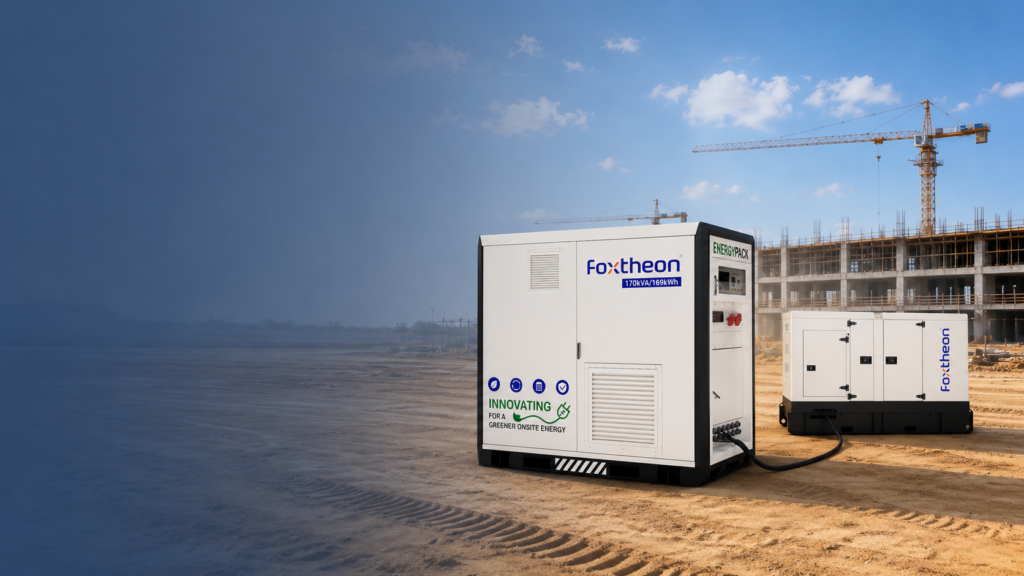
Electrochemistry and Core Component Material Standards
The selection of the electrochemical core is the first design variable in commercial and industrial (C&I) energy storage systems. Lithium Iron Phosphate (LFP, LiFePO4) chemistry has become the standard for utility-scale and commercial systems due to its high thermal stability and structural durability. LFP cells exhibit a thermal runaway threshold of approximately 270°C, which is significantly safer than nickel-manganese-cobalt (NMC) alternatives. From a mechanical perspective, high-capacity LFP cells (typically 280Ah or 306Ah) are housed in prismatic aluminum casings, which optimize heat dissipation and volumetric energy density within the battery rack.
Beyond the cell chemistry, the performance of a system depends on the structural materials used in the enclosure. Industrial-grade energy storage enclosures are subjected to harsh environmental conditions, requiring robust mechanical protection. Top-tier manufacturers utilize heavy-duty galvanized carbon steel plates (such as Q235 or Q355 grades) or marine-grade aluminum alloys. The external surfaces must undergo multi-layer protective coating processes conforming to ISO 12944 standards. For coastal or highly corrosive industrial environments, a C5-High or C5-Marine anti-corrosion classification is required. This involves a zinc-rich primer, an epoxy intermediate coat, and a polyurethane topcoat to prevent rust and mechanical degradation over a service life exceeding 15 years.
Thermal insulation inside the enclosure is achieved through double-wall sandwich panels filled with high-density rock wool or polyurethane foam. This structure maintains internal temperature stability, reducing the heating and cooling load on the auxiliary HVAC system. Ingress protection is another vital parameter, with systems requiring a minimum of IP54 or NEMA 3R ratings to prevent the entry of windblown dust, rain, and splashing water, thereby preserving the integrity of the internal power electronics.
Thermal Management and Safety Engineering in Utility-Scale Storage
Managing heat generation during charge and discharge cycles is necessary to prevent premature capacity fade and thermal runaway. Leading battery energy storage companies utilize two primary thermal management designs: forced air cooling and liquid cooling.
Liquid cooling has emerged as the preferred method for high-density, high-C-rate configurations. This design utilizes a closed-loop system circulating a water-glycol mixture through cold plates positioned directly beneath or between the battery cells. Liquid cooling systems achieve a higher heat transfer coefficient than air, keeping cell-to-cell temperature differentials within a strict 3°C margin. This temperature uniformity prevents localized cell degradation, ensuring balanced capacity draw across the entire pack. Air cooling systems, while mechanically simpler, are typically reserved for lower-power density installations where ambient temperatures remain moderate and cycling requirements are less intense.
Safety engineering also involves multi-tier fire suppression architectures, in compliance with international standards such as NFPA 855 and UL 9540A. Modern battery racks are equipped with integrated off-gas detection sensors capable of detecting early-stage thermal events by monitoring carbon monoxide, hydrogen, and volatile organic compound (VOC) levels before any visible smoke or temperature spike occurs. The fire suppression system typically features a dual-stage mechanism: first, the release of a clean agent gas (such as Novec 1230 or FM-200) to extinguish localized electrical fires, followed by a dry-pipe water sprinkler connection for backup containment. Structural isolation barriers between individual battery modules prevent thermal runaway cascade across adjacent racks.
Microgrid Integration and Generator Co-existence
For industrial facilities operating off-grid or in remote areas with weak utility connections, energy storage systems must operate alongside existing generation assets, such as diesel or gas generator sets. Rather than seeking to replace these existing power assets, BESS technology functions as an optimizer, improving the operational efficiency of the entire microgrid.
The integration is managed by a centralized Power Management System (PMS) and a fast-acting Energy Management System (EMS). When high-power industrial motors start up, they draw high inrush currents that can cause voltage sags and frequency drops on a standalone generator. By integrating a high-performance Power Conversion System (PCS) equipped with virtual synchronous machine (VSM) algorithms, the BESS provides instantaneous active power injection to support the grid frequency. This response occurs within milliseconds, absorbing transient loads and allowing existing generators to run at a stable, optimal load profile.
Operating generators at low loads (under 30-40% of rated capacity) leads to inefficient fuel combustion, engine carbon buildup (wet stacking), and increased maintenance requirements. The integration of technology from experienced battery energy storage companies allows the EMS to execute dynamic load-sharing. During low-load periods, the BESS absorbs excess power from the generators to charge the batteries, maintaining the generator load above the optimal 60% threshold. Once the batteries are charged, the generators can be turned off or put on standby, with the storage system silently supporting the base load. This operational approach reduces total engine run hours and extends the service intervals of the mechanical assets.
Selecting Partners and Evaluating Manufacturing Capabilities
For B2B procurement managers, EPC contractors, and system integrators, selecting the right manufacturing partner involves an evaluation of engineering capabilities, manufacturing quality controls, and compliance certifications. The production of battery racks must adhere to rigorous quality management systems, including ISO 9001, ISO 14001, and ISO 45001.
A reliable partner must demonstrate advanced testing capabilities, conducting End-of-Line (EOL) testing on every manufactured pack. This testing must verify insulation resistance, voltage balance, capacity verification, and communication bus integrity (CAN bus or Modbus). Verification of cell-matching protocols is also necessary; cells assembled within a single pack must have closely matched internal resistance and capacity values to prevent early module imbalance.
Furthermore, custom configuration capability is a key requirement for complex industrial integration. As an established developer of advanced energy solutions, Foxtheon provides modular, containerized storage designs that can be customized to meet specific spatial and environmental constraints. Whether integrating third-party PCS units or customizing auxiliary power distributions, working with flexible manufacturers ensures the BESS interfaces smoothly with existing high-voltage or medium-voltage switchgear.
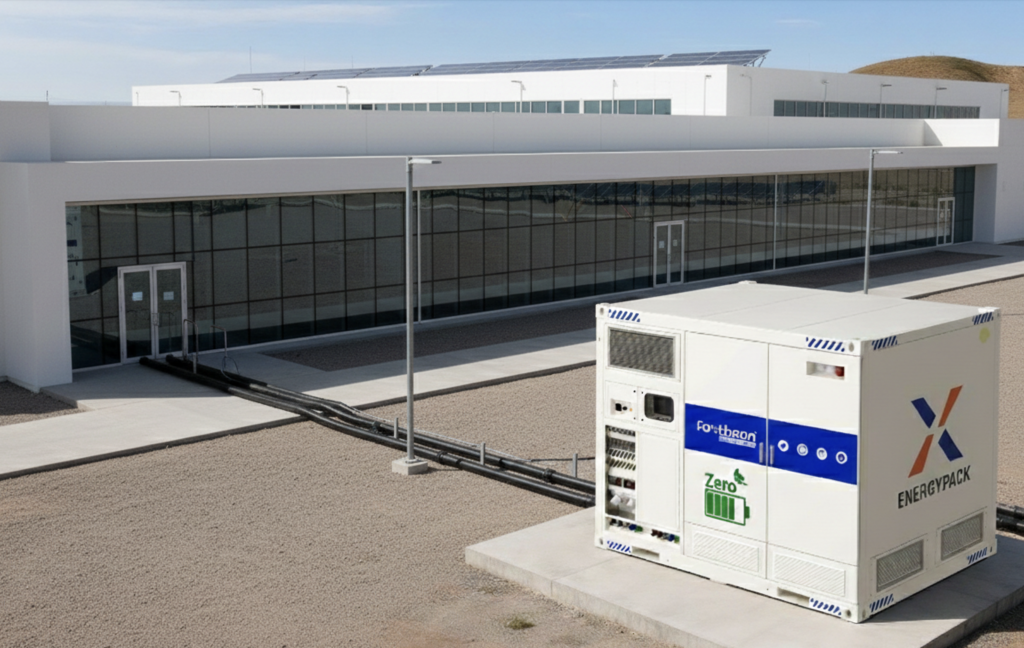
Key Technical Certifications and Regulatory Compliance
Navigating the regulatory environment is necessary for the successful deployment of commercial energy storage systems. Project developers must ensure that the equipment supplied by battery energy storage companies carries the appropriate international certifications. Below is a summary of the standard certification framework for industrial systems:
- IEC 62619: Specifies safety requirements and tests for secondary lithium cells and batteries used in industrial applications, ensuring safety under extreme mechanical and electrical stress.
- UL 1973: Standard for batteries for use in stationary, vehicle auxiliary power, and light rail applications, focusing on the ability of the battery system to withstand electrical, mechanical, and environmental abuse.
- UL 9540 and UL 9540A: Standard for safety of energy storage systems and equipment, including the specific test method for evaluating thermal runaway fire propagation in battery energy storage systems.
- IEC 61000 Series: Regulates electromagnetic compatibility (EMC) for the power electronics within the PCS, ensuring the system does not introduce harmonic distortion into the local grid or suffer from external electromagnetic interference.
- UN 38.3: Verifies the safety of lithium-ion batteries during transport, requiring modules to pass rigorous vibration, shock, altitude, and thermal tests.
Securing these certifications guarantees that the system is accepted by local utilities, building inspectors, and insurance underwriters, which minimizes project deployment delays and reduces operational risk profiles.
Sourcing Specifications and RFQ Preparation
To obtain accurate proposals from battery energy storage companies, procurement teams must prepare detailed Request for Quote (RFQ) documentation. This technical brief must define key parameters to ensure that bidders provide comparable, high-performance systems:
- System C-Rate: Define whether the application requires a high-energy system (e.g., 0.5C for 2-hour or 4-hour daily load shifting) or a high-power system (e.g., 1C or 2C for rapid transient response and peak shaving).
- Round-Trip Efficiency (RTE): Specify the minimum acceptable AC-to-AC round-trip efficiency, typically set at 85% or higher, which accounts for losses in the PCS, battery cells, and auxiliary cooling equipment.
- Auxiliary Power Consumption: Request clear metrics on the energy consumed by internal HVAC, BMS, and controller units under nominal operating conditions, as this directly affects the net energy yield.
- Communications Interface: Outline required integration protocols, such as Modbus TCP/IP, DNP3, or IEC 61850, to ensure compatibility with the facility’s SCADA system or building management system (BMS).
Frequently Asked Questions
Q1: What are the primary differences between liquid cooling and air cooling systems in commercial energy storage?
A1: Liquid cooling systems utilize a closed-circuit liquid coolant (typically a water-glycol mixture) pumped through internal plates in contact with the cells, providing a high heat transfer coefficient and keeping cell-to-cell temperature variations under 3°C. Air cooling relies on forced convection via fans, which is mechanically simpler but can lead to wider temperature variations (often up to 5-8°C) in high-density rack configurations, potentially accelerating uneven cell degradation.
Q2: How do battery energy storage systems coordinate with existing industrial diesel generators?
A2: The coordination is managed via a centralized Power Management System (PMS) utilizing droop control algorithms. The energy storage system absorbs or injects active power within milliseconds to handle transient load steps, while the generator handles the base load. This integration keeps the generator operating within its most efficient load curve, preventing issues like wet stacking and reducing mechanical wear.
Q3: What safety standards must a commercial BESS satisfy before deployment?
A3: Systems must comply with safety standards including IEC 62619 for lithium cells and packs, UL 1973 for stationary battery systems, and UL 9540/UL 9540A for thermal runaway propagation safety. Additionally, electromagnetic compatibility must comply with IEC 61000 standards, and the battery modules must pass UN 38.3 testing for transport safety.
Q4: What panel and enclosure materials are required for harsh marine or industrial environments?
A4: Enclosures should be constructed from high-strength galvanized steel or marine-grade aluminum treated with C5-High or C5-Marine anti-corrosion coatings in accordance with ISO 12944. The ingress protection rating should be at least IP54 or IP55, complemented by double-walled insulated panels to resist ambient thermal stress and maintain internal climate control.
Q5: Why should procurement teams evaluate C-rate specifications when selecting battery energy storage companies?
A5: The C-rate denotes the rate at which a battery is charged or discharged relative to its maximum capacity. A 1C rate means a 100kWh battery can deliver 100kW for one hour. Selecting experienced battery energy storage companies ensures you match the correct C-rate (e.g., 0.5C for daily load shifting vs. 2C for high-power industrial peak support) to avoid premature degradation.
Technical Specifications Inquiry for Commercial Storage Systems
For project-specific engineering support, Submit your project requirements directly to Foxtheon to initiate our custom engineering evaluation.