
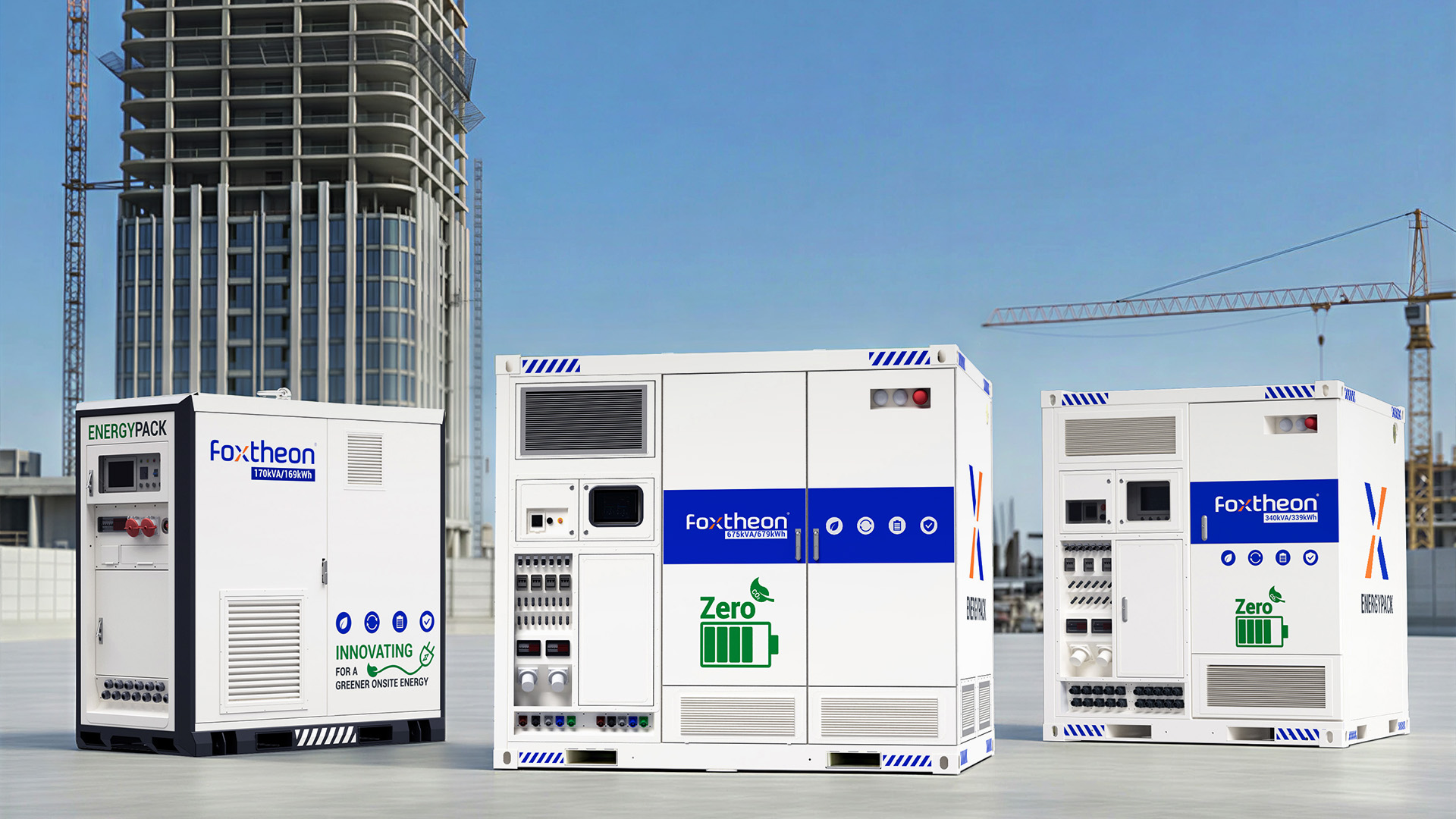
Operating industrial assets beyond the reach of centralized utility infrastructure demands an uninterrupted, power-quality-controlled electrical supply. Whether applied to extraction sites, regional utility substations, or remote processing hubs, deploying an industrial-grade Off-grid Power Solution has transitioned from basic aggregate generation to complex, multi-source microgrid engineering. Modern off-grid topologies must balance dynamic load profiles, minimize parasitic system losses, and manage harmonic distortion while running isolated from a reference frequency.
Developing these systems requires precise synchronization across multiple power vectors. Integrating high-yield photovoltaic (PV) generation, advanced battery energy storage systems (BESS), and thermal generation assets demands thorough analysis of power electronics, galvanic isolation, thermal dissipation, and industrial control networks.
Architectural Topologies: AC-Coupled vs. DC-Coupled Microgrids
System topology dictates how energy flows between generation assets, storage media, and operational loads. In an industrial context, engineering teams must evaluate the operational trade-offs between AC-coupled and DC-coupled systems based on daytime consumption versus nighttime dispatch cycles.
DC-Coupled Architecture
In DC-coupled architectures, photovoltaic arrays route power directly to the common DC bus via Maximum Power Point Tracking (MPPT) charge controllers. The energy remains in direct current form until inverted for loads or routed into the battery bank.
- Conversion Efficiency: Charging the energy storage unit incurs minimal conversion loss, as power routes through a single DC-DC conversion stage rather than undergoing DC-AC-DC processing. Round-trip efficiency for stored energy reaches optimal thresholds.
- Inverter Sizing Optimization: Centralized bidirectional inverters manage load dynamics independently of the total connected PV nameplate capacity, which stabilizes inverter thermal management.
- Application Suitability: This architecture demonstrates clear performance advantages where dynamic daylight energy storage exceeds direct daytime demand, such as overnight telemetry stations and continuous base-load processing plants.
AC-Coupled Architecture
AC-coupled designs connect both the renewable generation and the primary storage system directly to a common alternating current bus. Grid-forming string inverters convert PV production directly to AC at the source, while bidirectional battery inverters govern frequency and voltage parameters.
- Direct Load Consumption: Daytime industrial loads consume energy directly from solar production through a single DC-to-AC conversion step, minimizing intermediary losses during operational peak hours.
- Scalability and Modular Expansion: Engineers can scale generation capacity by adding decentralized string inverters along the AC distribution line without redesigning the central DC distribution switchgear.
- Fault Isolation: Segmenting generation assets onto distinct AC sub-breakers enhances redundancy, ensuring partial component failure does not interrupt the entire generation array.
Specifying engineers working with technical innovators like Foxtheon frequently deploy hybrid-coupled architectures that balance direct-consumption AC networks with high-efficiency DC-coupled storage reserves to match complex load regimes.
Photovoltaic Panel Metallurgy and Material Specifications
Harvesting reliability under harsh environmental conditions hinges on the structural and material configuration of the photovoltaic array. Specifying engineers must look beyond nominal nameplate wattage to evaluate silicon wafer technology, cell interconnects, and degradation mechanisms.
N-Type TOPCon vs. Heterojunction (HJT) Technologies
Modern standalone deployments utilize N-type silicon substrates over legacy P-type PERC designs. N-type architectures eliminate Light Induced Degradation (LID) caused by boron-oxygen defect pairs, providing greater generational yield over multi-decade operating horizons.
- Tunnel Oxide Passivated Contact (TOPCon): Features an ultra-thin silicon oxide layer combined with doped polycrystalline silicon. This design delivers lower surface recombination velocities and yields commercial module efficiencies exceeding 22.5%. TOPCon cells maintain a lower temperature coefficient (typically -0.30%/°C), retaining output capacity in high ambient temperature environments.
- Heterojunction Technology (HJT): Combines crystalline silicon thin wafers with amorphous silicon layers. HJT exhibits a symmetrical structure that produces industry-leading bifaciality factors (often exceeding 85-90%) and an exceptional temperature coefficient (around -0.26%/°C). The lower processing thermal budget reduces mechanical micro-stress across the cell matrix.
Cell Interconnection and Mechanical Integrity
Off-grid installations frequently face intense wind shear, wide ambient temperature deltas, and vibrational forces. Multi-Busbar (MBB) and zero-busbar designs mitigate localized current density resistance and shorten the electron path length. Utilizing high-density encapsulation materials, such as Polyolefin Elastomer (POE) rather than standard Ethylene Vinyl Acetate (EVA), eliminates Potential-Induced Degradation (PID) and blocks moisture ingress in high-humidity operating environments.
Electrochemical Energy Storage and Advanced Battery Management
The energy storage subsystem acts as the operational anchor of the industrial microgrid. Lithium Iron Phosphate (LiFePO4 or LFP) chemistry serves as the primary standard for industrial stationary storage due to its inherent chemical stability, resistance to thermal runway, and high cycling capacity under diverse operating patterns.
LFP Chemistry and Thermal Management
LiFePO4 possesses an olivine crystal structure with strong covalent P-O bonds that remain stable under deep operational cycling and elevated temperatures. Safe operation relies on proactive thermal management systems.
- Liquid Cooling Topologies: Advanced BESS containers utilize liquid cooling circuits with ethylene glycol-water mixtures instead of traditional forced-air HVAC units. Liquid plates in direct contact with prismatic cells maintain uniform core temperatures across thousands of cells, limiting cross-pack thermal variance to less than 2°C.
- Cycle Life and Depth of Discharge (DoD): Industrial LFP cells yield 6,000 to 8,000 cycles at 80% Depth of Discharge when maintained within a 20°C to 28°C operational band. Consistent thermal regulation preserves the solid electrolyte interphase (SEI) layer, mitigating lithium plating and premature capacity loss.
Battery Management System (BMS) Architecture
The operational longevity of an Off-grid Power Solution depends on the intelligence of its multi-tier BMS. Modern platforms employ a three-tier architecture: Cell Monitoring Units (CMU), Pack Management Units (PMU), and a central System Management Unit (SMU).
- Active Balancing: Unlike passive balancing that dissipates excess charge as heat through shunt resistors, active balancing redistributes charge between cells via bidirectional DC-DC circuits. This maximizes the usable state-of-charge (SOC) window without degrading cell capacity.
- Industrial Comms Integration: Robust BMS firmware interfaces directly with high-level microgrid controllers using deterministic protocols, including Modbus TCP/IP, CAN 2.0B, and IEC 61850. Real-time telemetry monitoring tracks internal resistance, state-of-health (SOH), and isolation monitoring down to individual module clusters.
Engineered Synchronization with Thermal Generation Assets
Industrial off-grid power designs rarely rely solely on renewable generation and storage. Maintaining continuous uptime requires synchronous hybridization with existing reciprocating internal combustion engines. Integrating diesel or gas generator sets transforms an intermittent generation footprint into a dispatchable, continuous-duty power framework.
Rather than seeking to displace mechanical generation infrastructure, modern power electronics interface with existing gen-sets to optimize mechanical efficiency and engine longevity.
Running Regimes and Wet Stacking Mitigation
Diesel generators operate with optimal thermal and combustion efficiency when loaded to 70–80% of their continuous rating. Running below 30–40% capacity causes unburned fuel to accumulate in the exhaust manifold—a condition known as wet stacking. This leads to carbon fouling, fuel dilution in lube oil, and accelerated mechanical failure.
Within a synchronized Off-grid Power Solution, the intelligent microgrid controller operates the generator solely within its sweet spot:
- When battery reserves decline, the controller starts the generator and immediately ramps its load to 75–80%.
- Power output is split: base-load facilities draw their exact power requirements, while all surplus generation charges the battery storage bank at high C-rates.
- Once the battery reaches a sustainable SOC, the automation system issues a soft-ramp down command and opens the generator breaker, returning the thermal asset to a cold standby condition.
Grid-Forming Inverters and Virtual Inertia
Mechanical generators supply real mechanical inertia via their rotating masses, dampening transient frequency variations caused by step-load additions. In high-penetration renewable microgrids, grid-forming (GFM) inverters simulate this rotational inertia through droop control and virtual synchronous machine (VSM) algorithms.
When heavy inductive loads start—such as high-voltage water injection pumps or industrial crushers—the grid-forming inverters dispatch sub-cycle reactive power, maintaining voltage profile stability without forcing the generator to endure electrical and mechanical torque shocks.
Industrial Load Dynamics and Power Quality Engineering
Autonomous networks operate with limited fault current capacity compared to traditional utility grids. As a result, power quality engineering must proactively address harmonic distortion, reactive current management, and transient surge events.
Managing Inrush Current and Inductive Loads
Direct-on-line (DOL) electric motors can draw starting currents of five to eight times their full-load amperage (FLA). Without utility support, these high starting currents cause deep voltage sags, which can trip sensitive operational controllers or cause inverter overcurrent shutdowns.
- Dynamic Overload Tolerances: Heavy-duty bidirectional inverters within the energy infrastructure must provide short-term overload thresholds (e.g., 150% for 60 seconds, 200% for 5 seconds) alongside active voltage drooping to supply real motor-starting magnetization currents.
- Power Factor Correction: Operating loads with low lagging power factors (such as induction motors and welding arrays) creates excessive reactive power flow. The central inverter or dedicated static var compensators (SVC) must provide four-quadrant active power factor correction, maintaining localized power factors above 0.98 at the primary distribution switchboard.
Mitigating Harmonics
The proliferation of variable frequency drives (VFDs), rectifiers, and automation electronics introduces harmonic currents that distort microgrid voltage wave shapes. Total Harmonic Distortion for Voltage (THDv) must be maintained under 3% for industrial applications. Engineers apply active harmonic filters (AHF) and configure LCL filter circuits at the inverter output stages to trap and attenuate high-frequency switching noise, keeping harmonic heating off internal transformer windings.
Commercial Sourcing and Technical Procurement Framework
Specifying a heavy-duty Off-grid Power Solution involves establishing engineering benchmarks that balance capital allocation with operational reliability. Technical sourcing professionals must implement structured evaluation frameworks when selecting hardware assemblies and system integrators.
Core Selection Metrics for System Procurement
- Tier-1 Photovoltaic Traceability: Procure modules exclusively from manufacturers with third-party verified balance-of-materials (BOM), verified low thermal coefficients, and full mechanical test certificates confirming resistance to heavy snow, wind, and salt-mist corrosion (IEC 61215, IEC 61701).
- Storage Integration Safety Standards: Ensure containerized BESS assets carry full-system UL 9540 and UL 9540A test reports, demonstrating that any thermal runaway event remains contained within the sub-module without cascading cell-to-cell or pack-to-pack.
- Controller Open Architecture: Reject proprietary controllers that restrict programmatic adjustments. Ensure firmware supports industrial-standard interfaces (CAN, Modbus, DNP3, IEC 60870-5-104) and allows user-level control over start/stop thresholds, state-of-charge boundaries, and spinning reserve limits.
- Environmental Resiliency of Power Electronics: Specify outdoor inverters and transformers built to IP65/NEMA 4X enclosures with conformal-coated printed circuit board assemblies (PCBA) to survive corrosive, dusty, or high-humidity operational conditions.
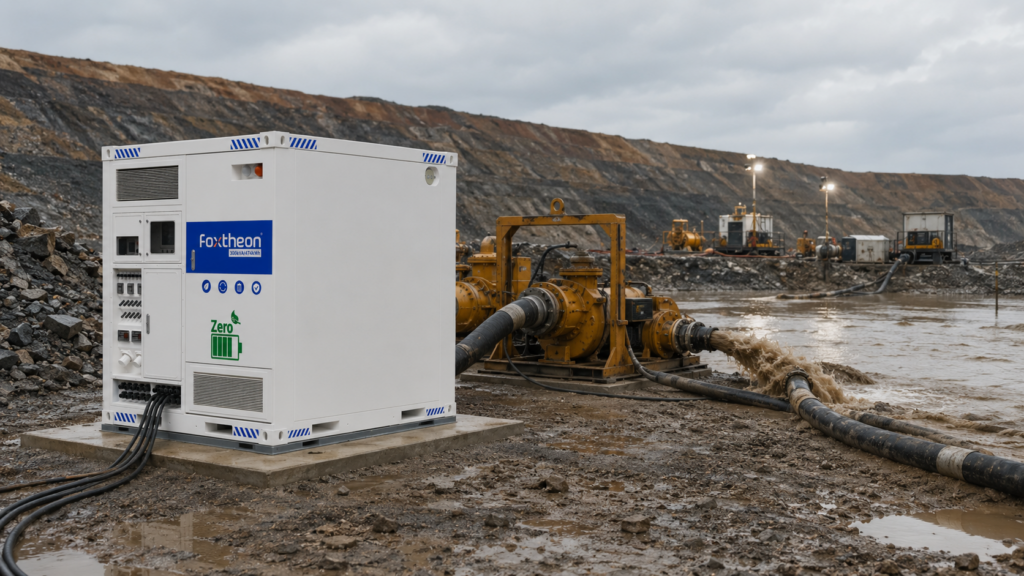
Working alongside advanced microgrid manufacturers like Foxtheon gives procurement teams direct access to integrated, pre-commissioned skid architectures that combine generation interface switches, storage, and intelligent microgrid controls within unified shipping footprints. This pre-engineered approach shortens on-site construction schedules and minimizes cold-commissioning technical discrepancies.
Frequently Asked Questions
Q1: How does a grid-forming inverter establish voltage and frequency in the absence of an electrical grid?
A1: A grid-forming (GFM) inverter operates as an independent voltage source rather than a grid-following current source. It utilizes internal voltage and frequency setpoints driven by droop control or virtual synchronous machine (VSM) algorithms. By continuously adjusting active power output to balance frequency deviations, and reactive power output to balance voltage deviations, the inverter establishes a stable AC voltage waveform to which other distributed energy resources synchronize.
Q2: Why is Liquid Cooling preferred over Forced Air cooling in industrial BESS containers?
A2: Liquid cooling plates sit directly adjacent to the battery cells, providing a thermal transfer medium with higher thermal conductivity and specific heat capacity than ambient air. This design maintains individual cell temperatures within narrow tolerances across the entire container, limits internal cell degradation, eliminates localized thermal zones, and cuts parasitic auxiliary cooling power consumption.
Q3: How does the integration of an Off-grid Power Solution preserve the lifespan of existing diesel generators?
A3: The hybridized storage and control platform eliminates extended generator run times under low-load conditions that trigger wet-stacking and incomplete fuel combustion. By operating the generator exclusively within its peak thermal efficiency window (70-80% loading) to supply dynamic operational demand and bulk-charge the battery bank simultaneously, mechanical run hours are curtailed and engine maintenance intervals are lengthened.
Q4: What is the significance of the C-rate in off-grid energy storage sizing?
A4: The C-rate measures the speed at which a battery discharges or charges relative to its maximum capacity. A 1C rate indicates a full charge or discharge in one hour, whereas a 0.5C rate corresponds to a two-hour cycle. In off-grid industrial environments, matching C-rate capabilities to high dynamic loads or motor inrush profiles ensures the battery system delivers high short-term current spikes without dropping output voltage or generating excessive internal heat.
Q5: Can an industrial off-grid microgrid achieve a true black start without generator assistance?
A5: Yes. Modern grid-forming bidirectional battery inverters are designed with autonomous black-start capabilities. By leveraging isolated internal DC storage reserves, the inverter can self-energize its internal control electronics, build the AC output voltage vector from zero, energize step-up isolation transformers without tripping on core saturation inrush currents, and subsequently initialize local distribution switchgear.
Technical Specifications and System Engineering Inquiries
Industrial facility expansion, remote infrastructure design, and off-grid asset modernization demand application-specific load profiling and power conversion engineering. Reach out directly to our engineering teams to review single-line diagrams, generator integration protocols, and energy storage sizing calculations:
Engineering & Solutions Division: Inquire Directly with Foxtheon Technical Services