
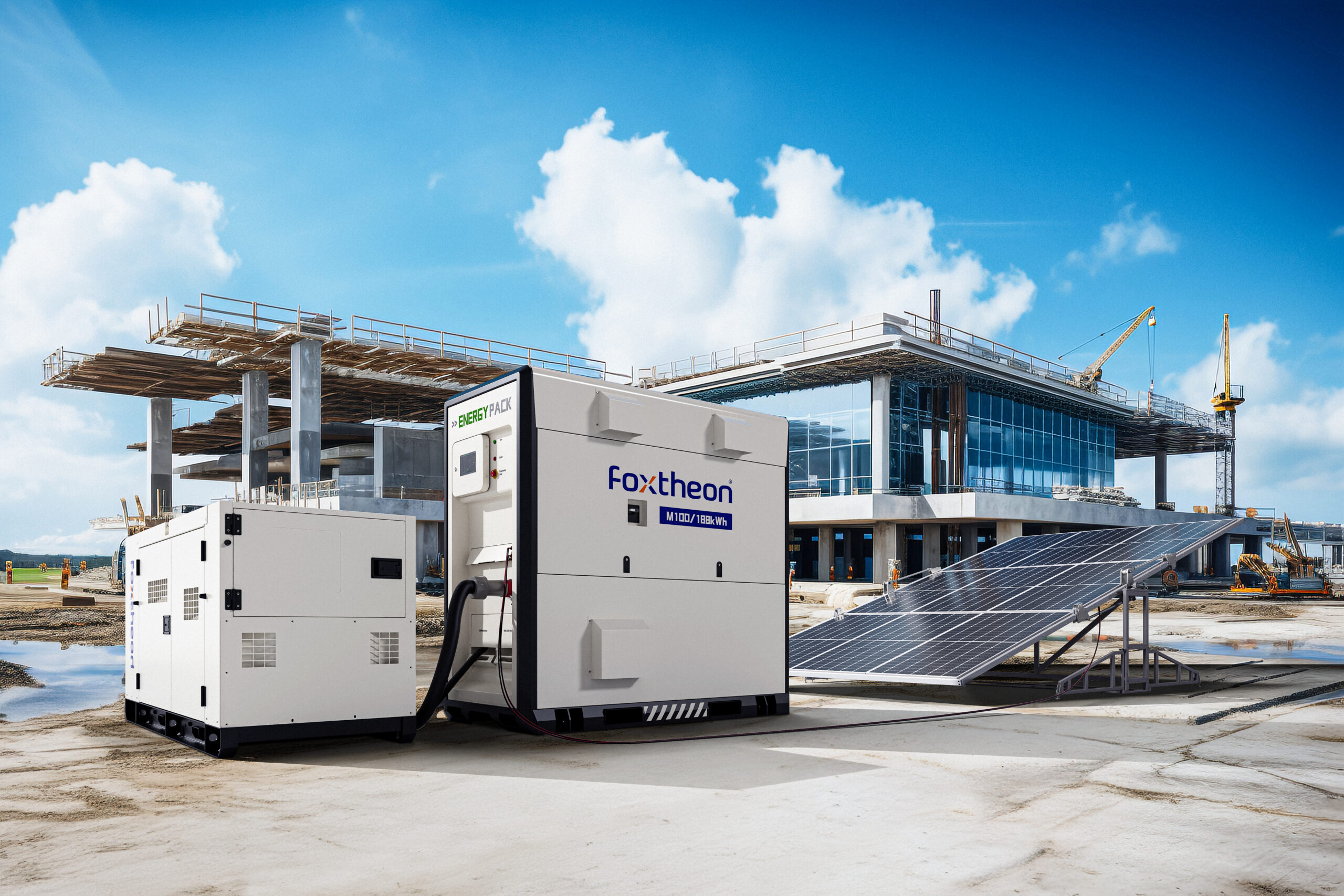
Remote industrial assets—ranging from mineral extraction facilities and remote processing hubs to telecommunication backbone stations—operate in environments devoid of transmission interconnects. Supplying uninterrupted, baseline electrical service to these facilities requires a departure from legacy centralized utility principles. A modern industrial off grid power supply is an engineered ecosystem combining distributed generation, electro-chemical energy storage, and dynamic power electronics to deliver autonomous power quality. Rather than relying on simple generator-based baseline power, contemporary engineering integrates multi-source topologies that work alongside existing asset bases to optimize run-hours, fuel burn, and thermal mechanical stress.
Specifying an industrial-scale standalone power architecture demands an understanding of electrical engineering fundamentals, transient response capabilities, semiconductor efficiencies, and battery cell chemistry degradation. System integrators such as Foxtheon approach this discipline by harmonizing power conversion units, localized distribution networks, and advanced telemetry into singular functional topologies capable of supporting continuous three-phase loads under harsh climate profiles.

Architectural Foundations of Industrial Standalone Power Networks
Industrial isolated grids operate without the inertia of an infinite utility bus. In grid-tied facilities, upstream generation absorbs motor starting currents, non-linear harmonic distortion, and reactive power spikes. In an islanded network, every kilovolt-ampere (kVA) of apparent power, every step-load event, and every power factor deviation must be resolved entirely within the local plant boundaries.
Establishing the foundation of an industrial off grid power supply begins with high-fidelity load classification. Loads must be split into steady-state continuous demand, cyclical operating profiles, and transient inductive spikes:
- Direct-On-Line (DOL) Inductive Loads: Heavy induction motors demand starting inrush currents between 500% to 800% of nominal full-load amperage (FLA). The microgrid power conversion system must deliver this reactive current without collapsing the AC voltage rail or triggering instantaneous overcurrent trips.
- Non-Linear Variable Frequency Drives (VFDs): Industrial automation components generate substantial 5th, 7th, and 11th order harmonics. Total Harmonic Distortion (THD) on voltage must be maintained below 3% to prevent parasitic heating in transformers and control equipment.
- Unbalanced Phase Imbalances: Single-phase auxiliary equipment distributed unevenly across three-phase distribution lines induces neutral current flow and negative-sequence voltages, requiring four-quadrant inverter balancing.
Photovoltaic Subsystem Dynamics and Semiconductor Selection
Photovoltaic generation provides zero-marginal-energy input for off-grid operations. However, panel selection is more complex than simply tallying standard test condition (STC) nameplate wattages. Environmental derating, module material compositions, and string architectures directly govern operational reliability.
TOPCon vs. Heterojunction (HJT) vs. PERC Technologies
Passivated Emitter and Rear Cell (PERC) technology, while historically dominant, yields lower power conversion efficiencies compared to n-type semiconductor advancements. Industrial applications prioritize modern n-type architectures:
- Tunnel Oxide Passivated Contact (TOPCon): Features ultra-thin silicon oxide tunnel layers paired with doped polycrystalline silicon. TOPCon modules deliver commercial module efficiencies exceeding 22.5%, an exceptionally low temperature coefficient of -0.30%/°C, and minimal Light-Induced Degradation (LID). In high-ambient-temperature environments like deserts or tropical operations, the lower temperature coefficient yields significantly higher kilowatt-hour output per square meter over standard operational lifespans.
- Heterojunction Technology (HJT): Merges crystalline silicon thin wafers with amorphous silicon layers. HJT modules offer an exceptional temperature coefficient (-0.26%/°C) and native bifaciality factors approaching 85-90%. HJT operates with lower thermal degradation curves, though TOPCon currently retains wider supply availability and mechanical robustness during cross-country freight.
Bifacial Yield Calculations and Inverter Clipping Dynamics
Industrial installations leverage ground-mounted bifacial panels to harvest both direct beam irradiance and ground-reflected albedo radiation. On high-albedo surfaces like crushed white rock, concrete, or light sand, bifacial gains increase string current by 10% to 25%. System designers must size DC bus components, Maximum Power Point Tracking (MPPT) inputs, and fuse ratings for continuous current ratings that account for these peaks to avoid early thermal throttling on sunny days.
Energy Storage Chemistries and Inverter Topologies
The energy storage subsystem establishes the backbone of frequency and voltage stability. In an industrial off grid power supply, energy storage serves a dual function: bulk energy shifting (absorbing daytime solar surplus for overnight discharge) and rapid dynamic response (acting as synthetic inertia to mitigate solar intermittency caused by cloud movement).
Electrochemical Chemistries: LFP Dominance
Lithium Iron Phosphate (LiFePO4 or LFP) remains the baseline chemistry for stationary industrial applications. Compared to Nickel Manganese Cobalt (NMC) chemistries, LFP exhibits a higher thermal runaway threshold (exceeding 270°C), superior chemical stability, and lower susceptibility to oxygen release under internal breakdown conditions. For operations targeting multi-thousand-cycle durability, LFP platforms routinely achieve 6,000 to 8,000 cycles at 80% Depth of Discharge (DoD) under managed 25°C cell temperatures, directly outlasting lead-carbon or traditional gel alternatives.
AC-Coupled vs. DC-Coupled Microgrid Topologies
The interconnection scheme between generation, storage, and consumption determines round-trip efficiency and expansion flexibility:
- DC-Coupled Architecture: PV strings connect directly to an integrated DC bus through MPPT charge controllers, which then direct power to the battery bank or via a central inverter to the loads. This setup eliminates multiple conversion stages for battery charging, achieving energy transfer efficiencies over 95%. It is well-suited for applications where daytime solar production closely matches battery capacity additions.
- AC-Coupled Architecture: PV arrays feed dedicated grid-forming or grid-following string inverters that output directly to an AC distribution board. The battery storage operates via a bidirectional Power Conversion System (PCS) on the same AC bus. This layout offers superior modularity; arrays and battery containers can be positioned hundreds of meters apart, communicating through optical SCADA lines. Integrated platforms engineered by Foxtheon often leverage AC-coupled microgrid architectures to simplify multi-megawatt scaling and streamline maintenance without interrupting runtime.
Harmonization with Existing Thermal Generation Assets
A resilient industrial off-grid infrastructure rarely excludes internal combustion generation. Existing diesel or reciprocating gas generator sets are valuable assets that provide reliable power during extended periods of low irradiance or during sudden plant capacity expansions. Modern energy management does not seek to strip these units out, but rather synchronizes them to operate within high-efficiency operational windows.
Diesel generators operating under light loads (below 30% to 40% of rated capacity) suffer from “wet stacking”—the accumulation of unburned fuel in the exhaust system caused by low cylinder temperatures. This causes fuel fouling, carbon buildup, accelerated mechanical wear, and excessive fuel consumption per generated kWh.
A synchronized off grid power supply utilizes an intelligent Microgrid Energy Management System (EMS) to optimize this interface:
- Virtual Inertia and Dynamic Reserve: The Battery Energy Storage System (BESS) provides rapid frequency response (sub-20-millisecond reaction time). As large inductive loads cycle on and off, the inverter PCS injects or absorbs active and reactive power instantly, shielding the combustion engine from severe torque steps.
- Base-Load Optimization: When the EMS initiates generator starting sequences, the generator runs exclusively within its optimal fuel-efficiency band (typically 75% to 85% load). Any surplus capacity beyond current facility consumption is diverted to recharge the battery bank. Once fully charged, the engine is shut down cleanly, returning to an automated hot-standby state.
- Isochronous and Droop Control Coordination: Advanced grid-forming inverters communicate with internal engine governors via frequency-droop and voltage-droop algorithms. This dynamic real-time communication enables load sharing across inverter bridges and rotating alternators without circulating currents or phase hunting.
Balance of System (BOS) Engineering and Environmental Hardening
Engineering robust performance in extreme climates requires precision in mechanical and electrical Balance of System (BOS) components. Remote sites expose equipment to thermal cycles, fine airborne particulate infiltration, chemical corrosion, and seismic activity.
Thermal Management within Battery Containers
Ambient operational temperatures can range from -20°C in mountainous zones to +50°C in equatorial deserts. LFP cell life degrades exponentially when operating continuously outside of the 20°C to 30°C range. Industrial enclosures must deploy active liquid cooling or dual-redundant HVAC systems equipped with closed-loop refrigerant circuits. Liquid cooling plates placed in direct thermal contact with individual cell surfaces deliver uniform temperature distribution (thermal delta less than 3°C across the rack), preventing localized hotspots that cause premature string degradation.
Ingress Protection and Metallurgical Integrity
Enclosures housing inverters, switchgear, and control systems require IP54 to IP65 ratings to protect internal electronics against conductive dust and driving rain. Coastal industrial platforms also demand C5-M anti-corrosion marine-grade powder coatings on all galvanized steel enclosures, along with 316-grade stainless steel fasteners, to withstand continuous salt spray without structural compromise.
Strategic Procurement: Evaluating Industrial Equipment Suppliers
Sourcing components for a megawatt-class off grid power supply requires rigorous due diligence across several technical standards:
- Factory Acceptance Testing (FAT) Protocols: Ensure prospective manufacturers support full-load, multi-megawatt FAT cycles. These tests must simulate step loads, harmonic injections, short circuits, and symmetric/asymmetric phase faults prior to equipment mobilization.
- Certification Frameworks: Inverters and energy storage enclosures must carry independent laboratory certifications, including UL 1741 SA/SB, UL 9540, UL 9540A (flam propagation profiling), IEC 62619, IEC 62109, and IEEE 1547. Compliance with these frameworks confirms that fault mitigation and mechanical isolation systems conform to international safety requirements.
- SCADA Open-Architecture Protocols: Avoid closed, proprietary systems. Industrial control interfaces must support standard protocols like Modbus TCP/IP, DNP3, and IEC 61850. These open standards enable smooth integration with existing plant distributed control systems (DCS) and allow third-party remote diagnostics without vendor lock-in.
Specialized original equipment manufacturers like Foxtheon focus on high-durability integrated platforms that simplify the interface between solar inputs, industrial storage blocks, and auxiliary rotating machinery, speeding up commissioning schedules at remote project sites.
Industrial System Specifications Inquiry
To request technical design reviews, site balance calculations, single-line diagrams (SLDs), and tailored configurations for an industrial-grade off grid power supply, please submit project parameters to our engineering team:
- Peak Continuous Load (kW/kVA): Minimum, average, and peak load requirements.
- Single-Line Diagram (SLD): Existing generation assets, including diesel, gas, or hydro capacity.
- Maximum Motor Inrush Rating: Largest Direct-On-Line (DOL) motor nameplate rating and soft-starter configurations.
- Geographic Coordinates: Latitude/longitude data for solar irradiance calculations, altitude derating factors, and ambient temperature extremes.
- Operational Autonomy Targets: Required duration for self-sustaining, battery-only continuous operations.
Access engineering support and supply channel consultation directly via Foxtheon commercial integration divisions: info@foxtheon.com.
Frequently Asked Questions
Q1: What is the primary difference between grid-following and grid-forming inverters in off-grid setups?
A1: Grid-following inverters require an external voltage and frequency reference—typically from a utility grid or a running synchronous generator—to synchronize their current output. In contrast, grid-forming inverters establish their own stable voltage and frequency bus using internal clocks and advanced droop control algorithms. This capability allows the system to support the local grid independently, without needing an external rotating mechanical alternator to anchor system voltage.
Q2: How does altitude affect power equipment ratings in remote industrial locations?
A2: Above 1,000 meters above sea level, thinner air reduces both convective cooling efficiency and the dielectric breakdown strength of air gaps. Inverters, transformers, and switchgear must be derated for both operational current and voltage. Thermal derating generally ranges from 1% to 1.5% per 100 meters above 1,000 meters, requiring oversized heat sinks, specialized liquid-cooling systems, or higher-rated power conversion units.
Q3: Can a BESS system charge directly from an existing diesel generator without electrical instability?
A3: Yes, provided the system includes an advanced microgrid controller. When energy storage systems charge from a running generator, sudden load drops can push the generator into reverse-power conditions if the system does not respond quickly. Modern controllers communicate via high-speed bus interfaces to modulate the charging power conversion system (PCS), keeping the generator loaded within its optimal fuel band while shielding it from rapid, destabilizing load steps.
Q4: Why is Black Start capability important for standalone industrial facilities?
A4: Black start capability is the ability of an electrical system to recover from a complete shutdown without relying on external power supplies. In an off-grid system, the main power conversion units must energize baseline transformers, switchboards, and generation auxiliaries using internal battery reserves. Without this capability, starting a completely shut-down system requires bringing in auxiliary mobile starting units to energize the station bus.
Q5: What impact do high inductive loads have on inverter sizing for off-grid operations?
A5: High inductive loads, such as large industrial pumps and rock crushers, draw starting currents that are multiple times higher than their steady-state ratings. If variable frequency drives (VFDs) or soft starters are not installed, the inverters must be sized to supply these large reactive currents. System integrators generally use inverters that support short-duration overload capacities (e.g., 150% to 200% for 3 to 10 seconds), or incorporate soft-starting devices to keep starting spikes within the inverter’s safe operating limits.