

Autonomous industrial operations located beyond the reach of municipal utility networks require robust, decentralized electrification strategies. Deploying reliable off grid power sources involves rigorous load profiling, power quality stabilization, and multi-vector generation synchronization. Modern industrial microgrids integrate photovoltaic (PV) arrays, thermal synchronous alternators, aerodynamic turbines, and electrochemical energy storage systems (BESS) into unified, fault-tolerant networks capable of continuous, high-duty operation.
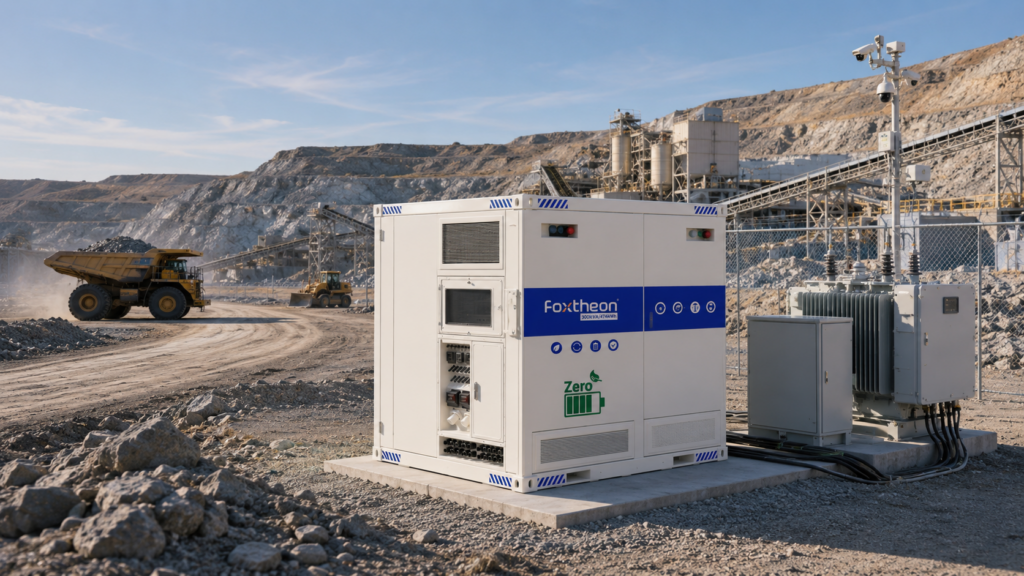
1. Classification and Operating Topologies of Standalone Generation Assets
Industrial isolated networks rely on primary energy conversion assets categorized into synchronous kinetic generation and asynchronous solid-state conversion. Achieving continuous power balance requires combining asynchronous renewable assets with synchronous assets to balance base loads, peak transients, and reactive power demands.
- Photovoltaic Generation: Solid-state conversion utilizing semiconductor junctions to generate direct current (DC). Generation fluctuates based on solar irradiance and thermal variance, requiring maximum power point tracking (MPPT) algorithms and bidirectional conversion stages.
- Synchronous Thermal Alternators: Internal combustion engines coupled with brushless, self-excited alternators. These machines provide real power alongside rotational inertia, which establishes the primary voltage and frequency reference in traditional multi-generator deployments.
- Aerodynamic Wind Conversion: Horizontal-axis wind turbines (HAWT) utilizing permanent magnet synchronous generators (PMSG) or doubly-fed induction generators (DFIG) to convert kinetic wind energy into variable AC power, rectified and inverted to match bus requirements.
- Electrochemical Energy Storage Systems (BESS): Bidirectional power reservoirs that buffer intermittent inputs, maintain system inertia via virtual synchronous generator (VSG) algorithms, and provide instantaneous dynamic response during step-load variations.
2. Semiconductor Physics and Photovoltaic Material Specifications
Selecting photovoltaic modules for severe or remote operating conditions requires looking closely at cell architectures, degradation coefficients, and structural properties to prevent premature field failures.
Heterojunction (HJT) vs. Tunnel Oxide Passivated Contact (TOPCon)
Standard P-type Passivated Emitter and Rear Cell (PERC) technology is largely being superseded by N-type architectures in heavy-duty commercial applications due to their superior temperature coefficients and reduced light-induced degradation (LID).
- N-Type TOPCon: Utilizes an ultra-thin silicon oxide layer combined with a doped polycrystalline silicon layer to passivate contacts. This reduces surface recombination velocity, resulting in mass-production cell conversion efficiencies exceeding 25.0%. TOPCon modules exhibit a temperature coefficient of power between -0.30%/°C and -0.32%/°C, maintaining performance in hot operating environments.
- Heterojunction Technology (HJT): Combines thin layers of amorphous silicon on both sides of an N-type monocrystalline silicon substrate. HJT delivers a temperature coefficient of -0.26%/°C and bifaciality factors up to 90%. The symmetrical cell structure eliminates Potential Induced Degradation (PID) and Light and Elevated Temperature Induced Degradation (LeTID), providing durable output in high-albedo terrain such as desert and mining environments.
Mechanical Reliability and Environmental Resistance Standards
Photovoltaic arrays configured within autonomous industrial systems must withstand severe atmospheric stresses:
- Bifacial Dual-Glass Architecture: Dual 2.0mm or 3.2mm semi-tempered glass encapsulations prevent moisture ingress, micro-cracking from heavy wind-shear loads (tested up to 5400 Pa static mechanical load), and chemical degradation from ammonia or saline exposure (IEC 61701 and IEC 62716 certifications).
- Encapsulant Material Selection: Polyolefin Elastomer (POE) encapsulants are preferred over standard Ethylene Vinyl Acetate (EVA) due to POE’s superior water-vapor transmission rate (WVTR) and resistance to acetic acid formation, which protects front-side metallization grids from corrosion.
3. Electrochemical Storage Topologies and Power Conversion Subsystems
Energy storage forms the backbone of modern off grid power sources, mitigating the intermittency of renewable generation and dampening high-inrush motor starts.
Lithium Iron Phosphate (LiFePO4) Cell Optimization
Industrial applications favor Lithium Iron Phosphate (LFP) chemistry due to its structural olivine crystal stability, high thermal runaway threshold (exceeding 270°C), and extended cycle life under deep-discharge conditions. Specialized systems engineered by Foxtheon utilize cell configurations rated for over 6,000 to 8,000 cycles at 80% Depth of Discharge (DoD) under controlled thermal parameters.
Thermal Management Architectures: Liquid Cooling vs. Forced Air
Maintaining balanced internal cell temperatures directly impacts battery pack longevity and capacity retention:
- Direct-to-Plate Liquid Cooling: Employs a closed-loop glycol-water coolant circulation circuit contacting aluminum cold plates integrated beneath or between cell groups. This architecture maintains cell-to-cell thermal deviation under 3°C across high C-rate charge/discharge cycles, preventing localized hot spots and uneven cell degradation.
- Forced Air Convection: Relies on high-static-pressure variable fans routed through internal enclosure ducting. While mechanically simpler, it often creates internal thermal gradients under high ambient temperatures, making liquid cooling the industry standard for high-capacity industrial installations.
| Parameter | Industrial LFP System | High-Density NMC System | Sodium-Ion (Na-ion) Emerging |
|---|---|---|---|
| Nominal Cell Voltage (V) | 3.2 V | 3.7 V | 3.0 – 3.1 V |
| Cycle Life (80% DoD, 25°C) | 6,000 – 8,000 Cycles | 2,500 – 4,000 Cycles | 3,000 – 5,000 Cycles |
| Thermal Runaway Onset | ~270°C | ~210°C | ~260°C |
| Low-Temp Performance (-20°C) | Requires internal pre-heating | Moderate capacity drop | Retains >85% discharge capacity |
| Optimal Operating Temperature | 15°C to 35°C | 15°C to 30°C | -10°C to 45°C |
Power Conversion System (PCS) Topologies and Grid-Forming Control
The PCS serves as the bidirectional link between DC electrochemical reserves and the site’s three-phase AC distribution bus. In standalone systems, inverters must operate in Grid-Forming (GFM) mode rather than traditional Grid-Following (GFL) mode.
- Virtual Synchronous Generator (VSG) Control: Implements active power-frequency ($P-f$) and reactive power-voltage ($Q-V$) droop algorithms to mimic the physical inertia and damping characteristics of a heavy rotating generator.
- Overload and Fault-Clearing Capacity: Industrial PCS units must deliver up to 150% rated current for short intervals (e.g., 10 to 30 seconds) and up to 200% for sub-cycle transients to supply magnetizing inrush current for step-up transformers and large inductive motor starters without tripping protective relays.
- Total Harmonic Distortion (THD): Advanced multi-level inverter topologies (such as 3-level NPC) paired with LCL output filters maintain voltage THD below 3% under linear loads and below 5% under non-linear industrial rectifier loads.
4. Hybrid Power Architecture and Dynamic Genset Synchronization
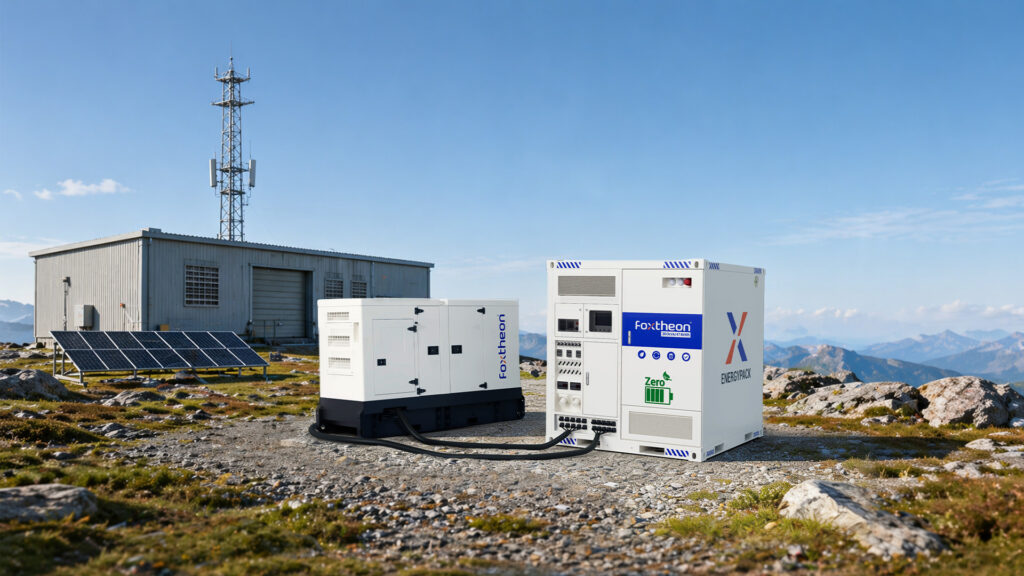
Modern microgrid engineering pairs existing internal combustion generators with renewable generation assets and energy storage to optimize operating efficiency across varying load conditions.
Rather than running generators continuously at low, inefficient output levels, integrated systems utilize high-performance off grid power sources to supply base loads and absorb demand swings. This setup allows synchronous generator sets to run within their optimal Brake Specific Fuel Consumption (BSFC) curve—typically between 70% and 85% of Maximum Continuous Rating (MCR). Operating within this window prevents engine issues like wet-stacking, incomplete fuel combustion, and carbon fouling on exhaust valves.
Sophisticated energy storage and power management solutions from Foxtheon interface directly with Deep Sea, ComAp, or Woodward generator controllers via Modbus TCP or CANbus protocols. This allows coordinated black-start capabilities, dynamic spinning reserve allocation, and reverse-power protection without interrupting power to the site.
5. Industrial Deployment Applications and Load Profiling
Implementing independent power systems requires tailoring system sizing to the specific operational demands of the deployment environment.
- Remote Mining and Mineral Extraction: Characterized by dynamic cyclical step-loads from ball mills, crushers, and submersible slurry pumps. Systems require high-rate discharge battery storage alongside grid-forming inverters to stabilize bus voltage and prevent generator stalls during heavy inductive motor starts.
- Telecom Transmission Hubs and Data Centers: Require continuous Tier-III/IV level power uptime (99.999% availability). These installations rely on modular N+1 or 2N redundant inverter designs and localized DC-bus distribution to feed DC telecommunication loads directly without intermediate conversion losses.
- Agricultural Micro-Irrigation and Processing: High seasonal peak demands driven by variable-frequency drive (VFD) pumping stations. Incorporating wide-input MPPT string inverters and solar PV generation supplies irrigation loads directly during peak daylight hours.
- Island Microgrids and Remote Communities: Variable residential and light commercial loads that require automated generator scheduling, seasonal battery reserve shifts, and dynamic load-shedding protocols to preserve essential services during cloudy or calm weather.
6. OEM and System Integrator Selection Criteria
Specifying enterprise-scale off grid power sources requires vetting manufacturing capabilities, engineering certifications, and hardware-software integration standards.
- Comprehensive System Certification: Ensure hardware complies with international engineering standards, including IEC 62933 (electrical energy storage systems), UL 9540/UL 9540A (thermal runaway fire propagation testing), IEEE 1547.4 (microgrid design and operation), and UN 38.3 (transportation testing for lithium batteries).
- Enclosure Protection and Anti-Corrosion Ratings: Outdoor enclosures should carry minimum ratings of IP55 or IP65, featuring C4 or C5-M anti-corrosion protective coatings (ISO 12944) for coastal or high-humidity industrial environments.
- Intelligent Energy Management System (EMS): The microgrid EMS should run localized deterministic edge control cycles (<10ms) capable of independent operation without relying on active cloud connectivity. It should support secure SCADA integration via standard protocols such as DNP3, IEC 60870-5-104, and Modbus TCP.
Working with an experienced technology partner like Foxtheon provides access to pre-engineered, modular energy storage systems and hybrid power stations configured to specific industrial load profiles.
Frequently Asked Questions
Q1: How do battery energy storage systems synchronize with legacy diesel generators in off grid setups?
A1: Synchronization is managed using grid-forming inverters and an intelligent Energy Management System (EMS). The EMS monitors the AC bus voltage, frequency, and phase angle. When integrating the generator, the system commands the genset controller to match these parameters across the bus before closing the motorized circuit breaker, preventing electrical and mechanical stress on the alternator.
Q2: What is the primary operational difference between grid-following and grid-forming inverters?
A2: Grid-following (GFL) inverters rely on an established AC voltage waveform provided by the utility or a rotating generator, using Phase-Locked Loop (PLL) circuits to inject synchronized current. In contrast, grid-forming (GFM) inverters establish the AC voltage and frequency reference themselves, acting as an independent voltage source that manages instantaneous load shifts and provides virtual inertia to the microgrid.
Q3: How do extreme ambient temperatures affect the selection of battery storage chemistries?
A3: Sub-zero temperatures reduce ion mobility in LFP electrolytes, requiring internal PTC heating jackets to safely warm cells before accepting high charge currents. In ambient temperatures exceeding 45°C, direct-to-plate liquid cooling systems are necessary to maintain cell core temperatures below 35°C, preventing accelerated solid electrolyte interphase (SEI) growth and capacity loss.
Q4: Why are N-type TOPCon and HJT solar modules preferred over conventional P-type PERC panels in remote microgrids?
A4: N-type cells feature lower temperature coefficients (down to -0.26%/°C), enabling higher energy harvest in high-temperature environments. They are also immune to boron-oxygen defect light-induced degradation (LID) and provide higher bifaciality factors (up to 85%-90%), which increases energy yield from ground reflection in open, arid terrain.
Q5: What mechanical and electrical safety systems are necessary for containerized LFP energy storage systems?
A5: Enterprise installations require multi-tier safety architectures compliant with UL 9540A. These include off-gas detection sensors (detecting CO, H2, and VOCs before thermal runaway), automated aerosol or Novec 1230 fire suppression systems, mechanical explosion-relief panels, and module-level electrical isolation switches to prevent fault propagation across DC battery racks.
Technical Specification and Project Inquiry
Engineering robust, custom-engineered off grid power sources requires precise analysis of operational single-line diagrams, duty cycles, and peak load parameters. Submit your detailed technical specifications below to initiate a load profiling and system configuration review with an application engineer.
| Specification Parameter | Project Requirement (Client Input) |
|---|---|
| Average Continuous Load (kW) & Peak Inrush (kVA) | [ Provide steady-state baseline and inductive peak loads ] |
| Existing Generation Assets | [ List current generator capacity, fuel type, and controller model ] |
| Renewable Resource Data | [ Site GPS coordinates, GHI solar irradiance, average wind speed ] |
| Distribution Bus Voltage & Frequency | [ e.g., 400V 3-Phase 50Hz / 480V 3-Phase 60Hz ] |
| Target Autonomy Duration (Hours/Days) | [ Required backup or zero-fuel operational runtime ] |