
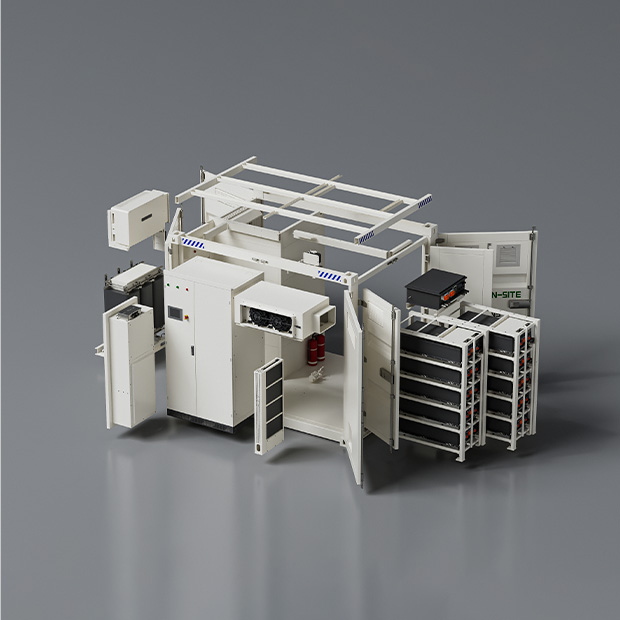
Modern electrical infrastructure demands unprecedented flexibility as heavy industrial facilities, data centers, and multi-megawatt campuses navigate fluctuating grid conditions, dynamic peak demands, and the integration of on-site generation assets. Within this framework, an industrial energy storage battery serves as a high-speed buffer, stabilizing internal distribution buses against frequency shifts, voltage sags, and transient load spikes.
Achieving system reliability requires an analytical approach to energy asset architecture. Rather than treating stationary storage as a monolithic asset, electrical engineers must evaluate electrochemical performance parameters, parasitic auxiliary loads, thermal mitigation pathways, and digital control integration. When engineered correctly, these multi-megawatt-hour assets harmonize distributed energy resources (DERs) to maintain industrial continuity.
Electrochemical Architectures: Cathode Selection for Stationary Storage
The operational lifespan and thermodynamic stability of stationary systems depend largely on cathode chemistry. While consumer electronics and specific transport segments rely on high-energy-density nickel-based chemistries, stationary industrial platforms prioritize cycle life, structural integrity under high ambient temperatures, and predictable thermal behavior.
Lithium Iron Phosphate (LFP) Dominance
Lithium Iron Phosphate ($\text{LiFePO}_4$) has become the benchmark standard for stationary industrial deployments. The phospho-olivine crystal structure possesses strong covalent P-O bonds, preventing structural collapse and oxygen release at elevated cell temperatures. Key operational characteristics include:
- Extended Cycling Profile: LFP cells regularly maintain 6,000 to 8,000 cycles at 80% Depth of Discharge (DoD) under nominal 0.5C charge and discharge rates before capacity fades to 70% of initial rating.
- Chemical Stability: The threshold for internal exothermic decomposition typically sits above 270°C, significantly higher than nickel-rich formulations.
- Thermal Dissipation Profile: Lower internal resistance ($\text{m}\Omega$) translates into reduced heat generation during sustained discharge intervals, limiting thermal stress on pack-level components.
Emerging Sodium-Ion and Alternative Chemistries
Sodium-ion ($\text{Na-ion}$) technologies are emerging as an auxiliary stationary solution, specifically in regions subject to extreme sub-zero ambient conditions where traditional lithium intercalation mechanisms encounter severe performance penalties. Operating across broader temperature windows without relying on restricted minerals, $\text{Na-ion}$ delivers lower energy density by volume but provides operational resilience in unconditioned remote yards. Detailed comparative analyses published by the National Renewable Energy Laboratory (NREL) continue to define the boundaries between energy density and spatial footprint requirements across both chemistries.
Thermal Management Architectures: Liquid Cooling vs. Forced Air
Electrochemical aging correlates directly with cell temperature uniformity. Operating stationary storage assets outside optimal thermal bands accelerates solid electrolyte interphase (SEI) growth, induces mechanical stress via uneven particle expansion, and causes module-level capacity mismatch. Consequently, selecting an appropriate cooling medium is an indispensable engineering decision.
Forced-Air Convection Systems
Early containerized designs relied heavily on high-volume heating, ventilation, and air conditioning (HVAC) ducting. While simple to install, air cooling presents significant fluid dynamics challenges:
- Thermal Gradients: Air exhibits a relatively low specific heat capacity ($C_p \approx 1.005 \text{ kJ/kg}\cdot\text{K}$). As air passes through dense battery racks, convective cooling diminishes, leaving rear cells running 5°C to 10°C hotter than inlet cells.
- Auxiliary Parasitic Loss: High-static-pressure blowers consume substantial power, reducing round-trip efficiency (RTE) over the full annual lifecycle.
Direct-to-Cold-Plate Liquid Cooling
Modern high-density platforms deploy closed-loop hydronic systems using an inhibited water-glycol mixture circulating through aluminum cold plates embedded directly beneath or between cell groups. Specialized providers like Foxtheon engineer integrated liquid thermal loops to keep temperature variance between individual cells within a narrow $\pm 2^\circ\text{C}$ range across dynamic charge-discharge profiles.
Liquid cooling provides superior thermal transport coefficients, reducing cooling-related auxiliary energy consumption while extending overall pack life. Furthermore, direct contact plates isolate cells from external humidity, particulate ingress, and salt-fog contamination, ensuring maximum protection for harsh industrial and maritime environments.
BMS and PCS: The Electrical and Digital Nervous System
A dependable energy storage battery relies on synchronous interaction between the internal Battery Management System (BMS) and the external Power Conversion System (PCS). These layers ensure balance across thousands of individual cells while stabilizing interface points with site switchgear.
Hierarchical Battery Management Systems (BMS)
The BMS topology typically follows a three-tier architecture:
- Slave / Cell Monitoring Units (CMU): Attached directly to cell tap lines to measure voltage down to millivolt accuracy and log localized thermistor inputs at microsecond sampling rates.
- String / Rack Management Units (BMU): Aggregates CMU data, executes active or passive cell balancing routines, and monitors string-level DC shunt current and insulation resistance.
- Master System Controller: Coordinates multi-rack arrays, calculates dynamic State of Charge (SoC) and State of Health (SoH) via Kalman filtering algorithms, and dictates immediate charge/discharge current limits to the upstream inverter.
Power Conversion System (PCS) Topologies
The PCS serves as the bidirectional bridge between DC battery strings and the three-phase AC distribution network. In modern industrial microgrids, grid-forming (GFM) inverters are preferred over standard grid-following (GFL) topologies. While GFL inverters rely on a reference voltage angle supplied by the utility or a rotating generator, GFM units establish an internal voltage vector, synthesizing virtual inertia through droop control curves ($\text{P-f}$ and $\text{Q-V}$).
This dynamic capability allows an industrial energy storage battery to provide sub-cycle synthetic inertia and rapid black-start capabilities, stabilizing common industrial buses without causing phase displacement across parallel operating equipment.
Co-Location Architecture: Synchronous Generation and Stationary Storage
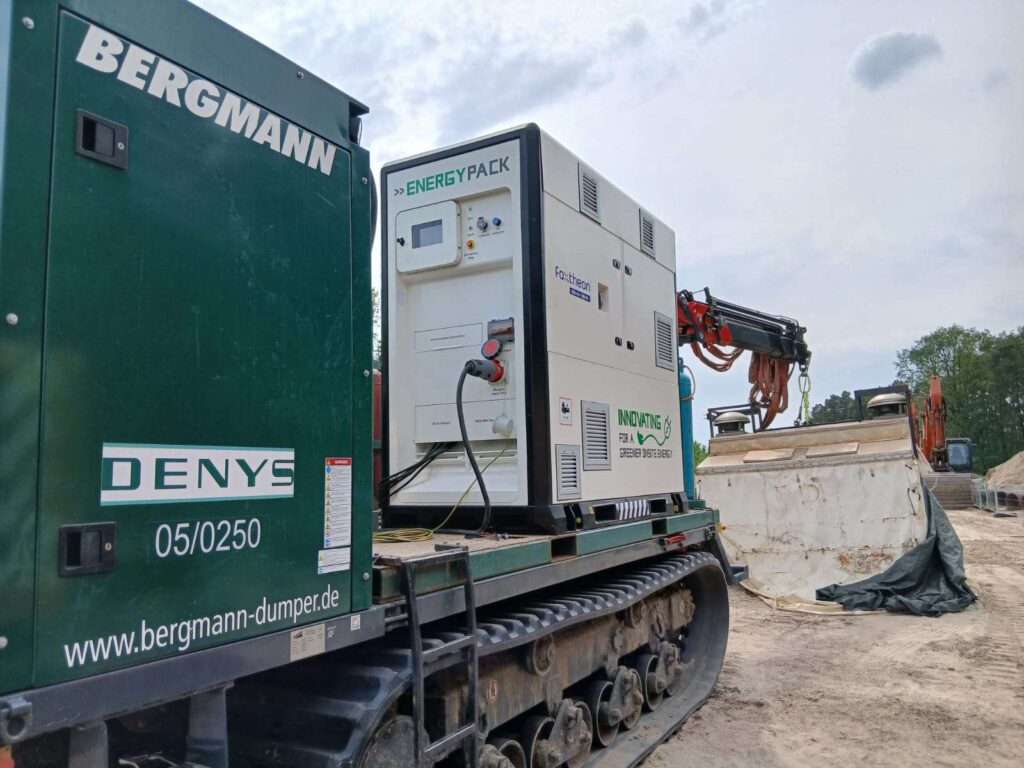
Rather than replacing installed site infrastructure, modern storage configurations are designed to optimize legacy systems. In high-demand manufacturing, processing plants, and mining outposts, large rotating equipment like diesel and natural gas reciprocating engine-generators provide baseline continuous prime power. Integrating an intermediate stationary storage asset dramatically improves the operating efficiency of these thermal units.
Dynamic Peak Shaving and Spinning Reserve Optimization
Reciprocating generators experience mechanical wear, accelerated soot formation, and elevated emissions when operating below their minimum stable loading threshold (often 30% to 40% of rated capacity) or during sudden step-load transients. By coupling an energy storage battery directly to the facility’s medium-voltage bus, plant engineers configure the battery to act as an instantaneous spinning reserve.
When high-inertia inductive loads—such as large crushers, chillers, or arc welding banks—cycle on, the battery system injects instantaneous active power within milliseconds. This step-response capability protects rotating generators from severe frequency excursions, allowing them to ramp up smoothly along their optimal brake-specific fuel consumption (BSFC) curves. Advanced control software configurations from firms like Foxtheon enable seamless parallel operation, minimizing mechanical stress on generator drivetrains and prolonging overhaul intervals for existing plant infrastructure.
Industrial Supplier Qualification and Testing Standards
Procuring utility-scale or heavy industrial storage systems requires strict adherence to international safety, performance, and communications frameworks. Enterprise buyers must verify compliance documentation early in the engineering review process.
Standardization and Safety Directives
Stationary systems must undergo comprehensive physical and electrical abuse testing to eliminate operational hazards. Key baseline standards include:
- IEC 62619: Outlines safety requirements for secondary lithium cells and batteries utilized in industrial applications, specifying testing for drop impacts, internal short circuits, and thermal abuse. The formal testing protocols can be referenced via the International Electrotechnical Commission.
- UL 9540A: Standard Test Method for Evaluating Thermal Runaway Fire Propagation in Battery Energy Storage Systems. This evaluates runaway propagation at cell, module, unit, and installation levels to guide passive barrier and deflagration venting designs.
- IEEE 1547: Standard for Interconnection and Interoperability of Distributed Energy Resources with Associated Electric Power Systems Interfaces, establishing steady-state and transient response baselines. Further engineering literature on distributed interface dynamics is documented through IEEE Xplore.
Cell Matching and Balance Metrics
High-tier manufacturing quality is evident in internal matching tolerances. Suppliers must document minimal deviations in initial cell capacity ($\Delta C \le 1\%$) and alternating current internal resistance ($\Delta \text{ACIR} \le 2\%$). Tight factory binning minimizes string balancing duration, maximizes accessible capacity, and preserves system efficiency throughout the multi-year lifecycle of the energy storage battery installation.
Procurement and Integration Verification Protocol
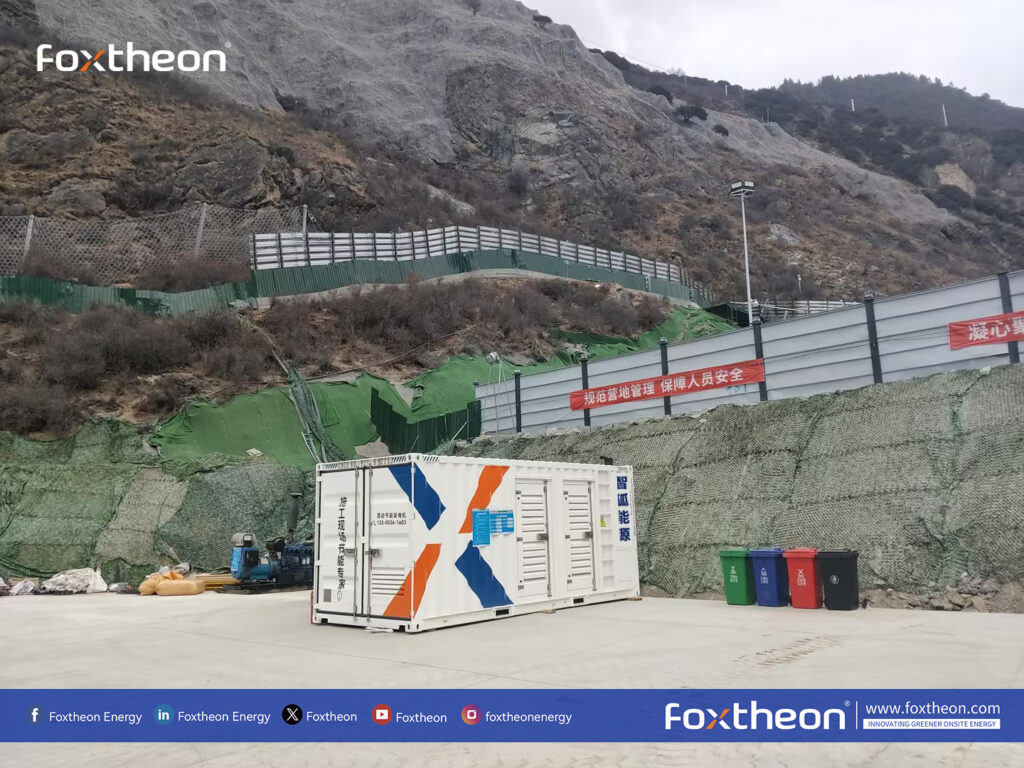
Deploying large-scale stationary assets involves detailed factory acceptance testing (FAT) and commissioning run-throughs. The integration checklist below outlines essential verification phases for industrial applications:
- Phase 1: Pre-Shipment Inspection: Factory acceptance testing covering continuous C-rate discharge capacity, balance of plant (BOP) auxiliary current draws, and high-voltage insulation tests up to 2.5 kV DC.
- Phase 2: Mechanical and Fire Isolation Verification: Verification of NFPA 68-compliant deflagration panels, aerosol or water-mist fire suppression hookups, and multi-sensor gas detection units (monitoring $\text{H}_2$, $\text{CO}$, and VOC off-gassing).
- Phase 3: Communication Protocol Handshakes: Verification of low-latency Modbus TCP/IP, DNP3, or IEC 61850 interfaces between the BMS master controller, the site SCADA, and the overall plant energy management system (EMS).
- Phase 4: Site Acceptance and Droop Testing: Real-world microgrid islanding validation, step-load injection tests, and automated synchronization checkouts between the energy storage battery and local generation units.
Through systematic adherence to these rigorous integration standards, system designers implement reliable, enterprise-grade energy infrastructure that satisfies both internal operational benchmarks and external utility interconnection mandates. Working with engineering innovators such as Foxtheon ensures that equipment architectures align directly with long-term site stability, continuous power quality requirements, and complex industrial operational parameters.
Frequently Asked Questions
Q1: What distinguishes an industrial-grade energy storage battery from residential or utility-scale variants?
A1: Industrial-grade systems prioritize high cycle durability, superior short-circuit withstand ratings, robust thermal management (typically liquid cooling), and modular field maintenance access. They are engineered to interface directly with industrial bus voltages (typically 480V to 13.8kV via transformers) and handle severe inductive step loads from heavy machinery, requiring faster response times and more durable balance-of-plant components than standard residential or light-commercial units.
Q2: How does cell balancing improve performance in multi-rack containerized setups?
A2: Because total string output is constrained by the weakest cell during discharge and the highest cell during charge, small variances in cell degradation lead to usable capacity loss. Active balancing redistributes energy from higher-charge cells to lower-charge cells across the string, while passive balancing bleeds excess charge via resistors. Proper balancing maximizes usable capacity and prevents individual cells from exceeding high-voltage or low-voltage cut-offs prematurely.
Q3: What role does an energy storage battery play in parallel with existing thermal generators?
A3: The storage asset acts as an instantaneous dynamic load buffer. It absorbs rapid transient loads and dampens harmonics, eliminating the need for thermal generators to constantly adjust output to match high-frequency fluctuations. This stabilizes overall bus voltage and frequency, prevents engine underloading, and allows generation assets to run within their optimal efficiency windows without bearing the mechanical strain of sharp load steps.
Q4: Why is UL 9540A testing preferred by fire protection authorities over standard factory tests?
A4: UL 9540A is not a simple pass/fail certification; it is an extensive fire and thermal runaway testing methodology that collects quantitative data on heat release rates, flammable gas generation, and fire spread across adjacent cells, modules, and full racks. This empirical data enables facility safety directors, structural engineers, and local authorities having jurisdiction (AHJs) to design appropriate sprinkler flows, deflagration venting, and spacing configurations for the facility.
Q5: What communications latency is necessary for microgrid frequency support?
A5: For fast frequency response (FFR) and synthetic inertia, system communication and inverter processing loops must respond within 20 to 100 milliseconds. This typically requires direct hardwired I/O or deterministic protocols like EtherCAT or high-speed Modbus TCP/IP, ensuring the power conversion system can rapidly modulate real power output to arrest frequency variations before primary mechanical governors can react.
Technical Specification Inquiries
Submit electrical single-line diagrams (SLD), site load duration profiles, and interconnection requirements directly to our engineering team for detailed system modeling and capacity configurations:
Technical Application Support: inquiry@foxtheon.com
Global Infrastructure Engineering Portal: https://www.foxtheon.com/