
The transition toward decentralized power grids and the rising integration of intermittent renewable energy sources have introduced new operational challenges for commercial and industrial (C&I) facilities. Voltage fluctuations, peak demand surcharges, and power quality degradation require sophisticated local infrastructure to stabilize power distribution. Implementing a commercial-grade bess solution provides the required buffering capacity to manage these load variations and support stable microgrid operations.
This technical analysis examines the engineering parameters, electrochemical selections, integration methodologies, and structural designs that define modern battery storage installations. By understanding these systems at a component level, utility engineers and facility managers can make informed decisions regarding procurement, system sizing, and integration with existing energy assets.
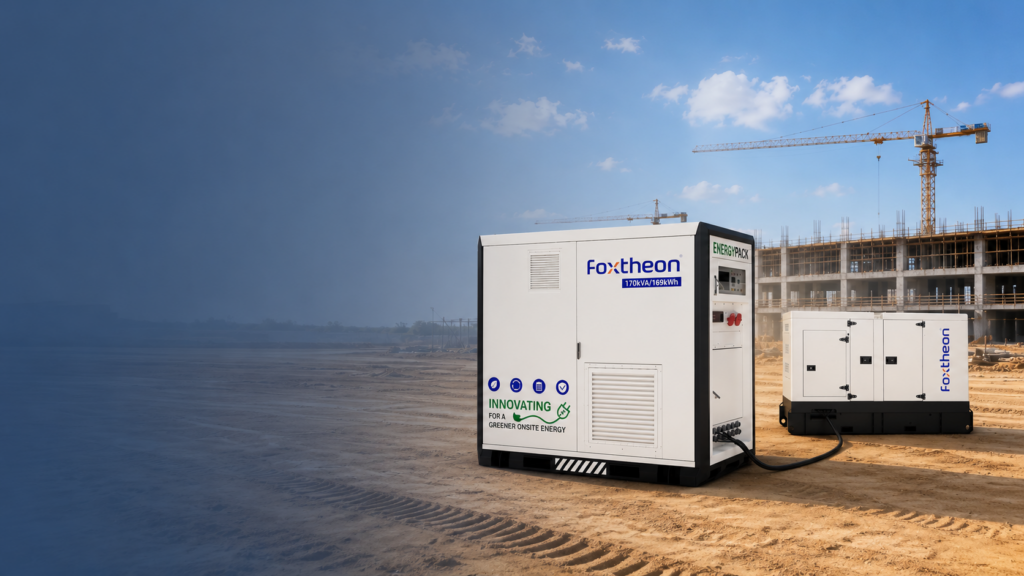
Addressing Contemporary Industrial Power Demands
Modern industrial operations face a complex energy environment characterized by volatile utility rates and strict power quality requirements. Facility managers must mitigate high peak-demand charges while maintaining continuous operations during grid disruptions. These operational challenges demand solutions that do not simply replace existing power infrastructure, but rather enhance overall system efficiency.
Integrating battery energy storage alongside existing assets allows for refined load management. Rather than operating thermal generators at low, inefficient loads during periods of minor demand variance, a battery system can handle the transient load spikes. This cooperative model allows existing generators to run at their optimal thermal efficiency, reducing soot accumulation, minimizing wear, and extending maintenance intervals. Advanced integrated systems developed by Foxtheon allow facilities to achieve this operational balance without necessitating a complete overhaul of their legacy electrical installations.
Furthermore, the integration of onsite solar photovoltaics (PV) introduces intermittency. Solar generation curves rarely align with the peak consumption profiles of manufacturing facilities. Local storage captures excess solar production during midday peaks and redistributes that energy during high-tariff evening periods, mitigating reverse power flow issues at the utility coupling point.
Technical Anatomy of a Modern Battery Storage System
To understand how energy storage stabilizes power systems, it is necessary to examine the primary hardware and software components that govern its operation. A commercial-grade storage installation is not merely a collection of cells; it is an integrated system of electrochemical, power electronic, and thermal management technologies.
Electrochemical Cell Chemistry
The selection of battery chemistry dictates the thermal envelope, cycle life, and discharge characteristics of the system. While various chemistries exist, two lithium-ion variations dominate the commercial sector:
- Lithium Iron Phosphate (LFP / LiFePO4): Known for high thermal stability, safety, and a long lifecycle (often exceeding 6,000 cycles at 80% Depth of Discharge). LFP is highly resistant to thermal runaway, making it the preferred choice for stationary industrial applications where space is available for slightly lower volumetric energy density.
- Nickel Manganese Cobalt (NMC): Offers higher energy density but possesses a lower thermal runaway threshold and a shorter cycle life under high-rate discharge conditions compared to LFP. NMC is utilized when physical footprint limitations are extremely restrictive.
The operational lifespan of a heavy-duty bess solution depends heavily on maintaining these cells within their designated temperature boundaries, making battery chemistry selection a fundamental design decision.
Power Conversion System (PCS)
The PCS consists of bidirectional inverters that manage the transfer of power between the direct current (DC) battery racks and the alternating current (AC) grid or facility distribution bus. Key engineering specifications for the PCS include:
- Response Time: Millisecond-level transition from charging to discharging, which is vital for uninterruptible power supply (UPS) capabilities.
- Grid-Forming vs. Grid-Following Capabilities: Grid-forming inverters can establish a local voltage and frequency reference during a grid blackout, enabling islanded microgrid operation. Grid-following inverters synchronize with an existing external utility signal.
- Harmonic Distortion Control: High-quality filter circuits within the PCS ensure that the AC output maintains low total harmonic distortion (THD), protecting sensitive downstream industrial machinery.
Battery and Energy Management Systems (BMS & EMS)
Control architecture operates on a multi-tiered hierarchy. At the lowest level, the BMS monitors individual cell parameters, such as voltage, temperature, and internal resistance. It prevents overcharging, over-discharging, and cell imbalance. Designing a resilient bess solution involves selecting the correct BMS protocol to interface with the higher-level EMS.
The EMS acts as the system intelligence, coordinating the battery, renewable generation assets, thermal generators, and building loads. The EMS utilizes predictive algorithms to schedule charging during low-tariff hours and discharging during peak demand periods, optimizing overall energy procurement.
Key Application Scenarios in Commercial and Industrial Sectors
Industrial applications present diverse load profiles that require customized configurations. Designing storage installations around specific applications ensures optimal asset utilization.
Peak Shaving and Demand Charge Mitigation
Many commercial utility tariffs include heavy demand charges based on the single highest fifteen-minute power consumption peak recorded during the billing cycle. By deploying energy storage to discharge during these brief high-load periods, facilities can flatten their demand curve. This process lowers monthly utility expenses without requiring operational downtime or shifts in production schedules.
Microgrid Integration and Islanding
In remote industrial sites, mining operations, or regions with unstable utility grids, local microgrids maintain operational continuity. Integrating an advanced bess solution with legacy microgrids provides grid stabilization, frequency regulation, and voltage support. The battery acts as a dynamic shock absorber, balancing the immediate power deficits that occur when heavy motor loads cycle on or when cloud cover reduces solar PV output.
In these configurations, manufacturers like Foxtheon provide standardized modules that simplify communication protocols between the storage assets and legacy PLC (Programmable Logic Controller) systems, ensuring stable control loops.
EV Fleet Charging Support
As logistics centers transition to electric delivery fleets, the installation of multiple DC fast chargers can overwhelm local sub-station capacities. Integrating a stationary battery system allows the facility to buffer energy from the grid at a low, continuous rate and discharge it rapidly into the fleet vehicles when they dock for charging, preventing localized grid overloads.
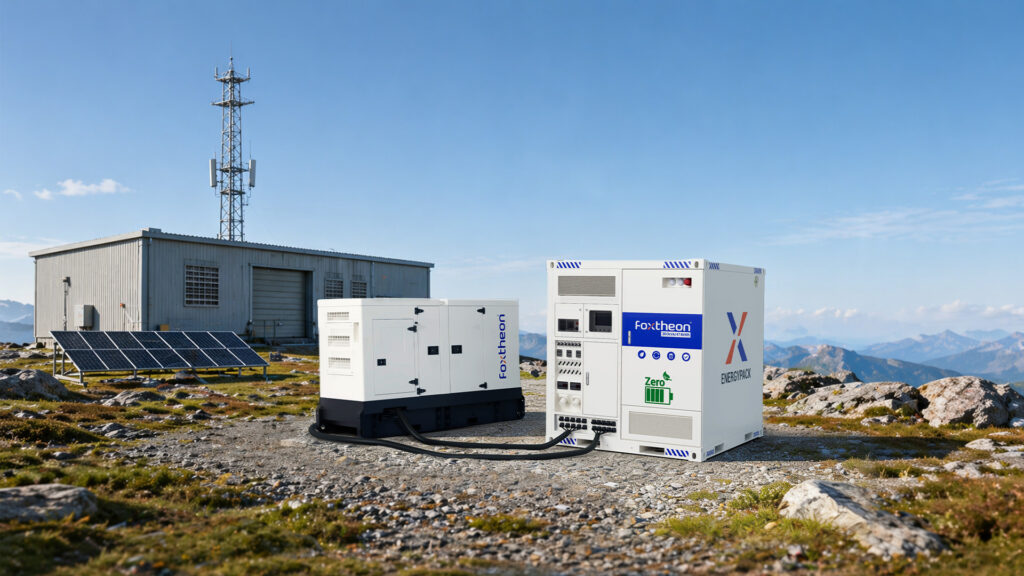
Materiality, Structural Design, and Environmental Management
Physical protection of the electrochemical cells determines the system’s safety and operational lifespan. Outdoor installations must withstand variable weather conditions, seismic activity, and external fire threats.
| Structural Component | Standard Engineering Specification | Primary Engineering Objective |
|---|---|---|
| Enclosure Rating | IP55 / NEMA 3R or NEMA 4 | Prevents ingress of dust, moisture, and windblown rain in outdoor environments. |
| Corrosion Protection | C5-M coating standard | Protects metal panels in coastal, marine, or highly industrial chemical environments. |
| Thermal Management | Liquid cooling with glycol-water loop | Maintains uniform temperature across all cells, minimizing differential degradation. |
| Fire Suppression | NFPA 855 compliant, Novec 1230 / Aerosol | Provides early-stage detection and active containment of thermal runaway risks. |
The core benefit of a containerized bess solution lies in its modularity. Thermal management has evolved from basic HVAC air cooling to sophisticated liquid cooling plates that contact individual cell modules. Liquid cooling provides higher thermal conductivity, resulting in smaller temperature deltas between cells (typically kept under 3 degrees Celsius). This uniform temperature profile prevents uneven cell degradation, which can cause premature pack-level failure.
Supplier Evaluation and Integration Methodology
Deploying a large-scale energy storage system requires thorough planning, engineering design, and testing. Purchasing teams must look beyond initial hardware costs and evaluate suppliers on engineering capabilities, certification compliance, and integration support.
Industrial operators often consult specialized developers such as Foxtheon to conduct feasibility studies and sizing simulations. Key certification standards that suppliers must meet include:
- UL 1973: Standard for Batteries for Use in Stationary, Vehicle Auxiliary Power and Light Rail Applications.
- UL 9540: Standard for Safety of Energy Storage Systems and Equipment.
- UL 9540A: Test Method for Evaluating Thermal Runaway Fire Propagation in Battery Energy Storage Systems.
- IEC 62619: Safety requirements for secondary lithium cells and batteries for use in industrial applications.
Commissioning a scalable bess solution requires meticulous calculation of round-trip efficiency (RTE), auxiliary power consumption (parasitic loads from cooling and control systems), and expected battery degradation rates under specific charge/discharge profiles. Collaboration with engineering partners such as Foxtheon ensures that communications protocols, such as Modbus TCP/IP or DNP3, integrate seamlessly with the site’s existing SCADA (Supervisory Control and Data Acquisition) system.
Enhancing System Lifetime Through Preventive Maintenance
Deploying energy storage represents a long-term investment that requires systematic lifecycle management. Over time, all lithium-ion chemistries experience capacity fade due to chemical degradation, solid electrolyte interphase (SEI) growth, and mechanical stress within the electrodes. To counteract these natural processes, facility operators must implement structured preventative maintenance plans.
Continuous diagnostic monitoring represents a major advance in maintaining the longevity of a multi-megawatt bess solution. Modern management platforms collect high-frequency data on cell voltage, temperature gradients, and impedance. When the software detects a cell deviating from the pack average, it alerts maintenance personnel to perform balancing operations before localized thermal stress causes permanent capacity loss. Periodic torque checks on electrical busbars, fluid level inspections in liquid cooling loops, and calibration of fire detection sensors further guarantee safe, continuous operation over the lifetime of the installation.
Frequently Asked Questions
Q1: What is the primary difference between LFP and NMC chemistries in industrial battery storage?
A1: LFP (Lithium Iron Phosphate) offers superior thermal stability, safety, and a longer cycle life (often exceeding 6,000 cycles), making it highly suitable for stationary applications. NMC (Nickel Manganese Cobalt) has higher energy density but lower thermal runaway thresholds and a shorter lifecycle under heavy industrial use profiles.
Q2: How does battery energy storage integrate with existing diesel generators?
A2: The battery system integrates at the AC busbar level. Controlled by an EMS, the battery manages transient load spikes and dynamic changes, allowing diesel generators to run continuously at their most efficient operating points rather than fluctuating inefficiently to follow minor load variations.
Q3: What certifications are required for deploying a commercial battery storage system in industrial zones?
A3: Key safety and performance standards include UL 1973 (for battery packs), UL 9540 (for the complete energy storage system), UL 9540A (for thermal runaway propagation testing), and IEC 62619 (for safe industrial operation). Local grid codes and NFPA 855 standards for fire protection also apply.
Q4: Why is liquid cooling preferred over air cooling in modern containerized systems?
A4: Liquid cooling provides significantly higher heat transfer coefficients than air. This allows the system to maintain a highly uniform temperature distribution across all cells (typically within a 3°C variance), which prevents localized cell degradation and extends the overall operating life of the battery pack.
Q5: What is the role of the Energy Management System (EMS) in peak shaving?
A5: The EMS monitors the facility’s real-time grid consumption. When the demand approaches a predefined threshold, the EMS commands the battery to discharge power, capping the grid draw. During off-peak hours, the EMS schedules the battery to recharge from the grid or local renewable sources at lower rates.
Inquiry
For technical consultations, detailed engineering documentation, or to request a system sizing evaluation for your facility’s energy storage requirements, please submit your project specifications, including your average load profiles, existing generation assets, and targeted applications, to our technical support desk.