
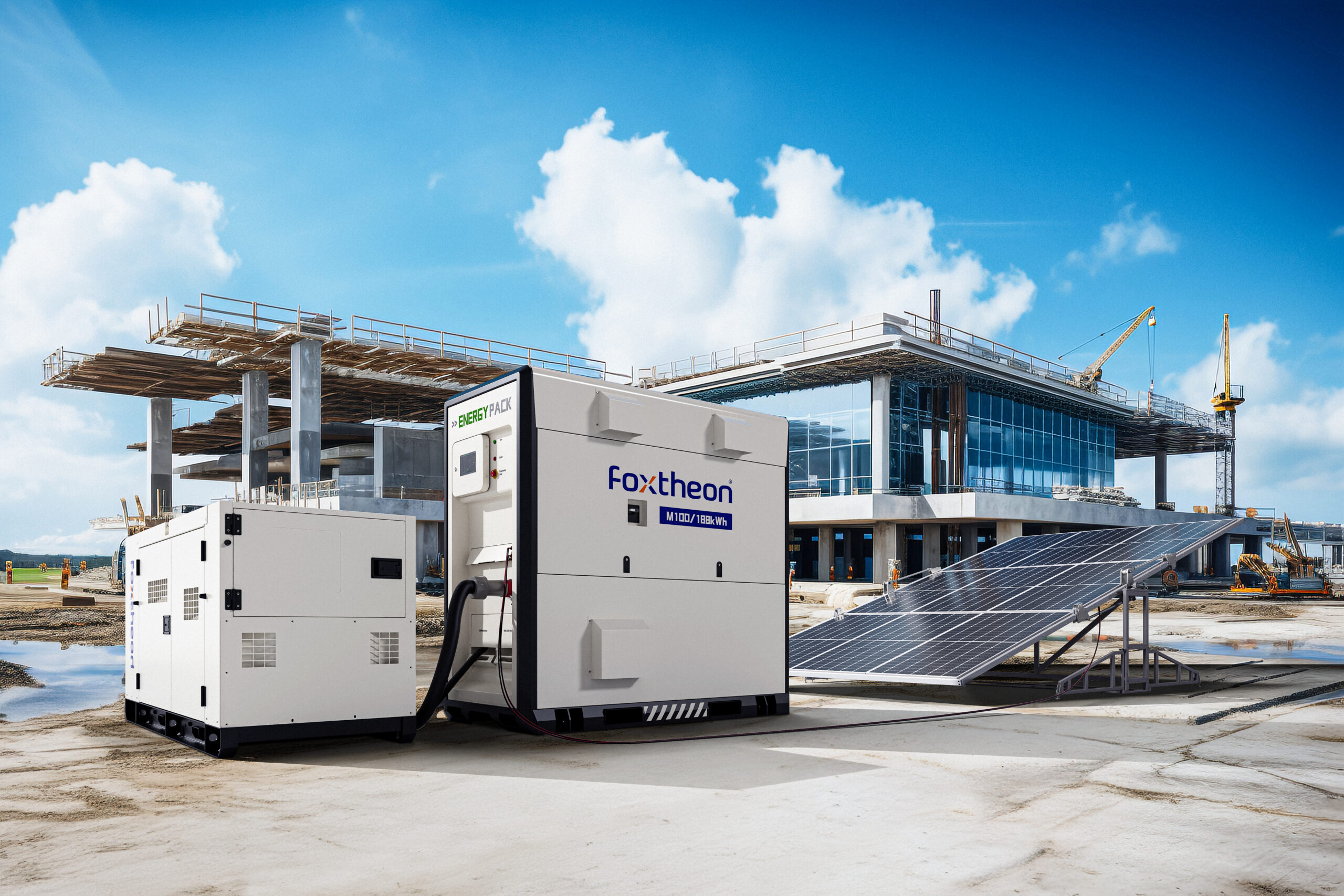
Industrial isolated networks—such as remote mining operations, island utilities, agricultural processing nodes, and heavy industrial facilities operating beyond main utility boundaries—require absolute power reliability. Supplying stable voltage and frequency in autonomous grids presents distinct electro-mechanical challenges that standard grid-tied setups do not encounter. Integrating high-capacity off grid energy storage has shifted from an experimental approach to a standardized engineering methodology for microgrid stabilization, thermal asset optimization, and autonomous power distribution.
Electrochemical Core: Chemistry Selection and Cell-Level Architecture
The foundation of any stationary storage infrastructure rests on cell chemistry and system-level thermal management. In off-grid environments where auxiliary maintenance infrastructure is sparse, cycle durability, thermal runaway resistance, and round-trip efficiency (RTE) dictate continuous operational availability.
Lithium Iron Phosphate (LiFePO4) Dominance
Lithium Iron Phosphate (LFP) remains the baseline chemistry for heavy industrial storage due to its structural stability under extended thermal conditions. The phospho-olivine crystal structure prevents oxygen release at elevated internal temperatures, inherently minimizing the thermal runaway thresholds seen in Nickel Manganese Cobalt (NMC) chemistries. Typical technical parameters for utility-grade LFP cells include:
- Nominal Cell Voltage: 3.2V per cell.
- Cycle Life: 6,000 to 10,000 cycles at 80% Depth of Discharge (DoD) under 0.5C charge/discharge regimes.
- Electrochemical Stability: Thermal runaway onset temperature exceeding 270°C.
- Cell Consistency Metrics: Internal resistance variance restricted to under 0.05 mΩ and open-circuit voltage (OCV) delta held within 2 mV across a standard pack assembly.
Thermal Management: Liquid Cooling vs. Forced-Air Architectures
Thermal gradients across battery racks accelerate cell degradation and cause capacity imbalances that trigger premature Battery Management System (BMS) cut-offs. High-performance installations increasingly deploy closed-loop liquid cooling plates integrated directly into cell modules. Liquid cooling provides:
- Uniform cell-to-cell temperature deltas within 2°C to 3°C, compared to 5°C to 8°C in conventional forced-air HVAC enclosures.
- Reduced parasitic auxiliary power consumption by up to 30%, preserving net stored capacity for base loads.
- Extended operational viability in extreme ambient temperatures ranging from -30°C to +55°C without derating the C-rate capability.
Power Conversion Systems (PCS) and Grid-Forming Control Topologies
In the absence of a stiff macro-grid, the inverter topology serves as the primary system reference for voltage magnitude and operational frequency.
Grid-Following vs. Grid-Forming Modes
Traditional grid-tied inverters operate in grid-following (GFL) mode, utilizing Phase-Locked Loops (PLL) to synchronize their output current to an existing voltage waveform established by spinning mechanical generators. When deployed within an isolated network, high penetration of GFL inverters causes harmonic instability and rapid frequency deviations whenever major dynamic loads kick in.
To overcome this, contemporary off grid energy storage deployment utilizes grid-forming (GFM) inverters. Operating as Virtual Synchronous Machines (VSM), GFM units regulate the AC bus voltage vector directly:
- Voltage Source Behavior: The PCS acts as a low-impedance AC voltage source behind a transient reactance, maintaining instantaneous frequency stability via virtual inertia algorithms ($J$).
- Droop Control Integration: Active power-frequency ($P-f$) and reactive power-voltage ($Q-V$) droop slopes govern proportional load sharing without inter-inverter high-speed communication lines.
- Fault Current Contribution: Modern GFM inverters are engineered to inject up to 200% nominal current for short windows (typically 1 to 3 seconds) to clear downstream distribution breaker faults and handle inductive motor inrush currents.
DC-Coupled vs. AC-Coupled Architectures
Topological selection dictates distribution efficiency, system expansion complexity, and redundancy profiles:
- AC-Coupled Microgrids: Photovoltaic arrays, storage blocks, and generators tie together on a centralized AC busbar (e.g., 400V, 480V, or medium-voltage 11kV/33kV). This is standard for brownfield retrofits and distributed setups across wide geographical sites, facilitating straightforward asset integration.
- DC-Coupled Microgrids: Renewable arrays interface via Maximum Power Point Tracking (MPPT) buck/boost regulators directly into a centralized DC bus (typically 800V to 1500V), feeding a unified central PCS. This configuration increases conversion efficiency by eliminating multiple DC-AC-DC conversion stages.
Hybridization with Existing Synchronous Generator Infrastructure
Autonomous industrial microgrids frequently rely on reciprocating diesel, heavy fuel oil (HFO), or natural gas generator sets as baseline prime power assets. Integrating advanced off grid energy storage optimizes these thermal generation assets without requiring their complete decommission or discarding established distribution investments.
Mitigating Low-Load Operation and Wet Stacking
Internal combustion generators running at loads below 30% to 40% of their continuous rating suffer from incomplete combustion, carbon buildup, and unburned fuel entering the exhaust system—a condition termed “wet stacking.” This operational state drastically increases maintenance cycles and reduces engine operational lifespan.
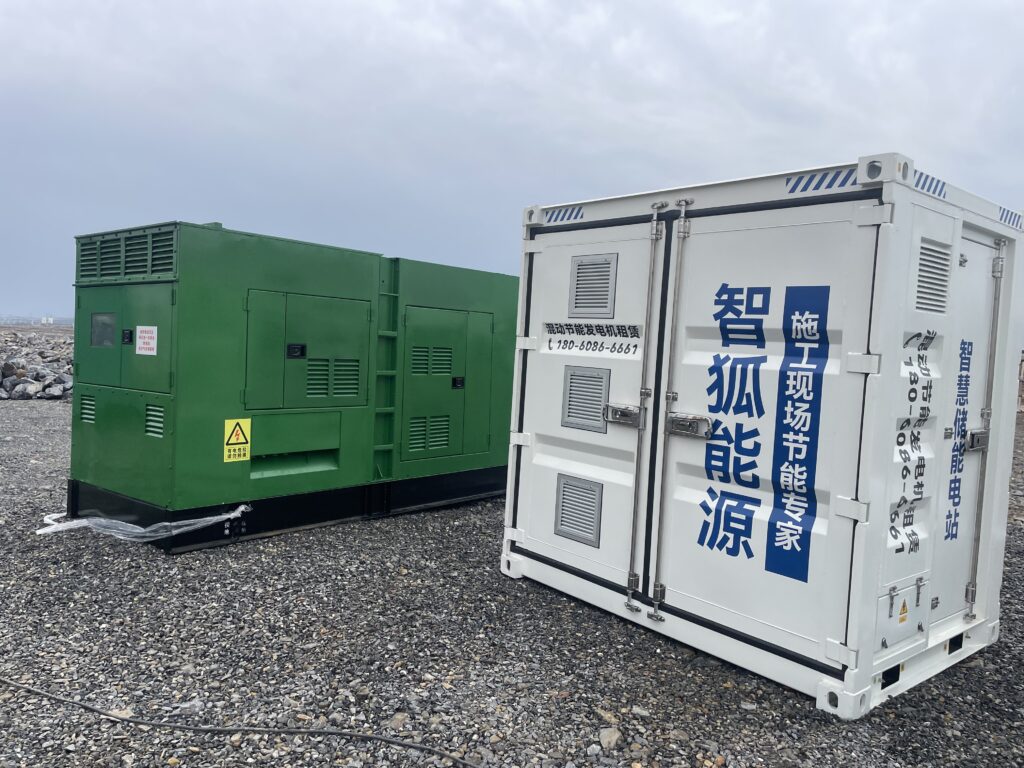
A hybrid storage system, orchestrated by manufacturers such as Foxtheon, operates in dynamic balance with genset controllers. The battery absorbs excess generation during light system load periods, keeping the generator loaded at its optimal fuel-efficiency band (typically 75% to 85% MCR). Once the battery reaches designated capacity thresholds, the power management system commands a clean generator shutdown, seamlessly transferring the entire baseline load to the storage system without interruptive phase shifts.
Dynamic Load-Step Absorption and Spinning Reserve
Starting large inductive loads (such as ball mills, high-capacity crushers, or heavy chillers) induces massive transient real and reactive power surges. Traditional configurations require running surplus generators simply as spinning reserve to absorb these transient steps.
- The fast response of the storage PCS (sub-20 millisecond response time) instantaneously provides the dynamic current step.
- Thermal engines are protected from aggressive thermal stresses, mechanical frequency dips, and turbocharger lag.
- The total running engine capacity can be dialed back to match actual base demand rather than peak transient sizing criteria.
Energy Management System (EMS) Architecture and Control Protocols
The Energy Management System (EMS) serves as the supervisory intelligence layer managing power flows, state of charge (SoC) balance, and islanded stability mechanisms.
Hierarchical Microgrid Control
Modern microgrid architectures divide control functions into three discrete tiers:
- Primary Control (Sub-millisecond): Local inverter droop responses, inner current loops, and voltage regulation executed directly on the digital signal processors (DSP) of the PCS.
- Secondary Control (Milliseconds to Seconds): Restoration of steady-state voltage and frequency nominal setpoints, harmonic active filtering, and dynamic power routing coordinated through deterministic fieldbus protocols such as CANopen or Modbus TCP.
- Tertiary Control (Minutes to Hours): Dispatch optimization, generator scheduling based on runtime tracking, and load prioritization via industrial interfaces (IEC 61850, DNP3, or OPC-UA).
Engineered platforms by Foxtheon implement advanced adaptive droop algorithms within the supervisory layer, ensuring that multiple decentralized battery containers maintain precise SOC convergence even during unpredictable cyclic loading regimes.
Technical Sizing Methodology for Isolated Industrial Microgrids
Sizing an off-grid storage system requires quantitative load profiling rather than simple average daily energy summation.
Step 1: Establishing the Load Profile and Dynamic Duty Cycle
System integrators must capture high-resolution power logs (1-second to 1-minute intervals minimum) to distinguish continuous base loads from transient peaks. The peak-to-average power ratio (PAPR) dictates whether the system architecture demands a high-energy container (e.g., 0.5C continuous discharge) or a high-power configuration (e.g., 1C to 2C rating with high pulse capability).
Step 2: Depth of Discharge (DoD) and End-of-Life (EoL) Degradation Sizing
Usable capacity ($E_{usable}$) must be derated against longevity expectations over the projected operational timeline (typically 10 to 15 years):
$$E_{nominal} = \frac{E_{required}}{DoD \times \eta_{RTE} \times SOH_{EoL} \times D_{temp}}$$
Where:
- $DoD$ = Nominal usable window (typically 80% to 90% to avoid extreme cell stress).
- $\eta_{RTE}$ = System round-trip conversion efficiency (typically 85% to 88% factoring in PCS and transformer losses).
- $SOH_{EoL}$ = State of Health at end of design life (typically 70% to 80%).
- $D_{temp}$ = Ambient temperature derating factor derived from thermal modeling.
Step 3: Fault Level and Short-Circuit Capability Validation
In pure off-grid distribution networks, clearing protective upstream/downstream switchgear without grid support requires careful calculation of prospective short-circuit current ($I_{sc}$). Designers must confirm that the combined sub-transient response of the storage PCS and parallel generation satisfies the trip curves of installed thermal-magnetic or electronic trip units.
Procurement and Quality Assurance Criteria for System Integrators
Specifying high-reliability off grid energy storage hardware requires stringent verification of component-level manufacturing standards, enclosure protections, and compliance certifications.
Standards and Compliance Matrix
Procurement specifications for industrial deployment should mandate the following international frameworks:
- UL 9540A: Standard Test Method for Evaluating Thermal Runaway Fire Propagation in Battery Energy Storage Systems.
- IEC 62619: Safety requirements for secondary lithium cells and batteries for use in industrial applications.
- IEEE 1547.4: Guide for Design, Operation, and Integration of Distributed Resource Island Systems with Electric Power Systems.
- IEC 62933: Electrical energy storage (EES) systems safety and testing procedures.
Environmental Hardening and Enclosure Engineering
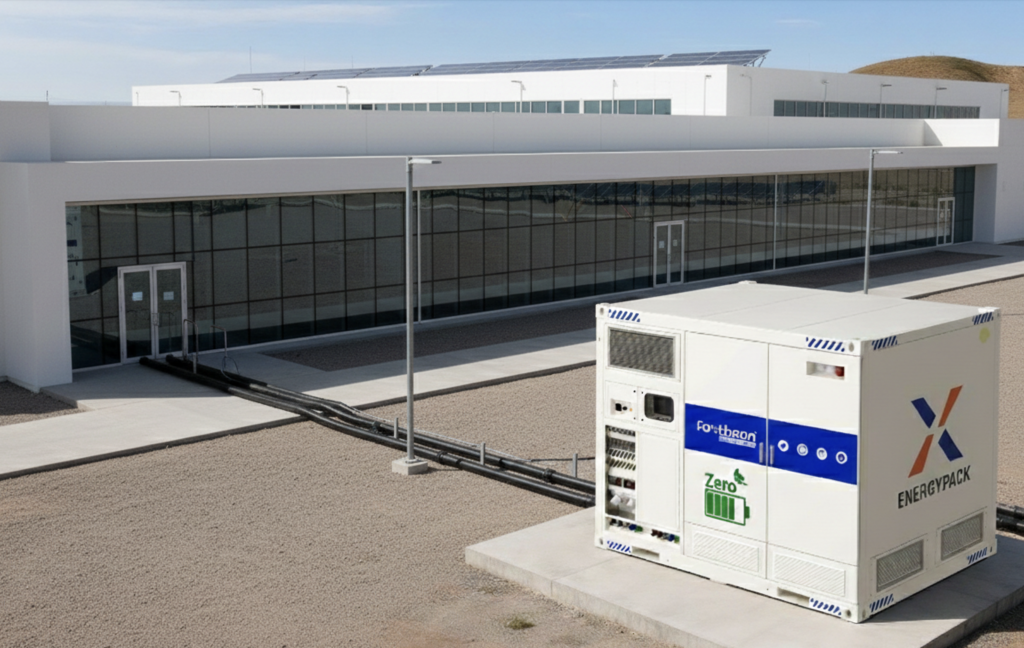
Off-grid sites are routinely exposed to hostile ambient conditions, from hyper-arid desert regions with fine particulate ingress to corrosive coastal locations. Containerized solutions, such as those integrated by Foxtheon, employ heavy-gauge corten steel enclosures rated to minimum IP55 or IP66 standards, paired with C5-M anti-corrosion protective coatings. Modular clean-agent fire suppression (such as FK-5-1-12 / Novec 1230) combined with multi-stage deflagration panels provides comprehensive physical safety within the container envelope.
Industrial Off-Grid System Specifications Comparison
| Parameter | Commercial / Light Industrial | Heavy Industrial / Utility Microgrid |
|---|---|---|
| DC Bus Voltage Range | 600 VDC – 1000 VDC | 1000 VDC – 1500 VDC |
| Inverter Topology | Multi-string bidirectional PCS | Centralized modular Grid-Forming PCS |
| C-Rate Capability | 0.2C to 0.5C continuous | 0.5C to 1C continuous (2C transient pulse) |
| Thermal Management | Forced-Air Industrial HVAC | Liquid Cooling with Glycol Loops |
| Switchgear Integration | Direct 400V/480V connection | Integrated Step-Up Transformer (11kV – 33kV) |
| Black Start Capability | Optional auxiliary-assisted | Mandatory autonomous self-excitation |
Frequently Asked Questions
Q1: What distinguishes a grid-forming PCS from a standard grid-tied inverter in off-grid setups?
A1: Standard grid-tied inverters are grid-following; they require a pre-existing stable voltage and frequency waveform from an external source to operate. A grid-forming PCS functions as an independent voltage source, establishing the microgrid’s frequency and voltage setpoints from internal references, providing virtual inertia, and enabling autonomous black-start functionality.
Q2: How does integrating off grid energy storage extend the operational life of existing diesel generators?
A2: Storage systems absorb rapid load fluctuations, eliminating mechanical strain, thermal cycling, and turbo lag on generators. They also maintain constant optimal loading on running engines, preventing the severe carbonization and wet stacking associated with running generators at low capacities.
Q3: Why is 1500V DC architecture increasingly preferred over 1000V in heavy industrial installations?
A3: Moving to a 1500V DC bus reduces current levels for an equivalent power rating. This results in reduced copper cabling dimensions, lower internal conduction losses ($I^2R$), higher conversion efficiency within the PCS, and significantly higher energy density per square meter within containerized enclosures.
Q4: Can an off-grid energy storage system clear downstream distribution faults without utility grid fault levels?
A4: Yes, provided the PCS is specifically engineered for high momentary short-circuit current contribution (typically 150% to 200% for 1 to 3 seconds) and coordinated alongside the protection settings of the microgrid’s circuit breakers. Proper microgrid protection engineering ensures selective coordination without voltage collapse.
Q5: What are the primary communication interfaces required between the storage EMS and remote industrial SCADA?
A5: Industrial deployments standardize on deterministic, open protocols. Modbus TCP/IP, IEC 60870-5-104, and IEC 61850 over fiber-optic rings are common for telemetry and dispatch commands, while CANbus or hardwired digital I/O channels are reserved for high-speed local protective trips and emergency stops.
Technical Inquiry and System Specification Submissions
Engineering teams evaluating isolated microgrid topologies, storage container specifications, or hybrid synchronization setups may direct project single-line diagrams (SLDs), load profiles, and operational parameters for formal technical review and design optimization directly to:
Technical Application Support: https://www.foxtheon.com/off-grid-power-storage/