
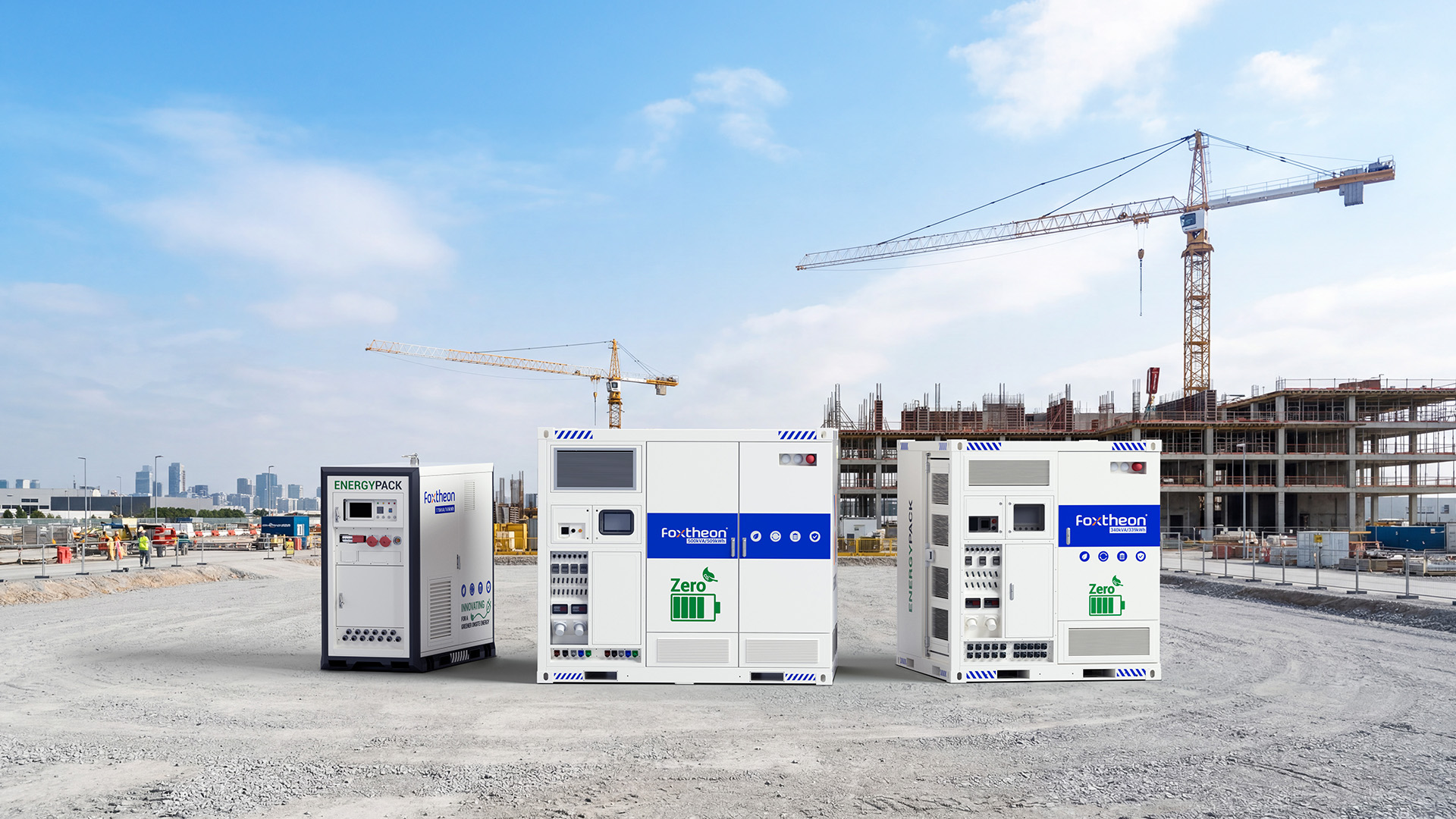
Industrial electrification in remote sites, telecommunication hubs, agricultural facilities, and mining infrastructure requires dependable power generation independent of the primary utility grid. Implementing an autonomous energy network demands precision engineering, where photovoltaic arrays, auxiliary generator sets, and electrochemical energy reservoirs operate in complete synchronization. Modern off grid power storage architectures provide the frequency regulation, voltage stabilization, and transient load support needed to sustain remote industrial operations continuously.
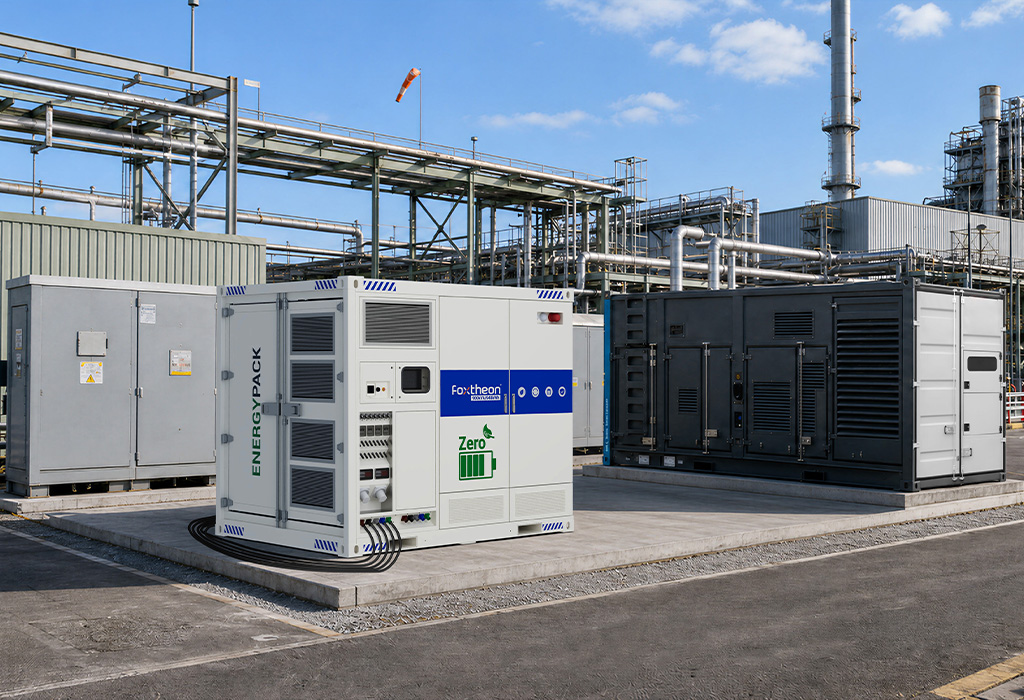
Architectural Topologies for Off-Grid Power Systems
The system topology defines how energy generation sources interact with energy storage units and site distribution buses. Selecting the correct coupling strategy directly influences system efficiency, power quality, and expandability.
DC-Coupled Architectures
In a DC-coupled configuration, the photovoltaic (PV) array connects directly to the common DC bus via Maximum Power Point Tracking (MPPT) charge controllers. The energy generated by the PV array charges the battery bank without intermediate conversions, and a centralized bidirectional inverter converts DC energy to AC for end-use distribution.
- Conversion Efficiency: Solar-to-battery charging achieves high conversion efficiency because it bypasses DC-AC-DC double inversion.
- Black-Start Simplicity: If the energy bank is fully depleted, DC charge controllers can wake up and charge the batteries directly as sunlight becomes available, without requiring an existing AC reference voltage.
- Application Suitability: Ideal for systems where daytime loads are lower than nighttime loads, prioritizing battery charging efficiency over direct daytime consumption.
AC-Coupled Architectures
AC-coupled topologies connect solar strings directly to standard grid-tied PV inverters that feed an energized AC bus. A specialized bidirectional battery inverter forms the microgrid voltage and frequency reference, regulating energy flow into and out of the battery banks.
- Direct Daytime Consumption: Power generated during daylight hours feeds directly to AC equipment loads with only a single DC-to-AC conversion step, minimizing transmission losses for diurnal operations.
- Modular Scalability: PV capacity and battery storage capacity scale independently. Additional AC-coupled generation assets, including wind turbines and existing generator infrastructure, integrate directly onto the common AC distribution switchboard.
- Frequency Shifting Control: The bidirectional inverter adjusts AC bus frequency upward (e.g., from 50.0 Hz to 51.5 Hz) to throttle the output of PV string inverters proportionally when the battery bank reaches full state-of-charge (SoC).
Synchronized Generator Hybridization
Off-grid industrial sites frequently utilize diesel or gas reciprocating generator sets. Rather than running generators continuously at low, inefficient load profiles, modern off grid power storage systems interface directly with generator automatic transfer switches (ATS) and programmable logic controllers (PLC).
The battery system serves as the primary voltage source, absorbing step-loads and dynamic surges. When battery SoC falls below a defined operational threshold, the storage management system signals the generator to start, operating it strictly within its optimal brake-specific fuel consumption (BSFC) curve (typically 70% to 85% load factor) to recharge the storage bank and supply peak loads simultaneously.
Electrochemical Storage Technologies: Technical Comparison
The battery chemistry dictates cycle endurance, thermal safety envelopes, usable depth of discharge, and operational degradation rates under continuous cyclic stress.
Lithium Iron Phosphate (LiFePO4 / LFP)
Lithium Iron Phosphate has become the technical benchmark for industrial and commercial stationary off-grid installations. The olivine crystal structure provides structural stability under elevated thermal conditions and continuous cycling.
- Cycle Endurance: LFP cells routinely deliver between 4,000 and 8,000 cycles at 80% Depth of Discharge (DoD) before reaching 80% State of Health (SoH).
- Thermal Stability: The chemical decomposition of the cathode occurs at approximately 270°C, significantly mitigating the occurrence of thermal runaway compared to oxide-based lithium chemistries.
- C-Rate Flexibility: High-rate LFP configurations sustain continuous discharge rates of 0.5C to 1C and pulse discharge up to 2C to handle heavy inductive motor starting currents.
Nickel Manganese Cobalt (NMC)
NMC chemistries offer high gravimetric and volumetric energy densities, making them relevant where installation footprint and weight carry strict structural limits.
- Energy Density: NMC cells deliver volumetric energy densities exceeding 300 Wh/L, allowing compact enclosures in confined remote shelters.
- Thermal Management Requirements: NMC exhibits lower onset temperatures for thermal breakdown (approximately 210°C), requiring liquid cooling loops, active HVAC systems, and multi-stage aerosol or gas fire suppression systems.
Advanced Lead-Carbon (Pb-C)
Lead-carbon technology integrates capacitive carbon materials into the negative plate of a valve-regulated lead-acid (VRLA) battery, suppressing cathode sulfation during continuous Partial State of Charge (PSoC) operations.
- Operational Profile: PB-C provides reliable operation in extreme cold environments where unheated lithium systems require pre-heating systems before accepting charge current.
- Limitations: Lower cycle life (typically 2,000 to 3,000 cycles at 70% DoD) and significant physical weight require reinforced foundation pads.
Photovoltaic Panel Selection and BOS Integration
A reliable off grid power storage design relies on precision pairing between the battery subsystem and the solar generation array. Module technology and Balance of System (BOS) components dictate overall energy capture across changing weather patterns.
Photovoltaic Cell Architecture
Commercial installations prioritize high-efficiency module technologies that maximize energy yield per square meter of racking:
- N-Type TOPCon (Tunnel Oxide Passivated Contact): Features lower temperature coefficients (-0.30%/°C) and virtually zero Light Induced Degradation (LID), sustaining high energy yield in desert environments where surface temperatures exceed 60°C.
- Heterojunction (HJT): Combines crystalline silicon with amorphous silicon thin films. HJT panels exhibit symmetrical bifaciality factors (up to 85-90%) and low degradation rates, maximizing diffuse and albedo radiation capture on rocky or reflective soils.
- Monocrystalline PERC (Passivated Emitter and Rear Cell): A proven technology suitable for projects requiring standard commercial specifications with predictable operational profiles.
MPPT Sizing and Oversizing Ratios
Off-grid systems require deliberate DC-to-AC oversizing (often between 1.25:1 and 1.4:1 DC-to-inverter capacity). Oversizing ensures that during suboptimal irradiance conditions, cloudy seasons, or low sun angles, the MPPT controllers continue to supply adequate current to power baseline loads while replenishing energy storage reserves.
Energy Management Systems and Microgrid Control
Microgrid controllers and Energy Management Systems (EMS) maintain balance across dynamic generation assets and variable load profiles. Proprietary control platforms developed by manufacturers like Foxtheon integrate advanced dispatch algorithms designed for continuous off-grid reliability.
Dynamic Load Prioritization
Industrial operations feature non-uniform load profiles consisting of primary production lines, water treatment, HVAC, and auxiliary systems. The EMS implements automated multi-stage load shedding based on battery state-of-charge thresholds and weather forecasting inputs. If battery reserves drop below pre-programmed parameters, secondary non-operational circuits are disconnected via motorized circuit breakers, preserving stored power for mission-critical industrial processes.
Black Start Capabilities
An industrial energy storage system must possess integrated black start capability. If an emergency shutdown or severe fault condition fully isolates the microgrid, the bidirectional inverter utilizes dedicated internal battery energy reserves to re-energize the main AC bus, provide magnetizing current for step-up transformers, and systematically restart external generation sources without auxiliary grid power.
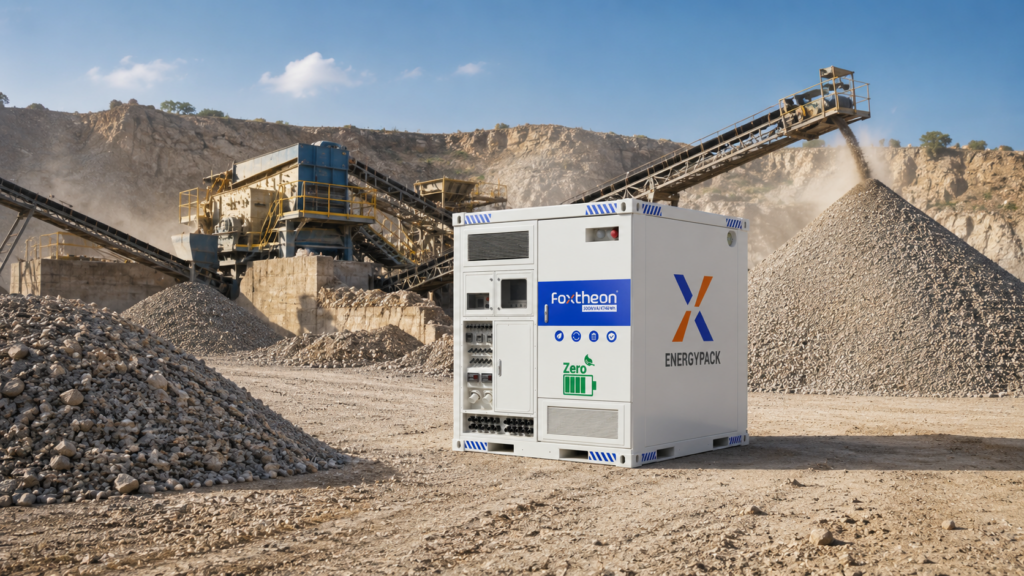
Engineering Dimensioning: Mathematical Sizing Example
Properly sizing an industrial off grid power storage array requires accounting for baseline energy consumption, peak surge multipliers, depth-of-discharge parameters, and autonomy requirements.
Step 1: Daily Energy Consumption
Assume an industrial remote pumping station operating with the following profile:
- Continuous baseline load: 30 kW (24 hours/day) = 720 kWh/day
- Peak processing load: 50 kW (6 hours/day during daylight) = 300 kWh/day
- Total Daily Consumption ($E_{daily}$): 1,020 kWh/day
Step 2: Battery Storage Capacity Calculation
Calculating nominal storage capacity requires defining days of autonomy ($N_{autonomy}$), maximum allowable Depth of Discharge ($DoD_{max}$), and inverter/system conversion efficiency ($\eta_{sys}$):
Using the parameters: $N_{autonomy} = 1.5 \text{ days}$, $DoD_{max} = 0.85$, and $\eta_{sys} = 0.92$:
$$\text{Nominal Capacity (kWh)} = \frac{E_{daily} \times N_{autonomy}}{DoD_{max} \times \eta_{sys}} = \frac{1,020 \times 1.5}{0.85 \times 0.92} = \frac{1,530}{0.782} \approx 1,956 \text{ kWh}$$
Step 3: Solar Array Sizing
Sizing the PV field requires evaluating the local site’s minimum average Peak Sun Hours (PSH) during the lowest-irradiance month, factoring in battery round-trip efficiency ($\eta_{rt} = 0.90$) and dirt/temperature derating factors ($\eta_{loss} = 0.82$):
Assuming minimum winter PSH = 3.8 hours:
$$\text{Required Array Generation} = \frac{E_{daily}}{\eta_{sys} \times \eta_{rt}} = \frac{1,020}{0.92 \times 0.90} \approx 1,232 \text{ kWh/day}$$
$$\text{PV Peak Power Output (kWp)} = \frac{1,232 \text{ kWh/day}}{3.8 \text{ PSH} \times 0.82} \approx 395 \text{ kWp}$$
Thermal Management and Environmental Hardening
Off-grid power equipment operates in severe ambient environments, ranging from sub-zero mountain ranges to high-heat, high-dust mining regions. Maintaining battery cells within their optimal electrochemical operating zone (15°C to 25°C) is necessary to ensure long cycle life and operational safety.
Liquid Cooling vs. Forced-Air HVAC
For small systems (under 100 kWh), forced-air cooling systems with redundant fans and heavy-duty dust filters are standard. For containerized systems exceeding 500 kWh, liquid-cooling plates integrated directly between cell modules provide substantial engineering advantages:
- Thermal Uniformity: Liquid cooling maintains temperature variance between individual cells within ≤ 2.5°C, preventing localized cell aging and capacity mismatch.
- Parasitic Load Reductions: Direct-contact liquid loops consume up to 30% less auxiliary power than industrial air conditioning units in ambient conditions above 40°C.
- Ingress Protection: Liquid-cooled battery compartments can be completely sealed to IP55 or IP65 standards, isolating sensitive electronics from sand, salt spray, and moisture.
Procurement and Supplier Technical Evaluation Criteria
When selecting industrial hardware for an off grid power storage deployment, procurement engineering teams must review technical specifications beyond nameplate capacity.
Key Technical Evaluation Parameters
- Cell-Level Certifications: Verification of UL 1973, UL 9540A (thermal runaway propagation test reports), IEC 62619, and UN 38.3 transport compliance.
- BMS Telemetry and Integration: Ensure the Battery Management System supports open-standard industrial protocols (Modbus TCP/RTU, CAN 2.0B, DNP3) and allows granular parameter adjustments for integration with third-party PLC microgrid systems.
- System Integration Capabilities: High-tier manufacturers like Foxtheon engineer fully integrated systems where power conversion systems (PCS), battery racks, fire suppression, and HVAC controls arrive pre-commissioned inside modular containers.
- Structural and Environmental Resilience: Verify enclosure ratings (C3 to C5-M anti-corrosion coating for marine/coastal zones, seismic rating according to IEEE 693 standards).
Frequently Asked Questions
Q1: What is the recommended Depth of Discharge (DoD) for off-grid industrial systems?
A1: For Lithium Iron Phosphate (LiFePO4) systems, setting daily operational DoD to 80% maximizes lifetime cycle numbers while providing an adequate operational reserve. Although LFP chemistry can discharge to 100% without immediate structural failure, operating consistently between 10% and 90% SoC optimizes cell longevity.
Q2: How do hybrid microgrids handle heavy inductive motor start-up surges?
A2: Industrial bidirectional inverters are engineered with overload capabilities (typically 150% for 60 seconds and 200% for 1 to 5 seconds). The battery bank must have an adequate continuous discharge C-rate and low internal resistance to deliver instantaneous reactive power without inducing DC bus voltage drop.
Q3: How does ambient temperature affect off-grid battery charging?
A3: Lithium-ion cells cannot accept charge current when cell temperatures fall below 0°C without risking irreversible lithium plating, which permanently degrades capacity. Systems deployed in cold climates require integrated internal heating pads or active thermal management loops to warm cells before accepting current from solar arrays or generators.
Q4: Can an existing diesel generator be incorporated into a new off-grid storage system?
A4: Yes. Modern energy management systems interface with generator controllers using two-wire auto-start signals or Modbus communications. The battery storage inverter forms the primary grid voltage reference, and the generator is dispatched automatically only when extra power is required or when battery reserves reach minimum operational limits.
Q5: What are the primary communication protocols used between battery banks, inverters, and EMS?
A5: Battery Management Systems generally use CAN bus or Modbus RTU (RS-485) for intra-rack communications and high-speed data exchange with inverters. At the plant supervisory level, Modbus TCP/IP, Ethernet/IP, and IEC 61850 are the primary standards utilized to exchange telemetry with the central Energy Management System.
Industrial System Specifications & Engineering Inquiries
To request technical design validation, balance of system optimization, or custom containerized off grid power storage configurations, direct engineering parameters, single-line diagrams (SLD), and site load profiles to the technical integration team at Foxtheon for comprehensive microgrid modeling and project integration support.