
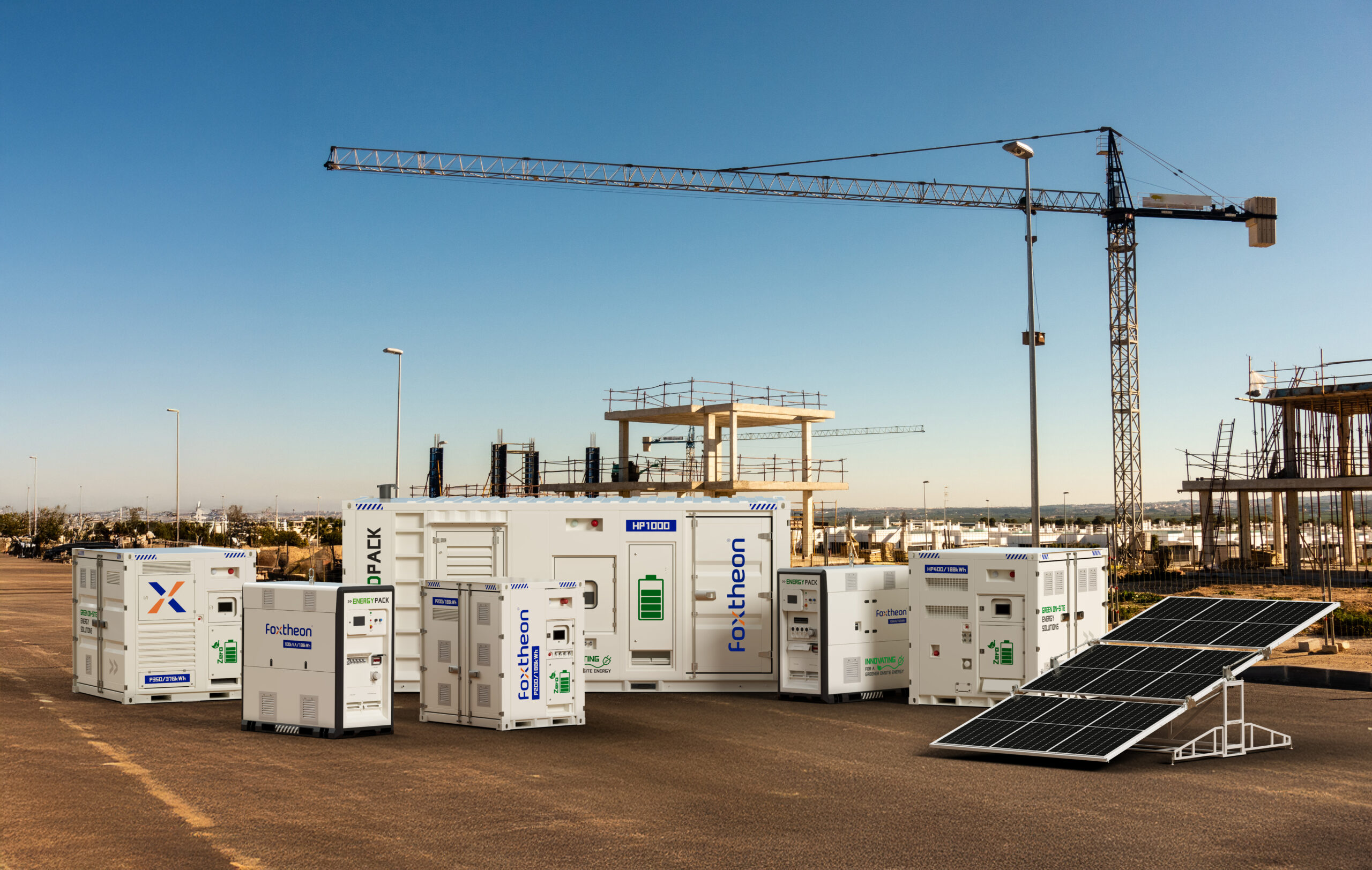
The transition toward decentralized power is a significant movement in modern industrial engineering. For facilities operating outside the reach of stable utility grids, the implementation of a robust off grid battery storage system has become a primary strategy for maintaining operational uptime. These systems represent a sophisticated integration of power electronics, electrochemistry, and intelligent software designed to manage energy loads without the constant support of a centralized electrical provider.
As organizations seek to enhance their energy resilience, providers like Foxtheon are focusing on high-capacity, modular solutions that can withstand the rigors of industrial use. This article examines the technical architecture, application challenges, and selection criteria necessary for a successful energy storage deployment in remote or autonomous environments.
1. Advanced Electrochemical Foundations: Beyond Standard Lead-Acid
At the heart of a modern off grid battery storage system is the choice of cell chemistry. While traditional deep-cycle lead-acid batteries served the industry for decades, the shift toward Lithium Iron Phosphate (LiFePO4) has changed the performance parameters of industrial storage. LiFePO4 cells offer several technical advantages that are required for industrial-scale operations:
- Higher Energy Density: Reduced physical footprint allows for more capacity in confined spaces, such as mobile command centers or remote telecommunications shelters.
- Cycle Longevity: Industrial lithium systems frequently provide 4,000 to 6,000 cycles at an 80% Depth of Discharge (DoD), significantly extending the operational lifespan before replacement is needed.
- Thermal Stability: LiFePO4 chemistry is inherently safer than other lithium-ion variants, exhibiting a higher thermal runaway threshold which is a priority in remote industrial sites.
The integration of these cells requires a sophisticated Battery Management System (BMS) that monitors cell-level voltage and temperature, ensuring that the entire string remains balanced and protected against over-discharge or short-circuit events.
2. Power Conversion Systems and Inverter Topology
An off grid battery storage system is defined by its ability to convert stored Direct Current (DC) into high-quality Alternating Current (AC). The Inverter/Charger is the gateway of this process. In industrial applications, the distinction between high-frequency and low-frequency inverters is significant.
Low-frequency inverters, utilizing large copper transformers, are often preferred for sites with high inductive loads, such as those running large motors, compressors, or heavy-duty pumps. These units possess the high surge capacity required to handle the initial “inrush” current that occurs when motors start. Conversely, high-frequency inverters offer greater efficiency and a lighter weight profile, making them suitable for lighter industrial electronics and communication equipment. Modern systems from Foxtheon leverage advanced power electronics to balance efficiency with robust surge performance, ensuring the system can handle fluctuating load profiles without interruption.
3. Synchronization with Renewable Energy and Existing Assets
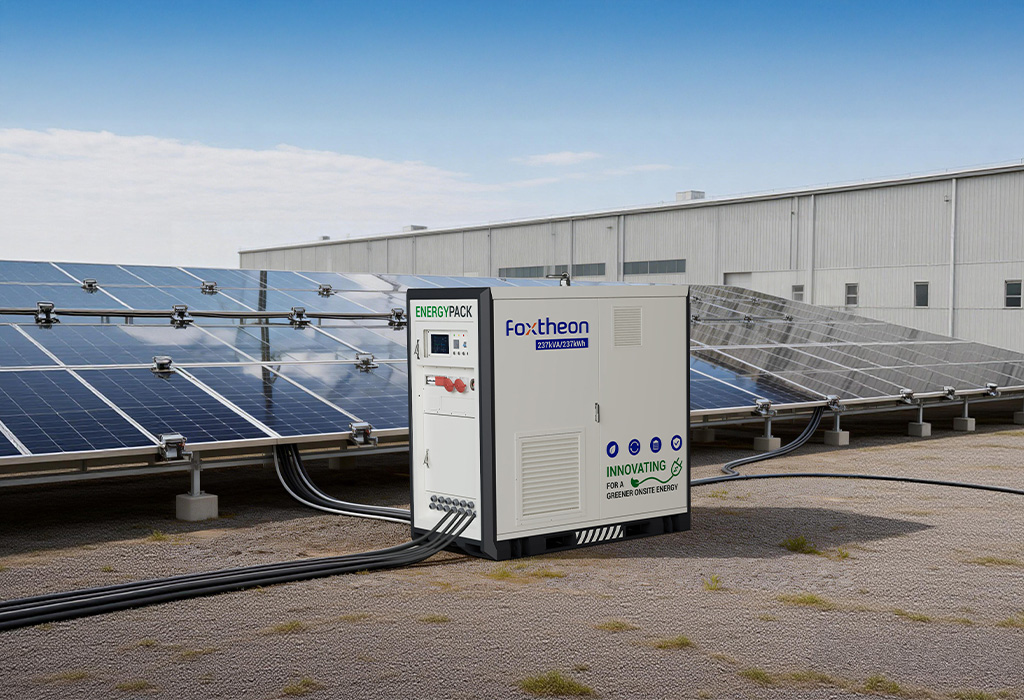
One of the most complex aspects of off-grid engineering is the synchronization of multiple power sources. An off grid battery storage system often acts as the primary frequency and voltage reference for a microgrid. When integrated with solar photovoltaic (PV) arrays, the system utilizes Maximum Power Point Tracking (MPPT) charge controllers to harvest maximum energy under varying atmospheric conditions.
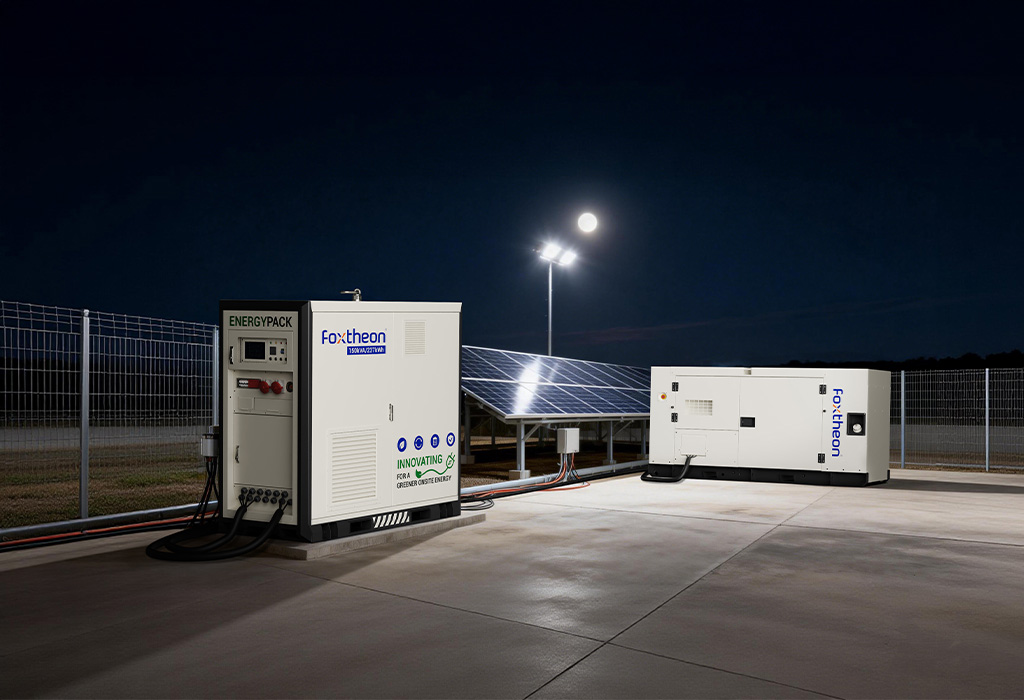
In many B2B scenarios, these systems work in tandem with existing mechanical generators. Rather than replacing these assets, the battery storage system complements them by providing “black-start” capabilities and handling momentary peak loads that would otherwise cause a generator to stall or run inefficiently at low loads. This hybrid approach ensures that the generator only runs during periods of prolonged low renewable production or during high-demand maintenance windows, extending the service life of all assets involved.
4. Addressing Industrial Load Profiles and Peak Shaving
Industrial operations rarely have a flat energy demand. Large machinery, HVAC systems, and processing equipment create significant “peaks” in energy consumption. A well-designed off grid battery storage system is engineered to perform peak shaving. By discharging stored energy during high-demand intervals, the system reduces the maximum load requirement placed on other power sources.
This capability requires an Intelligent Energy Management System (EMS). The EMS analyzes real-time consumption data and makes millisecond decisions on when to draw from the batteries and when to utilize available renewable or secondary power. For facilities in remote areas, this ensures that the electrical frequency remains stable (at 50Hz or 60Hz) even when high-wattage equipment is cycled on and off.
Key Metrics for System Sizing
- Daily Energy Consumption (kWh): The total energy required over a 24-hour period.
- Peak Load (kW): The maximum power required at any single moment.
- Autonomy Days: The number of days the system can run without any input from solar or secondary sources.
- Environmental Derating: Adjusting capacity expectations based on altitude, humidity, and ambient temperature.
5. Environmental Ruggedization and Enclosure Engineering
Industrial storage systems are frequently deployed in environments that would cause consumer-grade electronics to fail. Dust, salt spray, and extreme temperature fluctuations are constant threats. A professional off grid battery storage system must be housed in an enclosure with an appropriate Ingress Protection (IP) rating, such as IP55 or higher.
Thermal management is a significant technical hurdle. In high-temperature regions, active cooling systems—often utilizing heat exchangers or specialized air conditioning—are necessary to prevent the batteries from degrading prematurely. In arctic conditions, internal heating elements are required to maintain the battery temperature above freezing to allow for charging. Foxtheon prioritizes these protective measures to ensure that energy availability remains constant regardless of the external climate.
6. Application Scenarios in Global Infrastructure
The versatility of off-grid storage allows it to serve various specialized B2B sectors:
- Telecommunications: Base stations in mountainous or rural areas rely on battery storage to maintain uptime for critical communication networks.
- Remote Mining Operations: Exploration sites use portable storage to power sensitive laboratory equipment and site lighting without the noise and vibration of constant mechanical power.
- Agriculture and Water Management: Automated irrigation systems and remote sensors utilize battery storage to operate in vast agricultural tracts where grid extension is not feasible.
- Humanitarian and Emergency Relief: Mobile clinics and field hospitals require stable, silent power for medical refrigeration and diagnostic tools during rapid deployment.
7. Remote Monitoring and Data Analytics for Fleet Management
For large-scale operations managing multiple sites, the ability to monitor each off grid battery storage system remotely is a requirement. Through the integration of IoT gateways, operators can access cloud-based dashboards to track State of Health (SoH), State of Charge (SoC), and throughput data.
Predictive maintenance is a byproduct of this connectivity. By analyzing trends in battery internal resistance and discharge curves, technicians can identify potential issues before they lead to a system shutdown. This data-driven approach allows for optimized maintenance schedules and provides transparency for project managers overseeing remote infrastructure portfolios.
The Path Toward Energy Autonomy
The adoption of advanced storage solutions is a strategic move for any organization operating in the modern energy environment. By focusing on technical reliability, modularity, and environmental resilience, a off grid battery storage system provides the stability needed for industrial growth in the most challenging locations. As the industry continues to advance, the synergy between storage, intelligence, and rugged hardware will remain the foundation of energy independence. Companies like Foxtheon continue to push the boundaries of what is possible in the energy storage sector, ensuring that power is available wherever and whenever it is needed.
Frequently Asked Questions
Q1: How does an off-grid system handle large motor starting currents?
A1: Industrial-grade systems utilize inverters with high surge ratings, typically 2x to 3x their continuous power rating. This allows the system to provide the necessary current for the fraction of a second needed to start inductive loads without tripping safety breakers.
Q2: Can I expand the capacity of my storage system later?
A2: Yes, many professional systems are designed with modularity in mind. Additional battery modules can be added in parallel to increase total energy capacity (kWh), provided the BMS and inverter configuration support the expansion.
Q3: What is the expected lifespan of the batteries in an off-grid configuration?
A3: When utilizing LiFePO4 chemistry and proper thermal management, most industrial batteries are rated for 10 to 15 years of daily cycling before their capacity drops below 80% of the original rating.
Q4: How does altitude affect the performance of the power conversion system?
A4: At high altitudes, the air is less dense, which reduces its cooling efficiency. Most inverters require “derating”—meaning their maximum power output is reduced—when operating at altitudes above 2,000 meters.
Q5: Is it possible to monitor the system if there is no local internet?
A5: Yes. Many remote systems utilize satellite communication links or long-range LoRaWAN networks to transmit health data to a central server when traditional cellular or Wi-Fi networks are unavailable.
Seeking a customized energy solution for your industrial site? Our engineering team specializes in designing high-resilience power systems for the most demanding environments.
Submit an inquiry today to speak with a technical expert about your specific requirements and learn how our storage solutions can enhance your operations.