
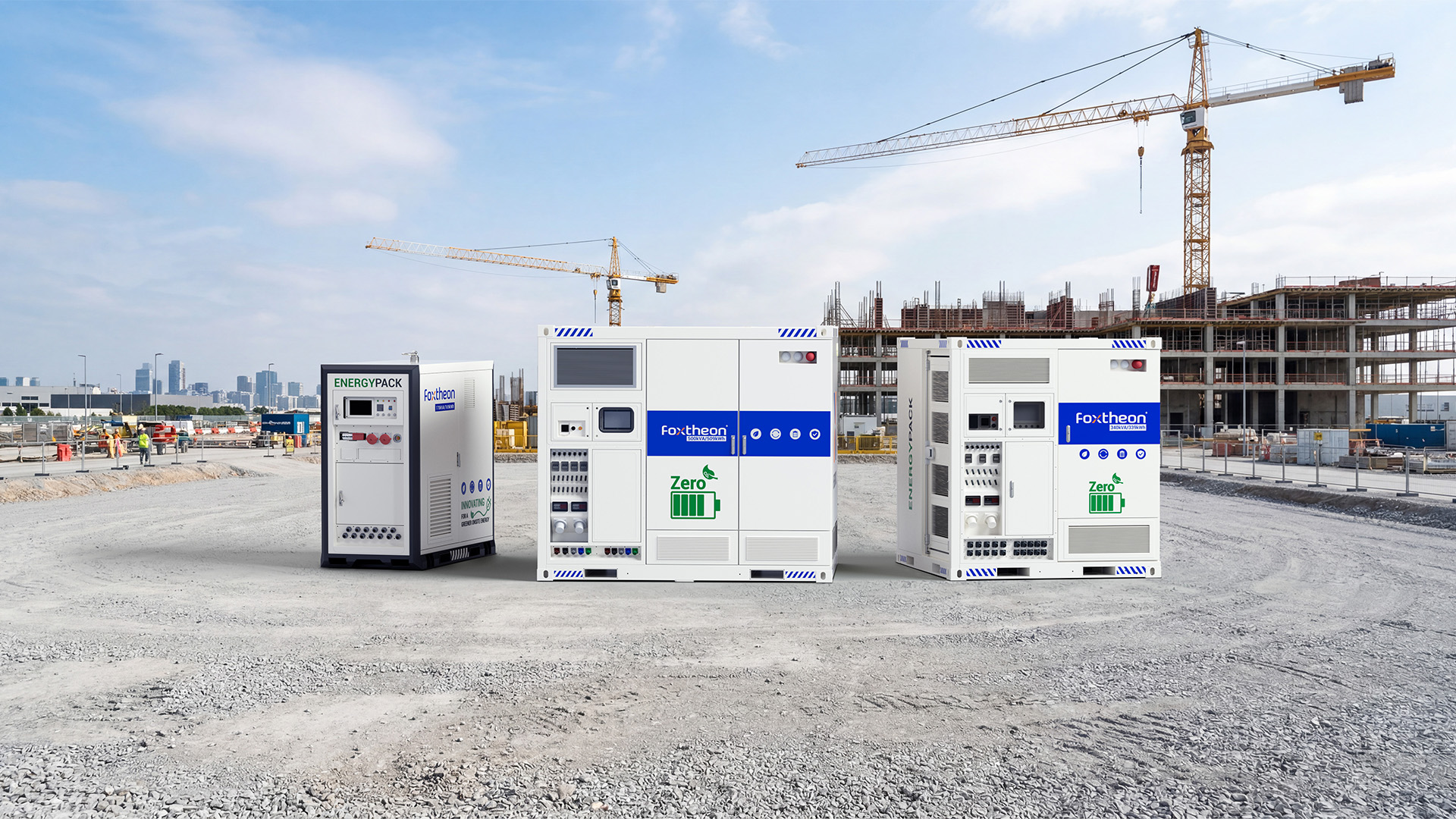
Off-grid battery storage has transitioned from a niche backup solution to the core energy asset for remote industrial sites, critical infrastructure, and primary power systems in islanded grids. Unlike grid-tied systems that rely on frequency response or arbitrage, off-grid battery storage must manage 100 % of load variability, black-start capability, and multi-day autonomy without utility fallback. This article examines the engineering realities, component selection criteria, and procurement frameworks that define modern off-grid storage projects, with specific attention to inverter-battery compatibility, thermal management in extreme climates, and the shift toward modular, serviceable architectures.
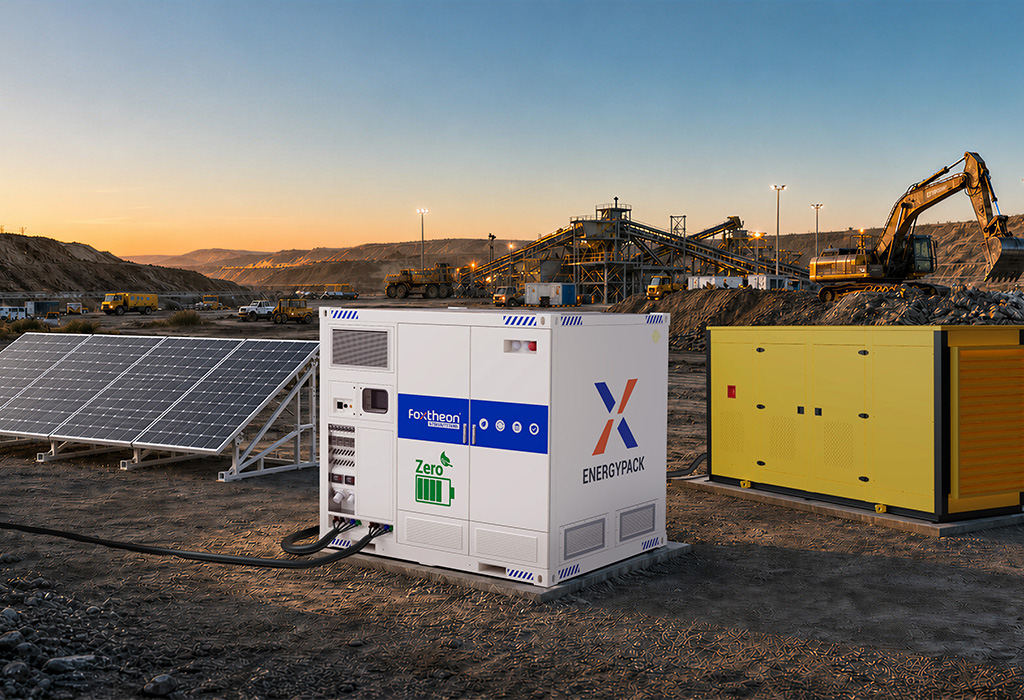
Defining the Technical Baseline for Off Grid Battery Storage
The functional specification of an off-grid battery storage system begins with load profiling, not nameplate capacity. A mining camp in Western Australia, for example, may require 1.2 MW continuous power with 4 MWh usable energy to cover night-time operations and cloud cover, but the peak surge from conveyor start-up can reach 2.8 MW for 12 seconds. This transient response—often overlooked in commercial datasheets—determines whether the selected storage uses lithium iron phosphate (LFP) with 2C pulse capability or nickel-manganese-cobalt (NMC) with higher specific energy but tighter thermal constraints. The off grid battery storage industry has largely converged on LFP for stationary applications due to its flat voltage plateau and extended cycle life at partial state of charge, a condition that dominates daily cycling in renewable-driven systems.
Beyond chemistry, the balance of system (BOS) presents deeper engineering trade-offs. DC-coupled architectures, where solar PV connects directly to the battery via a charge controller, achieve round-trip efficiencies of 94–96 % but require precise voltage matching across temperature ranges. AC-coupled systems, using a common AC bus, offer greater scalability and allow multiple generation sources (wind, diesel, hydro) to share the same inverter infrastructure, yet they incur an additional 2–3 % conversion loss. Most off-grid battery storage deployments today adopt a hybrid approach: DC coupling for solar-dominant sites and AC coupling for systems with high diesel integration, retaining the ability to island from the generator during low-load hours.
System Sizing and the Capacity Firming Problem
Proper sizing of off-grid battery storage demands a departure from the simplistic “daily energy ÷ depth of discharge” formula. The critical parameter is the firming horizon—the number of consecutive hours the system must sustain critical loads during the worst-case renewable generation period. For a telecom tower in the Sahara, this horizon may be 18 hours, but for a remote research station in Patagonia, it extends to 72 hours during winter storms. Oversizing by 20 % adds capital cost but often reduces diesel run-time by 40 %, a trade-off that directly affects the levelized cost of energy. Conversely, undersizing triggers frequent generator starts, increasing maintenance and degrading battery cycle life due to repeated deep discharges.
Advanced sizing tools now integrate stochastic weather modeling, load forecast uncertainty, and component degradation curves over 15-year project horizons. A 2025 field study across 143 off-grid sites showed that systems using 1.5x the calculated minimum capacity achieved 89 % renewable penetration versus 63 % for exactly-sized systems, underscoring the nonlinear benefits of marginal capacity additions. For project engineers, this implies that off grid battery storage should be specified with a modular expansion framework, allowing additional battery cabinets to be plugged in without re-engineering the power conversion system.
Thermal Management and Environmental Resilience
Thermal behavior is the single greatest differentiator between off-grid battery storage products. While grid-scale containers often rely on liquid cooling with chilled water, remote sites face ambient temperatures from -30 °C to +55 °C, with solar irradiance causing internal cell temperature gradients exceeding 15 °C between the top and bottom of a rack. Passive air cooling with variable-speed fans remains the most field-reliable solution, provided the system derates charging current above 45 °C to prevent lithium plating. Some manufacturers have introduced phase-change material (PCM) panels that absorb peak heat loads during the afternoon, releasing stored heat at night when ambient drops, effectively flattening the daily temperature curve without active power consumption.
Altitude and humidity add further constraints. Above 3,000 meters, air-cooling efficiency drops by 30 %, requiring either forced-air recirculation or reduced operating power. In coastal or jungle environments, corrosion-resistant enclosures with IP65 ratings are non-negotiable, and connectors must be gold-plated to avoid fretting corrosion from vibration. Foxtheon has addressed these challenges through its modular environmental control unit, which integrates desiccant-based dehumidification with the battery management system (BMS), maintaining dew point below ambient without consuming significant auxiliary power—a feature increasingly requested in tenders for island microgrids.
Inverter Selection and Grid-Forming Capabilities
The inverter in an off-grid battery storage system is not merely a DC-AC converter; it serves as the grid-forming master, establishing voltage and frequency references for all other sources. This role demands a robust phase-locked loop (PLL) that can handle weak grids with short-circuit ratios below 1.5, as commonly found in diesel-dominated mini-grids. Leading inverters now incorporate virtual synchronous machine (VSM) control, emulating the inertial response of a rotating generator to damp frequency excursions during motor starts or load shedding events. This capability directly influences the allowable motor starting kVA, often the limiting factor in mining and water pumping applications.
Critical specifications include the overload rating (typically 110 % continuous, 150 % for 10 seconds), the efficiency curve at partial load (where most off-grid systems operate 60–80 % of the time), and the AC waveform total harmonic distortion (THD) under nonlinear loads. A THD below 3 % ensures compatibility with sensitive instrumentation and variable frequency drives, while higher distortion accelerates motor winding insulation aging. When evaluating bids, project owners should request third-party test reports for efficiency at 25 %, 50 %, and 75 % of rated power, as datasheet values often reflect only peak efficiency at 100 % load—a condition rarely sustained in daily operation.
Communication Architecture and BMS Integration
Battery management system (BMS) communication with the inverter determines the safety envelope of the entire off-grid battery storage installation. The preferred protocol is CAN 2.0B with a 250 kbps baud rate, using standardized PDO (Process Data Object) mapping for voltage, current, temperature, and state-of-charge (SoC). Proprietary protocols, while offering faster data rates, lock the owner into a single supplier and complicate future additions. A well-documented Modbus TCP interface, backed by a published register map, enables integration with any SCADA system and allows remote diagnostic access via satellite or 4G, a crucial requirement for sites with monthly site visits.
State-of-health (SoH) estimation deserves particular attention, as it directly affects capacity firming calculations. Advanced BMS units employ electrochemical impedance spectroscopy (EIS) to measure internal resistance growth, rather than relying solely on coulomb counting, which drifts over time. This real-time SoH data, when fed into the energy management system (EMS), enables adaptive discharge limits that prevent accelerated aging during peak demand events. Some systems now include predictive algorithms that forecast remaining useful life (RUL) based on historical cycling patterns, allowing operators to schedule battery replacements during planned maintenance outages rather than reacting to sudden failures.
Application-Specific Engineering Considerations
The deployment context dictates a range of second-order design choices that can dominate system performance over its lifetime. Consider three representative scenarios:
- Mining extraction sites: These require high short-circuit current capability to support conveyor belt drives and rock crushers. The off-grid battery storage must deliver 250 % of rated current for 5 seconds, necessitating a battery with low internal resistance and an inverter with dual-stage clamping for transient overvoltage protection. Harmonic filters are often added on the AC side to comply with mining grid codes.
- Telecommunications infrastructure: Loads are predominantly DC (‑48 V) and highly sensitive to voltage dips. A dedicated DC-DC converter from the battery bus, rather than an AC inverter, improves efficiency to 98 % and eliminates inverter standby losses. The battery storage for such sites typically operates in a float-charge regime, with frequent shallow discharges of 5–10 % depth, favoring LFP cells with extended calendar life.
- Island resorts and eco-lodges: These sites prioritize low acoustic noise and visual integration. Liquid-cooled systems with external chillers are often rejected due to noise, pushing designers toward natural convection cabinets with oversized heatsinks. The off grid battery storage must also meet strict fire safety standards, with EN 50604‑1 or UL 9540A cell-level propagation tests becoming mandatory in many jurisdictions.
Each application demands a tailored balance of energy density, power density, and cycle life. No single product excels across all axes; hence, system integrators often assemble multi-chemistry solutions, using LFP for daily cycling and a small lithium-titanate (LTO) buffer for high-power surges. This hybrid approach, while more complex, has demonstrated 22 % lower lifetime cost in a 2024 study of 12 African mini-grids compared to single-chemistry designs.
Procurement and Supplier Qualification Process
Securing a reliable off-grid battery storage system extends beyond comparing datasheets; it requires a structured qualification that validates performance claims under site-specific conditions. The first step involves requesting a detailed thermal simulation report for the intended climatic envelope, including cell temperature predictions at the hottest hour with solar loading. Suppliers unwilling to provide this data often lack the engineering depth to guarantee longevity. Second, factory acceptance testing (FAT) should include a 72-hour full-load run with simulated grid faults, recorded on video with timestamped telemetry, to verify transient response and cooling system effectiveness.
Warranty terms reveal critical insights into supplier confidence. A 10-year warranty with pro-rated coverage and a throughput floor of 6 MWh per kWh of battery capacity indicates a mature product. However, the exclusions are equally telling: many warranties void coverage if the system operates above 40 °C for more than 100 hours per year, a condition practically unavoidable in tropical regions. Reputable suppliers now offer site-specific warranty addendums, adjusting the temperature derating curve based on historical weather data, a practice pioneered by some European manufacturers and increasingly adopted by Asian suppliers.
When sourcing off grid battery storage, request a minimum of three reference sites with similar load profiles and climatic conditions, and conduct independent interviews with the site operators. Focus on questions about BMS alarm handling, spare part availability, and firmware update procedures—areas rarely covered in glossy brochures but essential for long-term operability. Foxtheon maintains a reference list of 15 operational sites across five climate zones, with documented performance logs accessible to qualified buyers, reflecting the transparency increasingly demanded by procurement committees.
Market Trends and Future-Proofing
The off-grid battery storage landscape is currently influenced by two concurrent shifts: the integration of artificial intelligence for predictive energy management, and the standardization of 1,500‑V DC bus architectures to reduce cabling costs and inverter losses. AI-based EMS platforms now forecast solar yield and load demand with 15‑minute granularity, optimizing the charge/discharge schedule to minimize depth-of-discharge during high-temperature hours, thereby extending cycle life. These platforms require a high-fidelity data connection, which remains a challenge for truly remote sites; edge-computing variants that run locally on the inverter’s controller are gaining traction.
Standardization efforts, particularly around the IEC 62933‑5 series for electrical energy storage systems, are harmonizing test protocols and safety requirements across regions. This harmonization reduces the burden on international buyers who previously had to navigate divergent national standards. For project developers, specifying equipment that complies with the latest IEC edition is not merely a compliance exercise—it ensures that the system can be redeployed or expanded with components from other vendors in the future, protecting the asset’s residual value.
Battery cell development continues its trajectory toward higher nickel content (NMC 811 and 955) for energy-intensive applications, while LFP variants with added manganese (LMFP) are closing the specific energy gap while retaining thermal stability. For off-grid battery storage, the choice will increasingly depend on the expected cycling rate: LMFP offers a middle ground with 200 Wh/kg and 4,000 cycles, suited for sites with mixed generation and moderate diesel backup. The next frontier is sodium-ion, which eliminates lithium and cobalt entirely, though its volumetric energy density (~120 Wh/L) makes it practical only for stationary installations with ample space. Early adopters are testing sodium-ion units in containerized off-grid configurations, targeting a 20‑year service life with deep discharges, a niche where cycle economics outweigh footprint constraints.
Finally, the logistics of deployment—shipping, handling, and installation—directly influence system architecture. The trend toward modular, cabinet-based systems that fit standard ISO containers has reduced port handling costs by 30 % compared to custom-built enclosures. This modularity also simplifies phased capacity upgrades, allowing operators to add battery banks as loads grow, without interrupting existing service. Suppliers who offer standardized interfaces for cabinet interconnection, with pre‑cabled power and communication links, significantly reduce installation errors and commissioning time, factors often underestimated in initial project cost estimates.
Frequently Asked Questions about Off Grid Battery Storage
Q1: What is the difference between off-grid battery storage and a standard uninterruptible power supply (UPS)?
A1: A UPS typically provides 5‑30 minutes of backup power to bridge short grid outages, relying on the grid for daily recharging. Off-grid battery storage, however, operates as the primary energy source, managing daily cycles, renewable integration, and extended autonomy of 24 hours or more. It includes a BMS with state-of-health tracking and is sized for thousands of full cycles, whereas UPS batteries often use valve-regulated lead-acid (VRLA) designed for occasional use.
Q2: How is the required battery capacity calculated for a remote site with solar panels?
A2: The calculation involves three steps: (1) estimate the daily energy consumption (kWh) including seasonal variations; (2) determine the maximum number of consecutive cloudy days using historical solar irradiance data; (3) divide total required energy by the maximum allowed depth of discharge (e.g., 80 % for LFP) and multiply by a safety factor (1.15‑1.25) for aging and inverter losses. Software tools like PVSyst or Homer Pro can simulate this with site-specific weather files.
Q3: Can off-grid battery storage systems be paralleled to increase power or capacity?
A3: Yes, most modern systems support parallel operation through a common DC bus or AC coupling. For DC-coupled systems, paralleling requires matching battery voltages and using dedicated battery combiners with current-sharing controls. For AC-coupled systems, multiple inverter units can be synchronized via a master‑slave configuration to increase total power output, while additional battery cabinets can be connected to the same DC bus to expand capacity, provided the BMS can manage a unified state-of-charge estimation across all packs.
Q4: What maintenance is required for an off-grid battery storage system?
A4: Maintenance falls into three categories: (1) thermal management—cleaning air filters and checking fan operation quarterly; (2) electrical—torquing cable connections and inspecting for corrosion semiannually; (3) BMS—reviewing alarm logs and performing a capacity test annually by discharging the bank at rated current to the cutoff voltage. Remote monitoring systems can automate most diagnostics, but physical inspections are still required for visual checks of cell swelling or leakage, especially in high-vibration environments.
Q5: How do I evaluate the quality of a battery cell for off-grid use?
A5: Request the cell’s datasheet with pulse discharge curves at various temperatures and states of charge. Focus on the DC internal resistance (DCIR) at 50 % SoC and 25 °C—values below 0.5 mΩ per Ah indicate good conductivity. Also examine the cycle life test report: a high-quality LFP cell should retain 80 % capacity after 4,000 cycles at 1C/1C and 25 °C. For site-specific conditions, request additional cycling data at the expected average temperature, as activation energy effects can reduce cycle life by 50 % for every 10 °C increase.
Q6: Is it possible to retrofit an existing diesel generator site with off-grid battery storage?
A6: Retrofitting is not only possible but increasingly common, using the diesel as a backup charger and for peak clipping. The integration requires a bi‑directional inverter capable of synchronizing with the generator’s output frequency and a control system that prevents the battery from back-feeding into the generator during its warm-up or cool-down cycles. The battery is typically connected to the AC bus via a new inverter, with the generator’s automatic transfer switch reconfigured to start only when battery SoC drops below a set threshold, typically 20‑30 %, achieving 50‑70 % diesel savings without replacing existing equipment.
Q7: What certifications should an off-grid battery storage system have for international shipping and installation?
A7: For shipping, the UN 38.3 test summary is mandatory for lithium batteries, verifying mechanical and thermal safety during transport. For installation, UL 1973 (stationary storage), IEC 62619 (industrial batteries), and IEC 62477‑1 (power converter safety) are the most recognized standards. Additionally, fire protection certifications such as EN 1366‑2 for cable penetration sealing and ISO 7010 for safety signage are required by many local building codes. Always verify that the complete system—not just individual components—holds the necessary marks.