
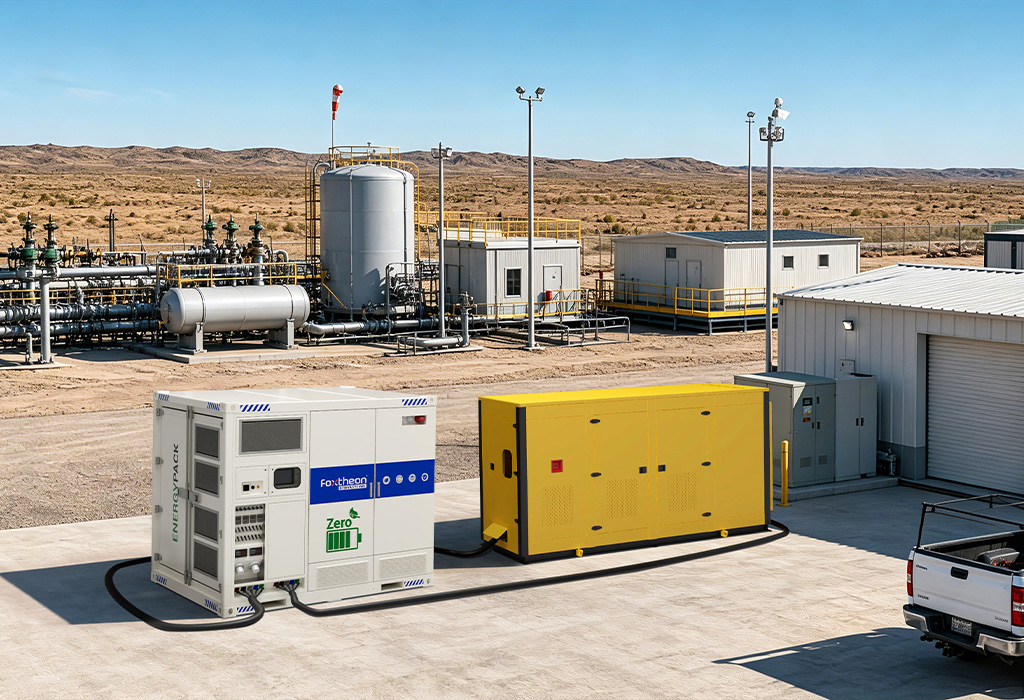
Electrification in remote industrial complexes, mining operations, micro-utilities, and telecom towers requires resilient autonomous power topologies. Selecting the right architecture among modern off grid power options demands an engineering approach that accounts for load profiles, ambient operating conditions, transient surges, and component degradation over multi-decade lifecycles.
Primary Generation Modalities and Coupled Architectures
Autonomous generation relies on multi-source hybridization to balance intermittent environmental resources against sustained base loads. Modern plant design classifies decentralized assets into primary renewable generation, kinetic generators, and dynamic power electronic converters.
Photovoltaic and Kinetic Generation Mix
Solar photovoltaic (PV) generation serves as the primary base generation source in decentralized systems due to its solid-state mechanics and minimal operating maintenance. In high-wind geographic corridors or continuous water-flow environments, small-scale horizontal-axis wind turbines or run-of-river micro-hydro plants provide complementary nocturnal generation.
Thermal generators remain a structural anchor within robust microgrids. Rather than operating in continuous, low-efficiency dispatch states, modern architectures position these units as synchronized spinning reserves or on-demand fast-start assets during prolonged irradiance shortfalls.
AC-Coupled versus DC-Coupled System Topologies
The structural topology directly influences conversion efficiency, power distribution parameters, and scalability:
- DC-Coupled Architectures: Generation sources and energy storage interconnect via a shared direct-current bus controlled by Maximum Power Point Tracking (MPPT) charge controllers. This setup minimizes DC-AC-DC conversion losses when prioritizing daytime electrochemical storage charging. It is suited for localized loads below 100 kW, such as telecommunication nodes.
- AC-Coupled Architectures: Multiple generation assets, battery inverters, and loads synchronize along an alternating current bus running at standard line voltages (e.g., 400V 3-Phase or medium voltage via step-up transformers). This topology allows modular expansion and flexible scaling across expansive sites. Industrial facilities exploring modern off grid power options favor AC coupling for its ease of parallel integration with existing synchronous generator switchgear.
Semiconductor and Metallurgy Advancements in PV Modules
Solar arrays deployed in islanded systems must maximize power density per square meter to reduce Balance of System (BOS) infrastructure, structural mounting, and cabling footprint. Cell substrate physics dictates overall yield stability in extreme environments.
P-Type PERC vs. N-Type TOPCon and Heterojunction (HJT)
While Passivated Emitter and Rear Cell (P-Type PERC) technology served as the previous utility benchmark, advanced N-type platforms provide superior operational parameters:
- Tunnel Oxide Passivated Contact (TOPCon): N-type TOPCon cells minimize recombination losses via an ultra-thin silicon oxide interface layer paired with doped polycrystalline silicon. They deliver initial cell efficiencies above 22.5% and possess a lower temperature coefficient (typically -0.30%/°C), sustaining yield in high-ambient-temperature regions.
- Heterojunction Technology (HJT): By combining thin-film amorphous silicon layers with crystalline silicon wafers, HJT cells provide high bifaciality factors (often exceeding 85-90%) and a temperature coefficient down to -0.26%/°C. These characteristics maximize ground-reflected irradiance capture on high-albedo surfaces like sand, gravel, and snow.
Degradation Metrics and Mechanical Resilience
N-type substrates feature zero boron-oxygen defect formation, eliminating Light Induced Degradation (LID). When paired with dual-glass (glass-glass) encapsulation and polyolefin elastomer (POE) encapsulants, these modules demonstrate superior resistance to Potential Induced Degradation (PID), moisture ingress, and micro-cracking caused by cyclic mechanical loading.
Energy Storage Systems (BESS) and Power Electronics
Electrochemical storage serves as the grid-forming backbone in standalone installations, establishing reference frequency and voltage while buffering dynamic load transients.
Electrochemical Chemistries
Lithium Iron Phosphate (LiFePO4 / LFP) has become the dominant technology for commercial microgrids due to its structural phase stability, absence of cobalt, and high thermal runaway threshold (exceeding 270°C). LFP platforms reliably deliver 6,000 to 8,000 cycles at 80% to 90% Depth of Discharge (DoD) under managed C-rates (0.5C to 1C continuous dispatch), outperforming legacy lead-acid and standard NMC chemistry variants in stationary environments.
Power Conversion System (PCS) and Inverter Topologies
The operational resilience of modern off grid power options relies heavily on the capabilities of the bidirectional PCS:
- Grid-Forming vs. Grid-Following Functionality: Grid-following inverters require an external voltage and frequency vector to operate. Grid-forming inverters utilize droop control or virtual synchronous machine (VSM) algorithms to synthesize a true voltage source, maintaining local system inertia, supplying reactive power, and handling instantaneous load imbalances.
- Surge and Overload Handling: Inductive loads, such as high-capacity pumps, HVAC compressors, and industrial milling motors, draw start-up inrush currents between 300% and 600% of full-load amps. Advanced bidirectional inverters must incorporate robust IGBT/SiC power modules capable of sustaining 150% to 200% overloads for 10 to 30 seconds to prevent voltage sag or system trips.
- Black-Start Capability: In the event of a full plant shutdown, the power conversion architecture must re-energize local step-up transformers and distribution networks autonomously without requiring external grid excitation.
Thermal Management, Microgrid Controllers, and Generator Integration
Balancing intermittent solar irradiance with active plant demands requires coordinated system integration and thermal stabilization.
Liquid Cooling versus Forced Air in Battery Housings
Modern commercial battery installations implement closed-loop liquid cooling systems using water-glycol mixtures circulated across internal cell cold plates. Compared to conventional forced-air HVAC systems, liquid cooling maintains intra-rack cell temperature differentials within ≤2.5°C. This uniform thermal distribution prevents localized cell degradation, slows internal resistance build-up, and prolongs operational runtimes in harsh ambient environments.
Microgrid Controllers and Generator Synchronization
Advanced power management systems (PMS) interface with existing thermal genset switchgear via standard protocols (e.g., Modbus TCP/IP, IEC 61850). The integration methodology optimizes overall generation efficiency:
- Minimum Loading Optimization: Running diesel or gas generators below 30-40% of their nameplate capacity causes wet stacking, unburned fuel residue, and accelerated maintenance wear. Intelligent controllers dynamically throttle inverter output or divert excess renewable energy into high-capacity battery storage to maintain thermal assets within their optimum operational zones (70-85% load).
- Zero-Interruption Synchronization: When storage reserves reach target depletion thresholds, the controller initiates generator start sequences, synchronizes phase angle, frequency, and voltage, and executes seamless closed-transition power transfers without microgrid dropouts.
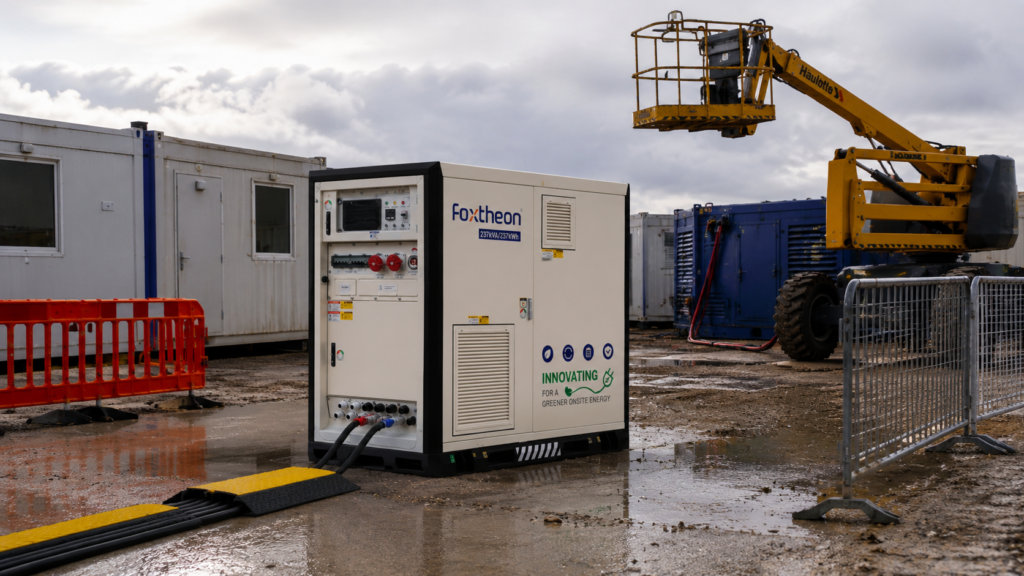
Manufacturers like Foxtheon develop integrated energy storage and hybrid power management systems engineered precisely to orchestrate these multi-vector generation setups across diverse industrial sites.
Industrial Use Cases and Operating Profiles
Engineering appropriate off grid power options requires tailoring the architecture to specific commercial demand curves.
Remote Mining and Extraction Sites
Remote mining operations exhibit heavy, continuous baseloads punctuated by severe inductive surges from conveyors, crushing equipment, and ventilation fans. The recommended configuration pairs a high-voltage N-type solar array with a high-C-rate LFP battery system functioning in parallel with existing multi-megawatt generator banks. The battery system absorbs regenerative energy from descending conveyors and provides peak-shaving capacity during heavy machinery starts.
Off-Grid Agricultural Processing and Cold Storage
Agricultural processing plants have seasonal load profiles with intense daytime cooling demands. Combining high-bifaciality solar arrays with dedicated liquid-cooled storage allows these facilities to shift solar generation directly into peak refrigeration cycles. This setup maintains stable humidity and temperature without subjecting compressors to voltage fluctuations.
Commercial Microgrids and Humanitarian Hubs
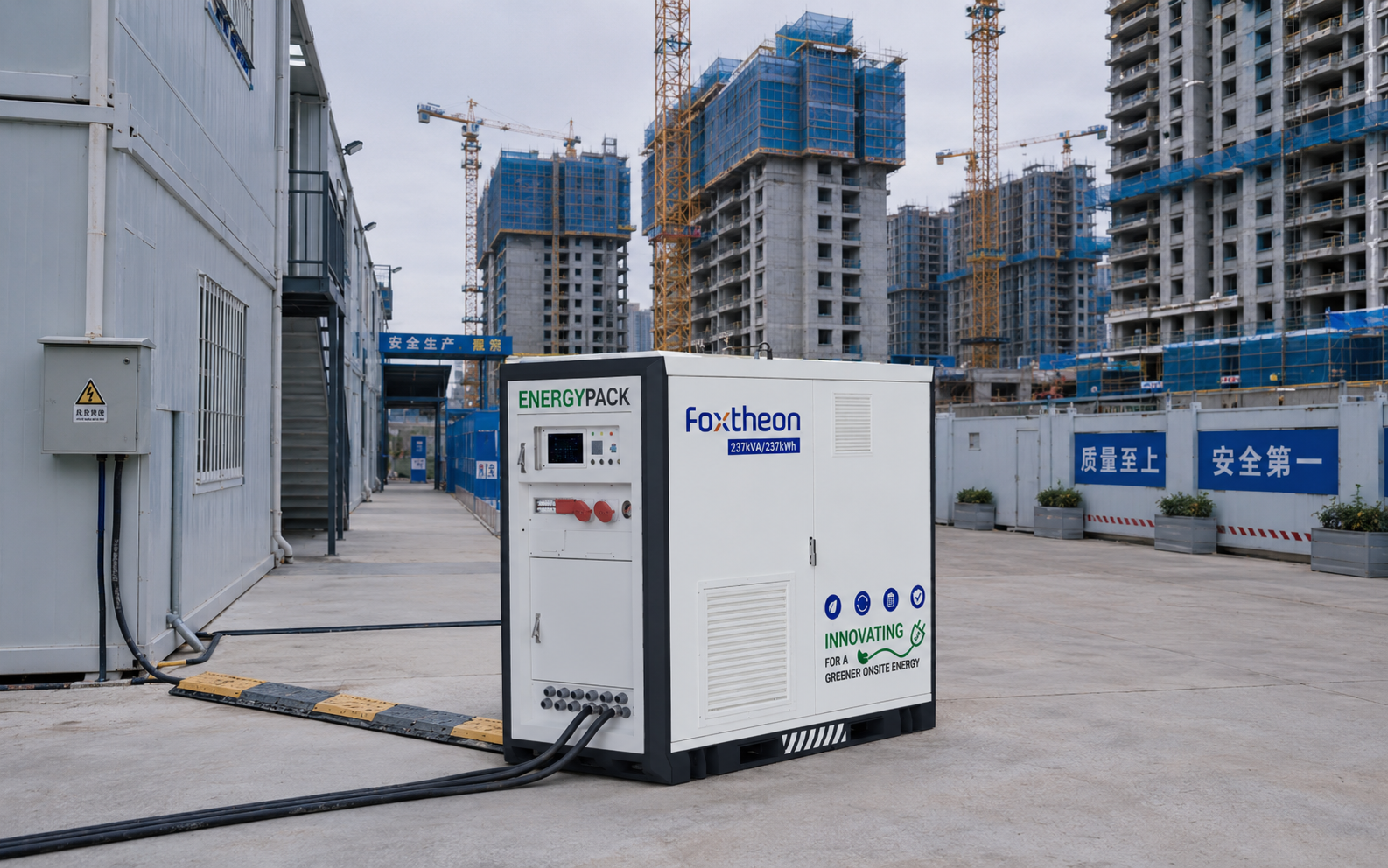
For remote communities, medical compounds, and operational outposts, power continuity is a core operational requirement. Deploying containerized, factory-preassembled power stations reduces on-site civil works and commissioning complexity. Integrated systems manufactured by Foxtheon provide plug-and-play medium-voltage connections, built-in fire suppression (Aerosol/Novec 1230), and advanced thermal management to deliver reliable power under diverse environmental conditions.
Procurement and Supplier Evaluation Criteria
Evaluating potential technology partners and system integrators requires strict technical due diligence across several domains:
Tier-1 Component Traceability and Cell Provenance
Industrial specifiers must verify that battery cells originate from authenticated Tier-1 manufacturing lines with complete quality assurance documentation. Testing protocols should encompass UN38.3, UL 1973, UL 9540A (thermal runaway propagation test), and IEC 62619 compliance. PV modules must be certified to IEC 61215 and IEC 61730 standards.
Firmware Architecture and Grid-Forming Customization
A frequent failure point in multi-source microgrids stems from closed, inflexible inverter firmware. Suppliers must support configurable droop coefficients, adjustable low-voltage ride-through (LVRT) settings, active power curtailment protocols, and open integration capabilities with third-party SCADA systems.
Factory Acceptance Testing (FAT) Standards
To prevent commissioning delays on remote sites, comprehensive full-load FAT should be conducted prior to deployment. This process includes dynamic step-load testing (0% to 100% instantaneous steps), harmonic distortion measurement (THD < 3%), thermal imaging under continuous C-rate discharge, and real-time failure simulation (e.g., loss of generation source, communication loss, and short-circuit fault clearing).
Frequently Asked Questions
Q1: What are the primary differences between AC and DC coupling in commercial off-grid setups?
A1: DC coupling links renewable sources and battery storage on a single DC bus via charge controllers, maximizing direct solar-to-battery charging efficiency in smaller applications. AC coupling connects all generation sources, inverters, and storage to an AC bus at line voltage, simplifying parallel expansion, accommodating multi-megawatt configurations, and streamlining integration with existing AC distribution switchgear.
Q2: How does temperature coefficient impact photovoltaic selection in hot climates?
A2: The temperature coefficient defines the percentage reduction in power output for every degree Celsius the cell operating temperature rises above 25°C. Technologies such as N-type TOPCon (-0.30%/°C) and HJT (-0.26%/°C) experience less thermal degradation than standard P-type PERC panels (-0.35%/°C to -0.38%/°C), resulting in higher continuous energy harvest in high-ambient environments.
Q3: Why is grid-forming inverter technology necessary for standalone microgrids?
A3: Grid-forming inverters do not rely on an external AC reference signal. They actively establish and stabilize the microgrid voltage and frequency using droop control algorithms. This capability is required to handle sudden large-scale load steps, balance intermittent generation fluctuations, and facilitate black-start operations after a plant shutdown.
Q4: How do hybrid controllers prolong the operating life of mechanical generators?
A4: Microgrid controllers prevent thermal generators from running at low load levels (below 30-40%), which causes carbon build-up and mechanical degradation. By using battery storage to absorb excess capacity or deliver peak power requirements, generators are kept operating within their optimum efficiency windows (typically 70-85%).
Q5: What safety standards must be met for commercial containerized battery energy storage systems?
A5: Key safety standards include UL 9540A for assessing thermal runaway propagation, UL 1973 for battery pack construction, IEC 62619 for industrial operational safety, and NFPA 855 for stationary energy storage installations. Systems should also include multi-stage gas detection, deflagration panels, and automated fire suppression systems.