
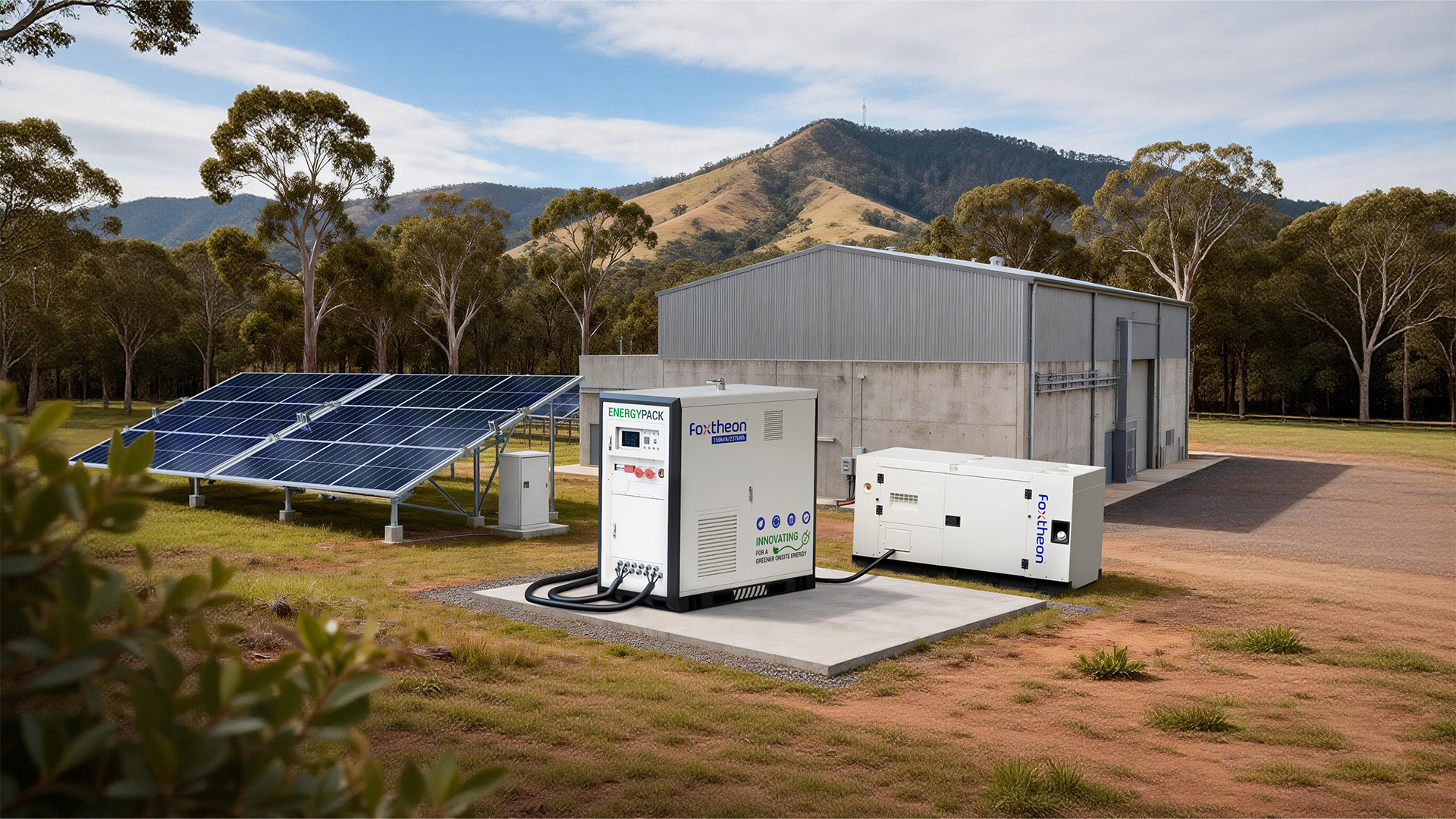
Power reliability and energy management strategies are undergoing a fundamental shift toward distributed energy resources (DERs). Enterprise operators, facility engineers, and commercial managers increasingly turn to the hybrid grid solar system to balance grid dependency with operational continuity. By integrating photovoltaic generation, advanced energy storage, and utility grid connectivity into a unified topology, these systems deliver uninterrupted supply, stabilize local loads, and mitigate rate volatility.
Unlike traditional grid-tied installations that shut down during grid disruptions or standalone off-grid setups that demand oversized battery banks, a hybrid configuration provides controlled energy dispatch. Engineering an effective hybrid system requires a clear understanding of power conversion mechanics, system coupling options, energy management algorithms, and load-prioritization strategies.
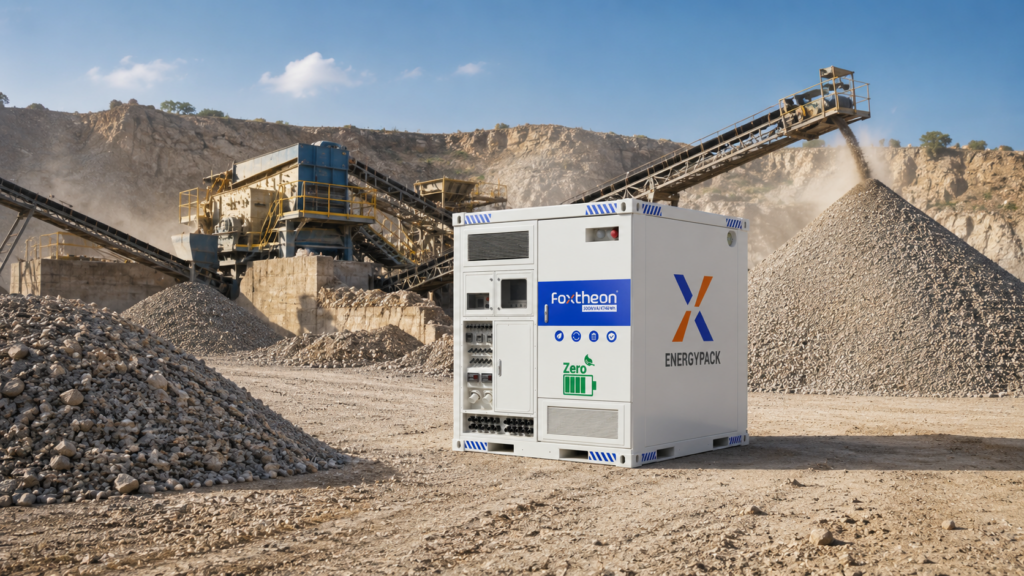
Demystifying the Hybrid Grid Solar System Architecture
A hybrid grid solar system combines multi-source power generation with intelligent storage, forming a localized microgrid capable of operating either in parallel with the utility grid or islanded from it. The architecture relies on four fundamental subsystems working in active synchronization.
Component Synergy and Power Conversion
- Photovoltaic (PV) Array: Converts solar irradiance into direct current (DC) electricity via the photovoltaic effect.
- Bidirectional Hybrid Inverter / Power Conversion System (PCS): Serves as the central operational hub, managing multi-directional DC-to-AC and AC-to-DC conversion, grid synchronization, and frequency regulation.
- Energy Storage System (ESS): Employs high-density chemistry—typically Lithium Iron Phosphate (LiFePO4)—governed by an integrated Battery Management System (BMS) for state-of-charge (SoC) management and thermal monitoring.
- Smart Switchboard & Energy Management System (EMS): Controls power distribution pathways, monitors dynamic building loads, and manages transfer switching during utility anomalies.
Within this ecosystem, specialized power electronics developed by engineering providers like Foxtheon ensure that incoming solar energy, stored reserve power, and auxiliary grid feeds are dynamically routed to match actual demand with minimal conversion losses.
AC-Coupled vs. DC-Coupled System Configurations
Determining the optimal system architecture depends on whether the installation is a greenfield project or a retrofit of an existing solar array.
- DC-Coupled Architecture: PV generation and battery storage connect on the same DC bus before passing through a single hybrid inverter. This layout maximizes charging efficiency from solar to battery, as energy avoids multiple DC-AC-DC conversion stages. It is the standard approach for newly designed facilities.
- AC-Coupled Architecture: PV arrays and battery banks feature separate inverters connected on the facility’s central AC switchboard. While this incurs minor double-conversion efficiency losses during battery charging, it offers flexibility for expanding legacy grid-tied systems without replacing existing string inverters.
Operational Dynamics Across Utility Grid States
The operational logic of a modern hybrid grid solar system adapts in real time based on grid stability, battery charge state, real-time load profiles, and prevailing electricity tariff structures.
Solar-First Self-Consumption Mode
During peak sunlight hours, the hybrid inverter directs PV power directly to facility loads. When generation exceeds operational demand, the intelligent control switchboard redirects excess electricity to charge the battery bank. Once the storage system reaches maximum capacity, remaining surplus power can be exported to the utility grid where net-metering regulations permit, providing localized grid support.
Peak Shaving and Time-of-Use (TOU) Arbitrage
In regions with Time-of-Use rate structures or high demand charges, energy costs fluctuate significantly throughout the day. The Energy Management System dynamically shifts facility power draw off the utility grid during peak pricing windows. Instead, the facility relies on stored solar reserves. During off-peak hours (such as overnight), the system can selectively draw grid power to recharge storage reserves at baseline rates if solar generation forecasts fall short.
Grid Outage Isolation and Microgrid Islanding
When utility grid failures or voltage sags occur, standard grid-tied systems disengage automatically due to anti-islanding safety requirements (such as IEEE 1547 and UL 1741 standards). A hybrid grid setup triggers an automated transfer switch (ATS) to physically isolate the internal bus from the utility network within milliseconds (<10-20 ms). The hybrid inverter immediately assumes grid-forming mode, supplying stable frequency and voltage to critical load panels using stored battery power and active solar output without interrupting operational uptime.
Comparative Analysis: Hybrid, On-Grid, and Off-Grid Topologies
Selecting the appropriate solar infrastructure requires evaluating performance characteristics across utility reliance, backup capability, and operational flexibility.
- On-Grid (Grid-Tied) Solar Systems: Utilize simpler inverter topologies without energy storage assets. While straightforward to deploy, they provide zero power security during utility blackouts, exposing critical operations to localized grid instability.
- Off-Grid Solar Systems: Operate in total isolation from public utilities. These setups require large PV arrays, heavy battery capacities, and auxiliary backup generation to handle extended low-irradiance periods. They are strictly designed for remote locations where utility interconnects are physically unavailable.
- Hybrid Grid Solar Systems: Provide a balanced strategy by blending the security of off-grid reserve power with the continuous fallback capacity of the utility grid. System capacities can be sized to meet operational risk profiles rather than absolute worst-case generation deficits.
PV Module Selection for Integrated Hybrid Systems
System performance relies on pairing the energy storage and power conversion infrastructure with appropriate photovoltaic technologies tailored to site parameters.
- Monocrystalline Silicon Modules: Deliver high module efficiencies (19% to 23%+) and superior low-light power production. Their small physical footprint per kilowatt makes them the industry standard for space-constrained commercial roofs.
- Polycrystalline Silicon Modules: Offer lower manufacturing complexity and lower efficiency thresholds (15% to 18%). They require larger surface areas for equivalent power outputs and exhibit higher temperature coefficients.
- Building-Integrated Photovoltaics (BIPV): Embed PV elements directly into structural cladding, glass facades, or roofing materials. While offering architectural integration, thermal management constraints can impact generation output compared to rack-mounted modules.
- Thin-Film Photovoltaics (CdTe / CIGS): Lightweight and flexible panels well-suited for structures with strict structural load limitations. They maintain performance in high ambient temperatures, though they require significantly more surface area.
Enterprise System Integration and Co-Existence Considerations
Deploying a robust hybrid grid solar system within commercial or industrial environments requires detailed planning around infrastructure compatibility, safety protocols, and existing facility assets.
Auxiliary Generation Co-Existence
Modern hybrid microgrids do not require facility managers to decomission existing back-up assets, such as diesel or natural gas generators. Instead, sophisticated energy management platforms incorporate generator dry-contacts into the overall power control logic. If an extended utility blackout depletes battery storage below critical thresholds during prolonged low-solar periods, the hybrid controller automatically signals the auxiliary generator to start, supplying load requirements while gently recharging the energy storage assets.
BMS and EMS Communication Frameworks
High-performance system integration depends on low-latency communication between the battery management hardware, hybrid PCS, and facility-level supervisory control and data acquisition (SCADA) platforms. Industrial protocols such as Modbus TCP/RTU, CANbus, and SunSpec ensure granular visibility into cell voltages, temperature gradients, state-of-health (SoH) metrics, and power quality parameters.
Thermal and Safety System Integration
Energy storage arrays housed alongside commercial facilities demand specialized environmental safety design. Enclosures must feature active thermal management (liquid or forced-air cooling) to maintain lithium-ion cell operating temperatures within optimal bands, alongside aerosol-based fire suppression and multi-stage gas detection systems to ensure operational safety.
Frequently Asked Questions
How quickly does a hybrid grid solar system switch to battery power during a blackout?
Modern commercial hybrid systems feature automated transfer switching with transition times under 10 to 20 milliseconds. This rapid switchover allows sensitive IT infrastructure, automation controllers, and critical facility machinery to remain operational without experiencing reset cycles.
Can an existing grid-tied solar array be upgraded to a hybrid grid configuration?
Yes. Existing grid-tied arrays can be upgraded using an AC-coupled topology. An additional energy storage unit paired with a dedicated storage inverter is integrated directly into the facility’s central AC distribution board, avoiding modifications to existing string inverters or solar array wiring.
How does a hybrid system handle sudden high-inrush motor loads?
Bidirectional hybrid inverters are engineered with overload peak-surge ratings—often 150% to 200% of nominal capacity for brief intervals (3 to 10 seconds). This short-term power capability supports high starting currents required by inductive loads like pumps, compressors, and HVAC equipment.
Is grid export control achievable with a hybrid solar setup?
Yes. The Energy Management System (EMS) can be programmed with dynamic grid-export limits ranging from 0% (zero-export mode) up to the full rated capacity of the inverter. Power flow meters at the utility point of common coupling (PCC) provide real-time feedback to prevent unauthorized grid injection.
What role does battery depth of discharge (DoD) play in system life cycle?
Managing the operational Depth of Discharge directly influences battery cycle life. Utilizing advanced LiFePO4 chemistry managed by intelligent BMS algorithms allows commercial setups to operate routinely at 80% to 90% DoD while maintaining cycle life expectations across thousands of operational charge-discharge cycles.
Partner with Foxtheon for Advanced Microgrid Engineering
Designing a high-reliability energy platform requires precise engineering tailored to your facility’s operational profile, load requirements, and grid conditions. Foxtheon delivers integrated hybrid power platforms, advanced battery energy storage systems (BESS), and intelligent power conversion equipment designed for commercial, industrial, and microgrid deployments worldwide.