
The global transition toward decentralized power networks has positioned Battery Energy Storage Systems (BESS) as fundamental assets for commercial, industrial, and utility-scale energy management. For system integrators, EPC (Engineering, Procurement, and Construction) contractors, and enterprise facility engineers, evaluating energy storage costs requires a detailed understanding of hardware sub-assemblies, soft costs, electrochemical behaviors, and grid-connection requirements. Modern projects demand a balance between initial capital expenditures and long-term operational efficiency, ensuring that energy storage assets deliver high operational uptime over multi-decade lifespans.
As battery manufacturing scales globally, understanding the primary cost drivers across the BESS supply chain enables procurement teams to make informed engineering choices. Technical parameters such as voltage architecture, thermal management design, cell formatting, and balance of plant (BOP) integration directly affect up-front capital outlay as well as levelized cost metrics. Enterprise energy equipment providers, including Foxtheon, design high-efficiency BESS solutions to optimize hardware layout, simplify field installation, and maintain high safety margins under demanding operational profiles.
1. Macro-Level Capital Allocations in BESS Infrastructure
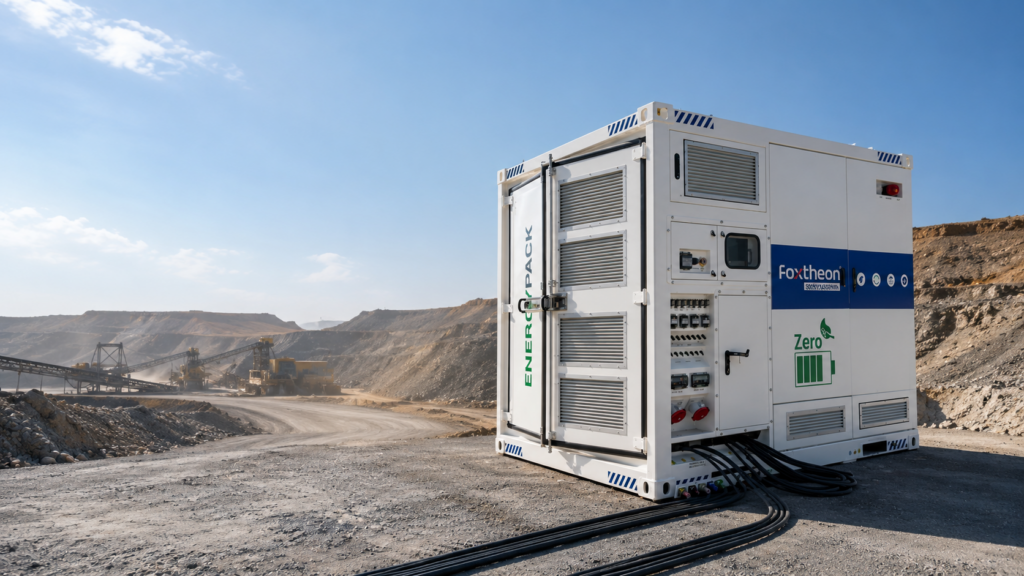
Capital expenditure (CapEx) for a commercial or utility BESS project spans several specialized engineering disciplines. Rather than treating an energy storage system as a monolithic asset, enterprise buyers categorize capital allocation across three main subsystems:
- Electrochemical Battery Stack: Includes raw materials, lithium-ion battery cells, module enclosures, structural rack assemblies, and local Battery Management System (BMS) hardware.
- Power Conversion and Electrical Balance of Plant (BOP): Includes bi-directional Power Conversion Systems (PCS), step-up isolation transformers, medium-voltage switchgear, protection relays, and DC/AC distribution cabling.
- Mechanical and Site Infrastructure: Includes localized containerized enclosures, HVAC or liquid thermal management circuits, fire suppression systems, structural concrete pad civil works, and grid interconnection access facilities.
Recent technological shifts toward standard containerized enclosures have reduced custom civil engineering expenses. However, hardware selection and integration complexity remain the primary variables determining total energy storage costs for multi-megawatt installations.
2. Hardware Breakdown: Cell Chemistry, Pack Engineering, and Balance of Plant
Battery Cell Chemistries and Density Milestones
The core electrochemical choice directly influences cell-level capital expenditure and volumetric density. Lithium Iron Phosphate (LiFePO4 or LFP) has emerged as the dominant chemistry for stationary energy storage due to its inherent thermal stability, non-toxic composition, and superior cycle life compared to Nickel Manganese Cobalt (NMC) formulations.
The industry standard for stationary BESS cells has transitioned from classic 280Ah prismatic formats to higher-capacity 314Ah and 320Ah prismatic cells. Increasing energy capacity per cell without changing the external cell footprint lowers structural pack material needs, reduces internal busbar electrical connection points, and decreases per-kilowatt-hour manufacturing expenses. High-density LFP cells allow manufacturers to assemble higher total energy storage capacities inside standard 20-foot or 40-foot ISO shipping containers, optimizing shipping logistics and civil footprint requirements.
1500V DC Architecture vs. Legacy 1000V Systems
Modern utility and commercial energy storage designs increasingly favor 1500V DC system bus architectures over legacy 1000V systems. Moving to higher operational DC voltages provides notable electrical and financial advantages:
- Reduced Conductor Volume: Operating at higher voltages lowers current draw for an equivalent power rating, allowing for smaller conductor cross-sections and reducing expensive copper and aluminum cabling requirements.
- Higher PCS Efficiency: Bi-directional inverters designed for 1500V operating ranges achieve higher conversion efficiencies, reducing internal semiconductor thermal losses.
- Increased Energy Density: High-voltage strings enable longer battery series connections within a single rack, increasing overall volumetric energy capacity per enclosure.
By implementing a 1500V architecture, system engineering teams effectively reduce hardware balance-of-plant expense while optimizing system round-trip efficiency (RTE).
Thermal Management: Liquid Cooling versus Forced Air
Thermal control systems directly impact operating lifespan, system reliability, and localized maintenance expenses. Historical forced-air cooling systems utilize localized fans and internal container ducting to move ambient air across battery packs. While air cooling features lower upfront mechanical component costs, it exhibits challenges in maintaining uniform internal cell temperatures, leading to localized thermal gradients across battery modules.
Direct liquid cooling systems utilize chillers, internal coolant pumps, and cold plates directly mounted to individual battery cells within each module. Advanced thermal engineering designs from manufacturers like Foxtheon leverage liquid cooling circuits to maintain strict internal cell temperature differentials within 3°C across the system. Liquid cooling yields key operational benefits that reduce overall energy storage costs:
- Lower Parasitic Energy Load: Liquid cooling systems consume less auxiliary electrical power compared to continuous high-volume air circulation fans, increasing net usable energy discharge.
- Extended Electrochemical Life: Consistent thermal uniformity slows standard cell degradation mechanics, extending total cycle count before reaching end-of-life parameters.
- Compact Physical Footprint: Liquid-cooled modules do not require wide air gaps between battery packs, enabling dense container packing configurations.
3. Balance of System (BOS) and Soft Cost Analysis
Beyond battery modules and power conversion hardware, non-battery hardware and engineering service components represent a significant portion of overall project budget allocations.
Power Conversion System (PCS) and Transformer Sizing
The PCS serves as the interface between the DC battery bank and the three-phase AC distribution network. Inverter selection must account for total power capability (kW/MW) as well as continuous current discharge profiles, total harmonic distortion (THD) limits, and rapid response response characteristics for frequency regulation. Pairing the PCS with appropriately sized medium-voltage step-up transformers (e.g., matching low-voltage AC outputs to 11kV, 22kV, or 33kV facility distribution grids) requires thorough power flow analyses during early design phases to prevent transformer saturation and harmonic loss.
Engineering, Procurement, and Construction (EPC) Variables
Field execution represents a variable component of total installation expenditure. Key site factors affecting project completion costs include:
- Civil and Structural Works: Soil load-bearing capacity evaluations, concrete pad foundation casting, seismic bracing structures, and perimeter security setup.
- Cable Trenching and Conduit Routing: Underground duct banks for high-voltage AC/DC lines and isolated control/communication routing.
- System Commissioning and Grid Sync: Multi-stage point-to-point electrical testing, localized control verification, and grid operator compliance validation testing.
Regulatory Compliance, Safety Codes, and Permitting
Compliance with internationally recognized safety frameworks is essential for project approval and insurability. Energy storage engineering designs must satisfy strict safety certifications, including:
- UL 1973: Safety evaluation for battery packs used in stationary applications.
- UL 9540 & UL 9540A: Standard for energy storage systems and equipment, including thermal runaway fire propagation testing at the cell, module, and unit level.
- IEC 62619: Safety requirements for secondary lithium cells and batteries used in industrial systems.
- NFPA 855: Standard for the Installation of Stationary Energy Storage Systems, specifying physical separation distances, water sprinkler flow rates, and localized gas detection requirements.
Selecting pre-certified containerized BESS equipment lowers field testing requirements and streamlines local fire authority permitting, preventing costly site delays during construction.
4. Operational Factors Influencing Financial Returns
Understanding operational metrics allows facility operators to control lifetime operational costs while maximizing energy output and revenue capabilities.
Cycle Life, Degradation Curves, and Depth of Discharge (DoD)
Lithium-ion cells experience gradual performance loss over time due to solid electrolyte interphase (SEI) growth, electrolyte depletion, and active material degradation. Cell degradation rate depends heavily on daily Depth of Discharge (DoD), operating C-rate (charge and discharge current relative to total capacity), and ambient temperature control.
Operating a system continuously at 100% DoD accelerates capacity fade compared to operating within an 80% or 90% window. Modern battery management systems allow site managers to adjust operating parameters based on real-time grid requirements, ensuring the battery string maintains optimal state-of-health (SOH) trajectories over a multi-year service lifecycle.
Round-Trip Efficiency (RTE) and Parasitic Loads
Round-Trip Efficiency measures the ratio of energy retrieved from a storage system relative to the total energy supplied during the charging phase. System-level RTE accounts for combined electrical and mechanical losses:
- Electrochemical Resistance: Internal cell impedance generated during lithium-ion transport.
- Inverter Conversion Losses: Dual AC-to-DC (charge) and DC-to-AC (discharge) power conversion efficiency curves.
- Parasitic Auxiliary Power: Continuous power consumed by thermal management chillers, control electronics, BMS units, and safety monitoring systems.
Maximizing AC-to-AC round-trip efficiency directly reduces energy waste during daily charging cycles, lowering the overall baseline energy storage costs per usable megawatt-hour.
5. Sourcing Frameworks: Evaluating Energy Storage Vendors
Procuring commercial-grade BESS hardware requires careful evaluation of technical capabilities, manufacturing standards, and long-term service agreements. Engineering teams and procurement managers evaluate suppliers using structured criteria:
- Supply Chain Traceability: Verification of Tier-1 battery cell origin, high-purity raw material sourcing, and automated quality control standards during cell and module production.
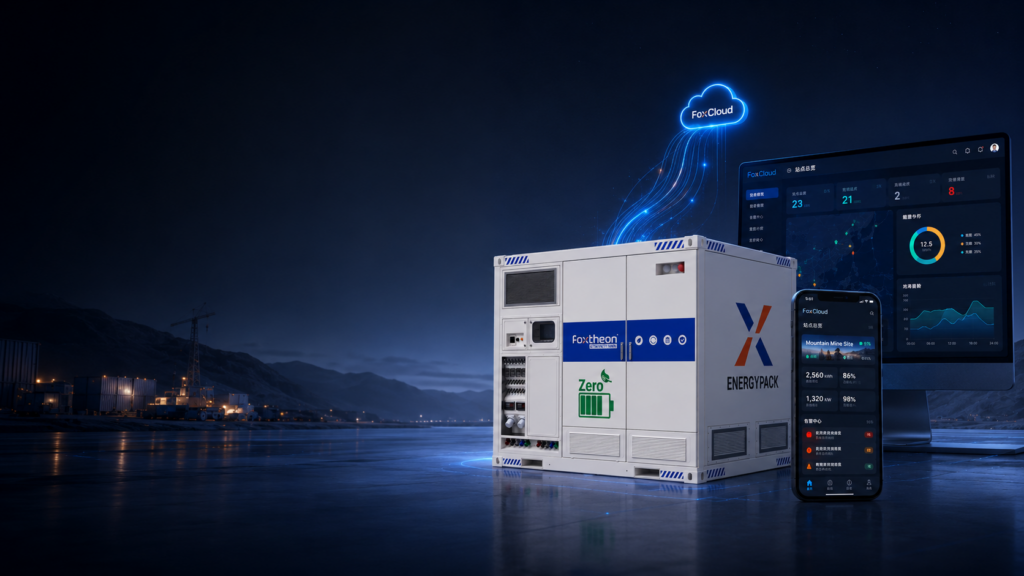
- Integrated System Architecture: Suppliers providing fully integrated BESS units—combining factory-installed cells, BMS, liquid cooling, power distribution, and fire suppression—reduce onsite assembly errors and integration conflicts.
- Microgrid and Hybrid Compatibility: Ensure BESS controllers can interface with existing industrial generation equipment, grid connections, and onsite solar arrays using standard industrial protocols (e.g., Modbus TCP, CANbus, IEC 61850).
- Factory Acceptance Testing (FAT): Comprehensive factory-floor testing protocols that validate load performance, BMS messaging, and safety controls prior to overseas shipment.
Industry suppliers such as Foxtheon focus on modular system designs that streamline factory integration, offering standardized BESS configurations suited for diverse industrial microgrid, commercial peak shaving, and renewable integration projects. Choosing equipment designed for straightforward modular expansion helps enterprise sites scale energy capacity incrementally, avoiding excessive upfront capital deployment.
Frequently Asked Questions (FAQ)
Q1: What are the primary factors that determine initial commercial energy storage costs?
A1: Initial investment expenses are primarily driven by battery cell chemistry (such as LFP), battery enclosure capacity, power rating of the Power Conversion System (PCS), thermal management systems (liquid vs. air cooling), balance of plant electrical hardware, site civil preparation, and regulatory compliance certification testing.
Q2: How does liquid cooling affect the financial performance of a BESS installation?
A2: While liquid cooling requires a slightly higher initial hardware outlay than basic air cooling systems, it offers superior thermal uniformity across cells, reduces auxiliary parasitic energy consumption, enables higher packing density, and slows overall cell capacity degradation over time.
Q3: Why is 1500V DC architecture becoming the preferred choice for commercial energy storage?
A3: A 1500V DC system allows for longer battery series connections per string, which lowers current draw for a given power level. This reduces conductor cross-section requirements, lowers power losses across copper wiring, optimizes inverter efficiency, and improves overall system power density.
Q4: How do safety standards like UL 9540A impact BESS project timelines and budgets?
A4: UL 9540A test data provides thermal runaway flame propagation measurements to local fire officials and insurance underwriters. Utilizing equipment that has completed rigorous UL 9540A testing streamlines local site permitting processes, prevents costly custom containment engineering, and helps secure favorable insurance terms.
Q5: Can a new battery energy storage system integrate with existing industrial power infrastructure?
A5: Yes. Modern BESS units are designed with open industrial communication protocols (such as Modbus TCP and CANbus) and flexible power electronics. They seamlessly operate alongside existing site power assets, solar PV arrays, and grid connections within an integrated microgrid setup without interrupting operations.
Inquiry and Technical Specifications Request
For custom site evaluations, detailed engineering datasheets, or commercial project procurement discussions, contact our technical integration team directly. Explore scalable commercial energy storage architectures, custom liquid-cooled BESS containers, and microgrid power solutions tailored to your operational profiles at energy storage costs and system engineering resources available at Foxtheon.