
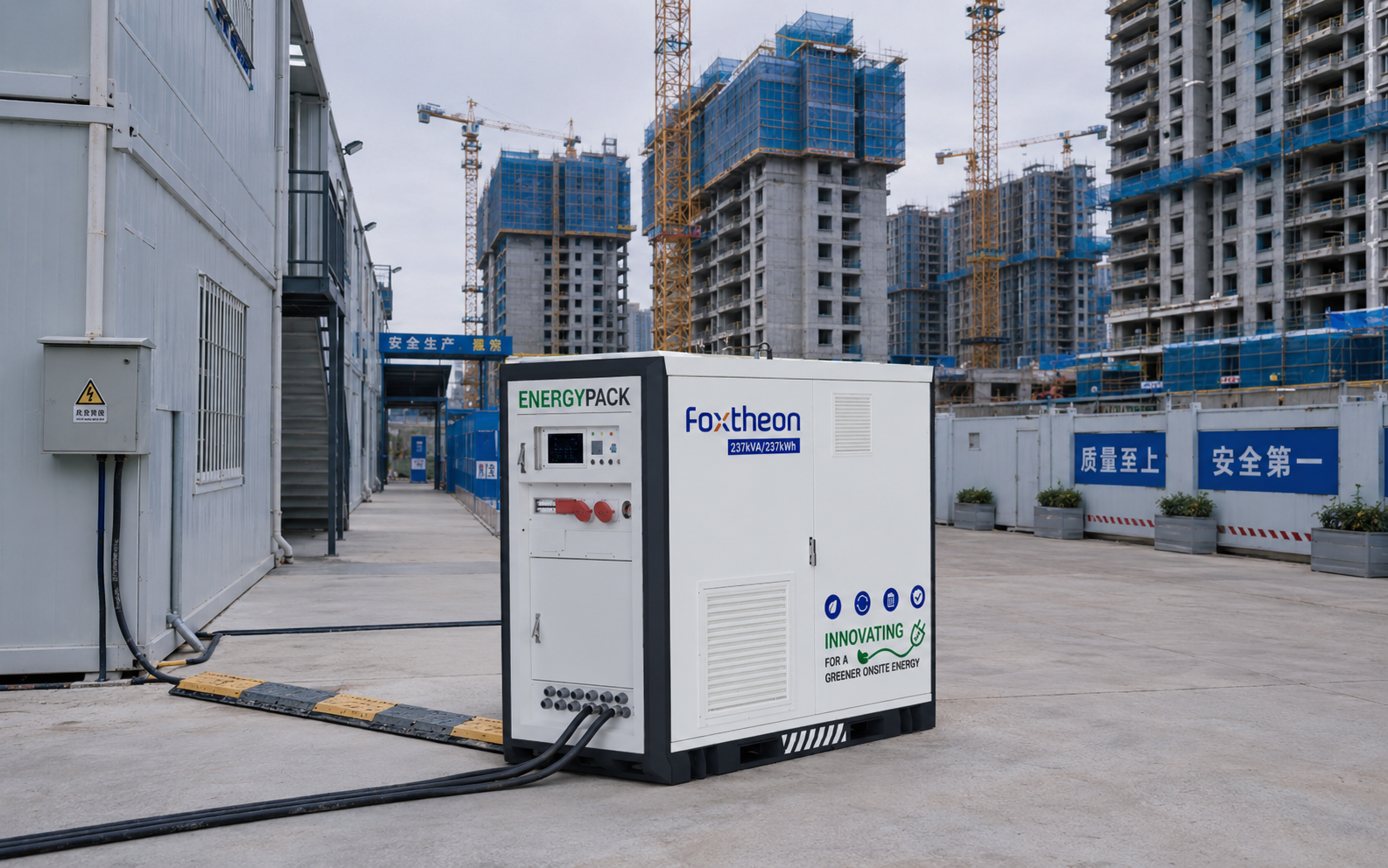
Modern electrical distribution networks require dynamic balancing mechanisms to manage bidirectional power flows, harmonic distortion, and intermittency. Electrochemical and electromechanical energy storage devices serve as prime stabilizing assets across utility-scale interconnections and decentralized commercial microgrids. Rather than functioning as standalone backup supplies, these systems operate as active power-conditioning nodes capable of multi-quadrant sub-cycle dispatch.
Implementing these units alongside current infrastructure demands an understanding of cell-level materials science, thermal behavior, power electronics topologies, and communication interoperability. Engineering teams must evaluate internal resistance profiles, cycling degradation kinetics, and control loop latency to maintain continuous plant operation under demanding load shifts.
Electrochemical Architectures and Material Composition
The operational longevity and efficiency of containerized energy storage devices depend heavily on cathode and anode material properties. Industrial deployments favor solid-state, flow, and advanced lithium-ion variants depending on cycling duration requirements.
Cathode Morphologies and Thermal Stability
Lithium Iron Phosphate (LiFePO4 or LFP) remains prominent in stationary installations due to the strong covalent P-O bonds within the olivine crystal lattice. This structural stability maintains lattice integrity during overcharging events and limits oxygen liberation under elevated operating temperatures. In contrast, Nickel Manganese Cobalt (NMC) chemistries provide higher volumetric energy density by utilizing layered oxide crystalline structures. However, NMC cells exhibit lower onset temperatures for self-heating and internal parasitic reactions. Advanced smart systems engineered by Foxtheon leverage optimized cell arrangements that isolate individual modules to prevent heat transfer between adjacent packs.
Anode Interface Dynamics
At the negative electrode, artificial graphite matrices are often blended with silicon sub-oxides to expand lithium intercalation capacities. A vital factor governing system longevity is the morphology of the Solid Electrolyte Interphase (SEI) film. Repeated microgrid peak-shaving cycles induce mechanical stress within the anode particles, causing exfoliation and localized lithium plating if charging occurs below minimum thermal thresholds. Continuous monitoring of equivalent series resistance (ESR) allows plant controllers to calculate the rate of active lithium loss throughout the operational lifespan.
Alternative Chemistries for Long-Duration Applications
- Sodium-Ion Formulations: Utilizing earth-abundant Prussian blue analogues or polyanionic cathodes, sodium-ion technology provides a dependable supply profile for stationary operations that require moderate density and wider thermal margins.
- All-Vanadium Redox Flow Systems: By utilizing separate aqueous electrolytes containing vanadium ions in distinct oxidation states, these systems decouple power capability from energy capacity, eliminating degradation linked to phase changes in solid lattices.
- Solid-State Electrolyte Matrices: Transitioning from flammable organic carbonate solvents to solid ceramic or polymer ion conductors allows higher current densities during constant-current charge profiles.
Thermal Management Topologies and Heat Dissipation Controls
Operating industrial-grade energy storage devices at design efficiency requires tight control over internal temperature differentials. Excessive thermal gradients across a rack lead to uneven current distribution, premature capacity divergence among cells, and accelerated aging.
Liquid cooling has become the preferred approach for high C-rate applications, replacing forced-air systems. Closed-loop circuits channel a water-glycol mixture through micro-channel aluminum cold plates placed directly against cell surface planes. According to research documents published by the National Renewable Energy Laboratory (NREL), uniform heat extraction across battery packs minimizes cell-to-cell thermal variations to under 2 degrees Celsius, which mitigates differential aging rates across parallel battery strings.
System designers must also integrate active refrigerant cycle units, variable-speed brushless DC pumps, and multi-port proportional valves. Advanced Energy Management Systems (EMS) deploy predictive thermal algorithms, initiating pre-cooling cycles prior to planned heavy discharge schedules based on incoming grid dispatch schedules.
Power Conversion Systems (PCS) and Hybridized Generation Topology
The efficiency of energy storage devices relies on the bi-directional power conversion system (PCS) that interfaces DC battery racks with high-voltage AC switchgear. Modern installations implement multi-level neutral point clamped (NPC) or active neutral point clamped (ANPC) transistor architectures to reduce total harmonic distortion (THD) and switching losses.
Grid-Following vs. Grid-Forming Control Modes
Traditional installations operate predominantly in grid-following (GFL) configurations, utilizing phase-locked loops (PLL) to synchronize their current injection with existing grid voltage vectors. However, high-penetration renewable microgrids increasingly mandate grid-forming (GFM) capabilities. In GFM operational modes, the PCS behaves as an independent virtual synchronous machine (VSM), generating voltage and frequency references while supplying synthetic inertia during sudden load additions.
Co-Location with Reciprocating Engine Generators
Rather than seeking to displace existing synchronous generating assets, sophisticated power system architects combine energy storage devices alongside diesel or natural gas gensets. Internal combustion reciprocating generators function with maximum thermal efficiency and lower maintenance intervals when operated at steady, optimized baseline loads between 70% and 85% of their rated capacity.
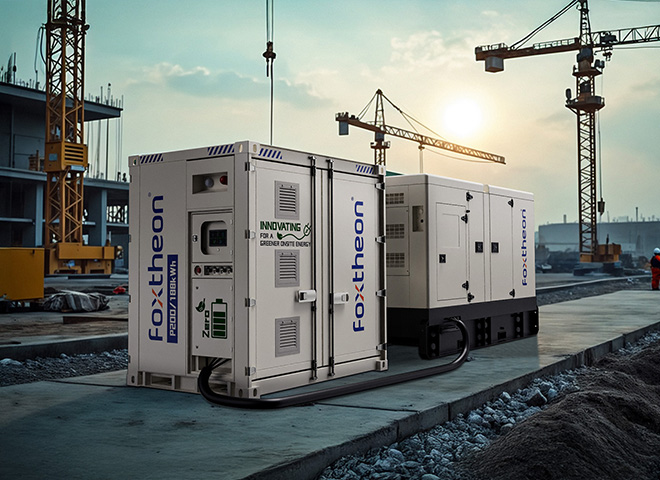
Industrial integration packages from Foxtheon integrate directly with generator automation panels. In this hybrid layout, the stationary battery system absorbs sudden, transient step loads and supplies momentary reactive power, allowing reciprocating engines to ramp smoothly without frequency dip anomalies, wet stacking, or low-load soot formation.
Compliance Frameworks and Engineering Specifications
Industrial battery energy installations must comply with strict international regulatory standards. These regulations govern electrical safety, mechanical construction, electromagnetic compatibility, and microgrid interconnection behavior.
System specifications must verify certifications under IEC 62619 for industrial secondary lithium cells and batteries, ensuring mechanical integrity against drop, impact, and high-vibration exposure. For the North American market, installations require test evaluations via UL 9540A to examine thermal runaway propagation characteristics across module and containerized boundaries.
Interconnection at the distribution line boundary demands compliance with IEEE 1547, defining parameters for fault ride-through (FRT), dynamic reactive current provision during low-voltage events, and automated islanding detection protocols. B2B engineers must verify that the target PCS features hardware-level galvanic isolation and dual-stage surge protection suppression modules (SPDs) rated for utility transient categories.
Procurement and Quality Audit Framework for Large-Scale Integration
Specifying enterprise-scale systems requires evaluation criteria that extend beyond basic plate-line capacities. Procurement teams must conduct detailed factory acceptance test (FAT) reviews and verify original equipment manufacturing protocols.
- Cell-Sorting Tolerances: Quality manufacturing requires that cells grouped into a single pack display capacity variations within 1.0% and DC internal resistance variations below 1.5 milliohms. This balance prevents cell divergence during cycling.
- Structural Enclosure Ratings: Outdoor containers require minimum C4- or C5-rated marine protective coatings per ISO 12944 standards to resist atmospheric corrosion in coastal or industrial air basins, alongside IP55 or IP67 ingress protection for external junctions.
- BMS Telemetry Granularity: The battery management system must process voltage, temperature, and current readings across every series cell group at high sampling rates (typically 100 milliseconds or lower), broadcasting diagnostics through industrial Modbus TCP/IP, CAN 2.0B, or IEC 61850 protocols.
- Safety Interlock Redundancy: Hardware-level interlocks must function independently of software logic, automatically triggering dry contact breakers, gas suppression mechanisms, and HV disconnect circuits upon detection of thermal, off-gas, or insulation degradation limits.
Frequently Asked Questions
Q1: What are the primary distinctions between C-rate ratings in industrial applications?
A1: The C-rate measures the rate at which an energy storage unit charges or discharges relative to its total capacity. A 1C rating indicates that the system can discharge its full capacity in one hour. A 0.5C system provides a two-hour duration, whereas a 4C system discharges fully in fifteen minutes, tailored for short-duration frequency regulation and sub-second transient damping.
Q2: How do temperature variations impact the cycle life of LFP batteries?
A2: Operating above 35 degrees Celsius accelerates parasitic side reactions at the electrolyte-electrode interfaces, which speeds up solid electrolyte interphase (SEI) layer growth and capacity loss. Conversely, charging below 0 degrees Celsius without thermal pre-conditioning causes localized lithium plating on the graphite anode, permanently increasing internal impedance and lowering storage capacity.
Q3: How do stationary storage systems enhance reciprocating engine efficiency in microgrids?
A3: Energy storage units handle rapid, high-demand load variations and dynamic start-up spikes. This operational buffers allow reciprocating engine generators to run at stable, peak-efficiency points, minimizing maintenance downtime, fuel consumption, and component wear.
Q4: What role does short-circuit ratio (SCR) play in siting grid-scale battery systems?
A4: The short-circuit ratio indicates the relative electrical strength of an AC network at a specific node. In low SCR environments (weak grids), grid-following inverters may experience phase-angle tracking instability, necessitating the deployment of grid-forming (GFM) control algorithms with synthetic inertia capabilities to support grid stability.
Q5: Why is cell balancing essential in high-voltage DC battery strings?
A5: Over prolonged cycles, minor variations in internal impedance and module temperatures cause state-of-charge (SOC) drift between cells. Without active or passive balancing circuits, the lowest-capacity cell determines the discharge cut-off limit of the entire string, while the highest cell limits the recharge ceiling, reducing the overall usable energy of the installation.
Technical Inquiry Specification Template
System integrators, EPC contractors, and distribution network operators may submit project parameters through our engineering portal. Please specify nominal AC interconnection voltage, primary dispatch application (frequency stabilization, peak shaving, or microgrid integration), physical footprint constraints, and environmental classifications for system sizing.
| Engineering Metric | Input Requirement Parameters |
|---|---|
| Interconnection Voltage | 400V / 480V / 11kV / 33kV |
| Target Cycle Profile | Continuous C-Rate / Duration Hours / Cycles per 24h |
| Thermal Environment | Min/Max Ambient Ambient Temperature, Humidity, Elevation |
| Communications Protocol | Modbus TCP / DNP3 / IEC 61850-7-420 |
Direct technical inquiries and comprehensive single-line diagrams (SLD) can be routed for engineering analysis via Foxtheon system integration support channels.