
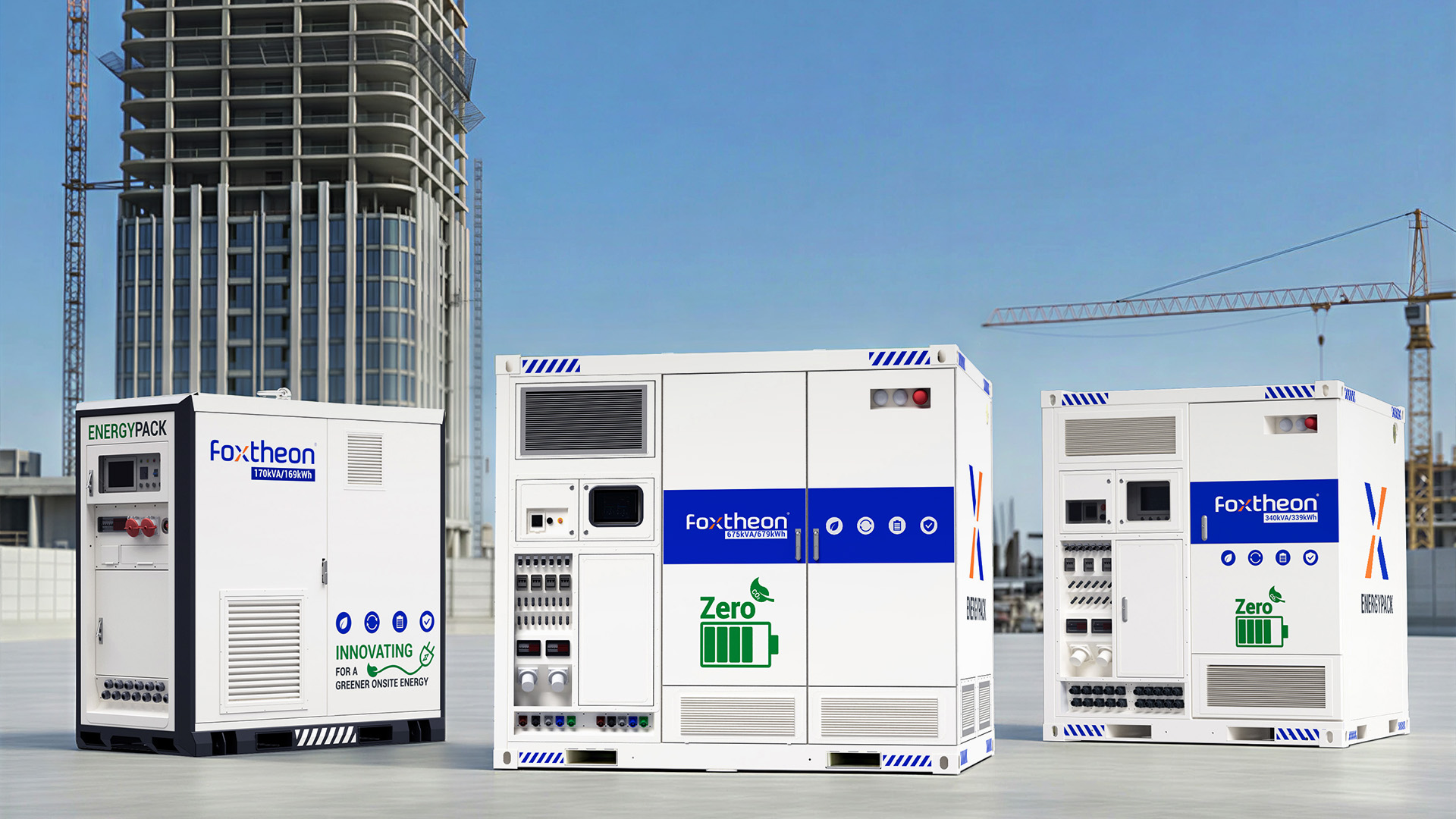
Modern industrial and commercial facilities operate under complex electrical demands. Grid instability, fluctuating utility tariffs, and the integration of localized renewable energy sources require sophisticated onsite power management. To address these challenges, facilities increasingly deploy decentralized energy assets to stabilize operational power quality and optimize energy consumption profiles.
Among these technologies, commercial battery storage systems have emerged as a primary solution for balancing load demands and securing localized grid resilience. These systems act as a buffer between the utility grid and onsite electrical infrastructure, enabling facility managers to manage peak demand, store excess renewable generation, and maintain power quality. Implementing these solutions requires a detailed understanding of electrochemical performance, system integration, and regulatory compliance.
The Technical Architecture of Commercial Energy Storage
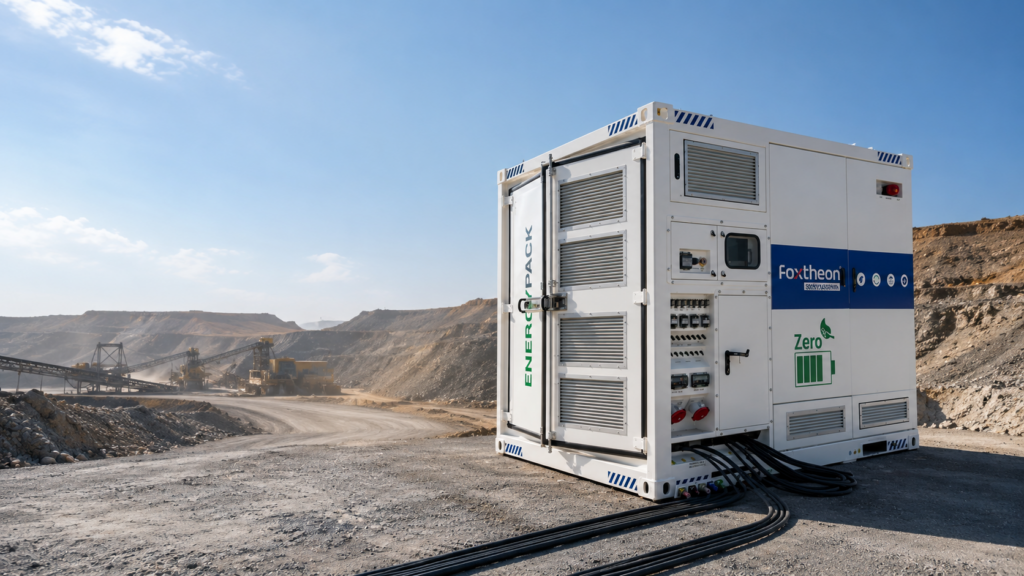
A functional commercial-scale energy storage installation consists of several integrated subsystems. Each component must be engineered to match the specific load profile and environmental conditions of the target facility.
Electrochemical Cell Chemistry
The selection of battery chemistry dictates the thermal limits, cycle life, and discharge characteristics of the overall installation. Lithium Iron Phosphate (LiFePO4 or LFP) has become the dominant chemistry for stationary commercial applications. LFP cells offer distinct advantages over Nickel Manganese Cobalt (NMC) chemistries in stationary configurations:
- Thermal Stability: LFP chemistry features a high thermal runaway threshold (approximately 270°C), reducing the likelihood of self-sustaining fire events under electrical or mechanical stress.
- Cycle Longevity: LFP cells regularly achieve between 4,000 and 8,000 cycles at an 80% Depth of Discharge (DoD) before capacity degrades to 80% of its nominal value.
- Material Availability: LFP does not rely on cobalt or nickel, which stabilizes supply chain pathways and avoids reliance on highly volatile mineral markets.
The Power Conversion System (PCS)
The PCS, or bi-directional inverter, manages the conversion of Direct Current (DC) stored in the battery cells to Alternating Current (AC) used by the facility or fed back into the utility grid. Modern PCS units utilize high-frequency switching insulated-gate bipolar transistors (IGBTs) or silicon carbide (SiC) semiconductors to maximize conversion efficiency, often exceeding 98%. The PCS must support both grid-tied (current source) and islanded (voltage source) modes of operation, allowing seamless transitions during utility outages.
Battery Management System (BMS) and Control Layers
Safe and efficient operation relies on a multi-tier BMS. At the primary level, the BMS monitors cell-level parameters, including voltage, temperature, and internal resistance. At the secondary level, the BMS manages rack-level balancing, preventing current imbalances among parallel-connected battery strings. High-performance configurations manufactured by Foxtheon incorporate advanced state-of-charge (SoC) and state-of-health (SoH) algorithms to predict degradation trends and optimize thermal distribution.
Strategic Integration with Facility Power Infrastructure
Integrating commercial battery storage systems into an existing electrical network requires aligning the storage capacity with the facility’s load profile and local utility tariff structures.
Utility bills for commercial and industrial users often contain substantial peak demand charges based on the highest rate of electricity consumption recorded during a billing cycle. By deploying targeted dispatch algorithms, the battery storage system discharges during these high-demand intervals. This process, known as peak shaving, reduces the maximum draw from the utility grid, flattening the facility’s demand profile without requiring operational shutdowns.
In facilities with onsite solar photovoltaic (PV) arrays, production peak hours rarely align with consumption peaks. Large-scale battery storage facilitates load shifting by absorbing excess PV energy generated during midday periods and discharging it during evening high-tariff periods. This local consumption optimization minimizes transmission losses and reduces reliance on external energy suppliers.
Many facilities operate existing backup generation assets, such as diesel or gas generators. Rather than replacing these units, modern battery systems are integrated alongside them. The battery system provides immediate power during the startup delay of a generator, absorbing transient loads and allowing the generator to run at its most efficient operating point. This hybrid configuration reduces generator runtime, minimizes fuel consumption during low-load periods, and extends the operational life of the mechanical generation assets.
Technical Challenges and Mitigation Strategies
Deploying large-scale electrochemical storage presents specific engineering challenges that must be addressed during the design and permitting phases.
Thermal Runaway and Safety Standards
Managing thermal risks is a fundamental requirement for indoor and outdoor installations. If a battery cell suffers a severe internal short circuit, mechanical damage, or overcharging, it can enter thermal runaway, releasing toxic and flammable gases. To mitigate this hazard, compliance with strict international standards is mandatory:
- UL 1973: Standard for Batteries for Use in Stationary, Vehicle Auxiliary Power and Light Electric Rail Applications, ensuring safety at the cell and module level.
- UL 9540: Standard for Energy Storage Systems and Equipment, regulating the interaction between the battery, PCS, and control systems.
- UL 9540A: Test Method for Evaluating Thermal Runaway Fire Propagation in Battery Energy Storage Systems, which determines if a fire will propagate from cell to cell or rack to rack.
- NFPA 855: Standard for the Installation of Stationary Energy Storage Systems, governing spatial separation, water supply requirements, and fire suppression integration.
Thermal Management Systems
Active thermal management is necessary to maintain battery cells within their optimal operating window (typically 15°C to 35°C). While forced-air cooling is suitable for lower C-rate applications, liquid-cooling systems are increasingly utilized for high-density, high-throughput systems. Liquid cooling provides superior thermal uniformity across all modules, reducing cell-to-cell temperature variations to less than 3°C, which directly prevents localized degradation and extends the functional lifespan of the battery bank.
Sourcing and Specifying Commercial Storage Systems
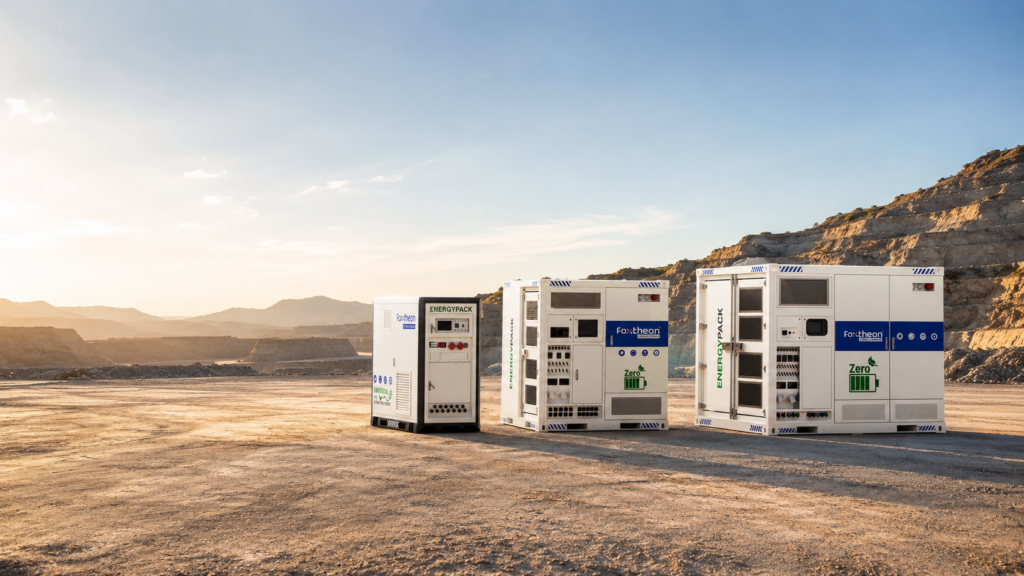
When engineering a localized grid solution, selecting appropriate components and suppliers represents a major phase of project development. System integrators must evaluate several critical parameters before purchasing commercial battery storage systems to ensure compatibility with site-specific needs.
System capacity must be sized based on 15-minute interval data collected over a minimum of 12 months. This data allows engineers to determine the optimal energy-to-power ratio (C-rate). For instance, a facility requiring rapid power injection for peak shaving may specify a 1C or 2C system (discharging full capacity in 1 or 0.5 hours), whereas a facility focused on energy arbitrage or long-duration backup may opt for a 0.5C or 0.25C system (discharging over 2 to 4 hours).
Modular scalability is another important consideration. As electrical demands evolve, the storage architecture should allow for parallel expansion. Standardized containerized designs—such as 20-foot or 40-foot ISO containers—simplify site preparation, shipping, and installation. Working with established manufacturers like Foxtheon ensures that the modular battery racks, integrated fire suppression, and liquid-cooling blocks are pre-assembled and factory-tested, reducing onsite commissioning timelines and installation errors.
Operations and Maintenance Protocol
Maintaining the long-term viability of commercial battery storage systems requires a structured operations and maintenance (O&M) schedule. Modern installations rely on cloud-based Supervisory Control and Data Acquisition (SCADA) platforms to track system performance in real-time.
O&M service providers analyze thermal profiles, state-of-charge tracking, and impedance metrics to identify anomalies before they lead to hardware failures. Regular physical inspections must include verifying the integrity of the fire suppression agent storage, testing emergency stop circuits, cleaning HVAC or liquid-loop heat exchangers, and checking electrical connections for torque loss due to thermal cycling.
Frequently Asked Questions
Q1: What are the primary differences between LFP and NMC chemistries in commercial battery storage systems?
A1: Lithium Iron Phosphate (LFP) chemistries offer superior thermal stability, a longer cycle life (often double that of NMC), and a lower risk of thermal runaway, making them highly suitable for stationary commercial installations. Nickel Manganese Cobalt (NMC) chemistries provide higher energy density, which is advantageous where physical space is extremely constrained, but they require more complex thermal management and fire suppression configurations due to lower thermal runaway thresholds.
Q2: How does a battery storage system operate alongside existing commercial diesel generators?
A2: The storage system operates in parallel with the generator through a centralized microgrid controller. During a power interruption, the battery system instantly provides power to the load, preventing voltage drops. Once the diesel generator starts up and synchronizes, the controller coordinates power delivery, allowing the generator to run at its optimal fuel-efficiency point while the battery handles rapid load transients.
Q3: What safety certifications are required for installing commercial battery storage units?
A3: Key certifications include UL 1973 for safety at the cell and rack levels, UL 9540 for the complete integrated system, and UL 9540A testing data to evaluate thermal runaway propagation characteristics. Compliance with NFPA 855 is also mandatory in many jurisdictions to govern installation spacing, structural fire barriers, and active fire suppression systems.
Q4: How does liquid cooling compare to air cooling in C&I energy storage?
A4: Liquid cooling uses a closed-loop coolant system to transfer heat away from the cells, offering higher thermal conductivity and keeping temperature differentials across the pack within a narrow range (usually under 3°C). Air cooling relies on fans and ducting, which is simpler but less efficient in high-ambient environments or during rapid charge and discharge cycles, potentially leading to uneven cell aging.
Q5: Can commercial battery storage systems assist in power quality correction?
A5: Yes. The bi-directional inverters (PCS) in modern commercial battery storage systems can provide active power factor correction, voltage support, and harmonic mitigation. By injecting or absorbing reactive power dynamically, the system stabilizes local voltage fluctuations caused by heavy industrial machinery, ensuring sensitive electronic equipment operates without disruption.
Technical Inquiries and Project Engineering Support
Integrating localized storage into commercial electrical infrastructure requires rigorous engineering design, detailed load profiling, and strict compliance with local utility interconnection rules. The engineering team at Foxtheon provides comprehensive technical support, system sizing services, and modular hardware configurations tailored to specific industrial requirements.
For detailed product specifications, system schematics, or to discuss a project layout with an application engineer, please submit your technical requirements and load data through our official inquiry portal at Foxtheon Commercial Energy Storage Solutions.