
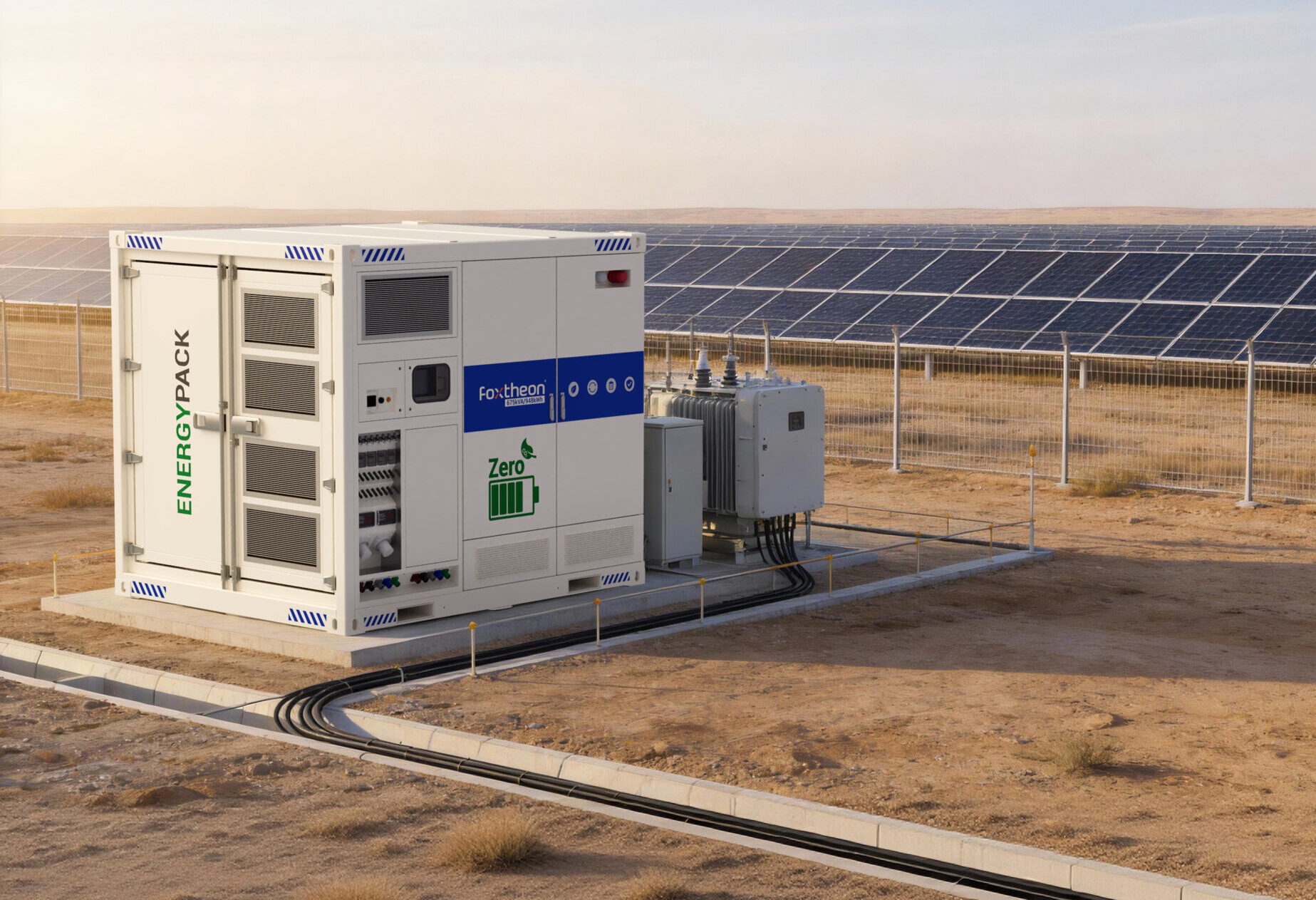
Large-scale energy storage has transitioned from an experimental asset to a vital component of modern industrial infrastructure. As grid volatility increases and industrial power requirements become more complex, integrating a robust bess battery system into modern infrastructure provides the necessary buffer to stabilize supply and manage load profiles. Implementing these systems requires a comprehensive understanding of electrochemical performance, power electronics, control system hierarchy, and thermal safety protocols. This technical analysis examines the core engineering parameters, system architectures, and procurement standards required for successful commercial and industrial deployment.
1. Technical Architecture and Core Electrochemical Components
A commercial energy storage solution is a complex multi-layered assembly designed to convert, store, and dispatch electrical energy on demand. The performance of this system is heavily influenced by the electrochemical properties of the battery cells and the integration of power electronics.
Electrochemical Cell Selection: LFP vs. NMC
The choice of battery chemistry dictates the cycle life, safety profile, thermal behavior, and energy density of the entire storage asset. The two dominant chemistries in industrial applications are Lithium Iron Phosphate (LiFePO4 or LFP) and Nickel Manganese Cobalt Oxide (NMC).
- Lithium Iron Phosphate (LFP): LFP cells feature an olivine crystal structure that offers high thermal stability and resistance to thermal runaway up to approximately 270°C. They exhibit a long cycle life, typically maintaining 80% of their original capacity after 5,000 to 8,000 cycles at 80% Depth of Discharge (DoD). While the volumetric and gravimetric energy densities of LFP are lower than those of NMC, its structural stability makes it highly suitable for stationary applications where physical footprint constraints are secondary to safety and longevity.
- Nickel Manganese Cobalt (NMC): NMC chemistries provide higher energy density, making them suitable for space-constrained installations. However, their layered crystal structure is more susceptible to thermal degradation, with thermal runaway thresholds occurring at lower temperatures (approximately 210°C). The typical cycle life of NMC in stationary applications ranges from 2,000 to 4,000 cycles under comparable operating conditions.
Battery Management System (BMS) Architecture
To mitigate cell degradation and prevent hazardous operating conditions, the overall longevity of a bess battery system is determined by the precision of its Battery Management System. The BMS operates in a three-tier hierarchical structure:
- Slave BMS (Module Level): Monitors cell voltage and temperature sensors within a single module. It performs passive cell balancing by dissipating excess energy through shunt resistors when cell-to-cell variance exceeds preset tolerances.
- Master BMS (Rack Level): Aggregates data from multiple module-level controllers, calculates the State of Charge (SoC) and State of Health (SoH) using advanced Kalman filtering algorithms, and controls the rack-level contactors and fuses.
- System BMS (Container/Plant Level): Manages communication between multiple racks, coordinates safety shutdowns, and interfaces with the Power Conversion System (PCS) and Energy Management System (EMS).
Integrated system designs from developers like Foxtheon ensure that high-resolution data from the BMS is continuously mapped to control registers, allowing for dynamic current limiting based on real-time cell parameters.
Power Conversion System (PCS) and Grid Interaction
The PCS acts as the bi-directional interface between the direct current (DC) battery racks and the alternating current (AC) distribution network. Modern industrial installations utilize three-level topology inverters to reduce total harmonic distortion (THD) and optimize conversion efficiency, which typically exceeds 98%. The PCS must support grid-following modes (relying on grid voltage and frequency reference) as well as grid-forming capabilities, enabling the system to establish a local voltage reference during grid outages.
2. Addressing Infrastructure Pain Points in Modern Power Distribution
Industrial facility operators and utility managers face several operational challenges related to power quality, grid constraints, and load management. Understanding these pain points is necessary for configuring storage assets correctly.
Peak Demand Charges and Load Profiles
Commercial electricity tariffs often include peak demand charges based on the maximum power drawn during a billing cycle. These charges can represent a substantial portion of an industrial facility’s utility expenses. Implementing a utility-scale bess battery system allows operators to perform peak shaving, discharging the stored energy during intervals of high facility demand to flatten the consumption curve.
Power Quality and Voltage Fluctuation
Automated manufacturing facilities, data centers, and semiconductor fabrication plants require continuous, high-quality power. Transient voltage drops, sags, and frequency deviations can disrupt automated assembly lines and damage sensitive electronics. Energy storage systems equipped with high-speed PCS controls can inject active or reactive power within milliseconds to stabilize voltage and frequency deviations, functioning as dynamic power quality compensators.
Renewable Energy Integration and Intermittency
Co-locating photovoltaic (PV) arrays or wind turbines with energy storage helps address the challenges of localized power generation. Without energy storage, rapid changes in solar irradiance or wind speed can cause voltage instability at the point of common coupling (PCC). Storage assets absorb excess generation during peak production hours and release it when generation falls, converting intermittent renewable resources into dispatchable capacity.
3. Strategic Commercial and Industrial (C&I) Application Scenarios
Deploying energy storage requires alignment with local site conditions and operational objectives. The system configuration is typically tailored to specific commercial use cases.
Commercial Peak Shaving and Load Shifting
For facilities operating on a multi-shift basis, energy consumption patterns vary widely. By deploying an on-site bess battery system, industrial operators can draw energy from the grid during low-cost off-peak hours (load shifting) and discharge it during peak tariff periods. This process optimizes energy use profiles without requiring modifications to core manufacturing schedules.
Microgrid Stabilization and Hybrid Configurations
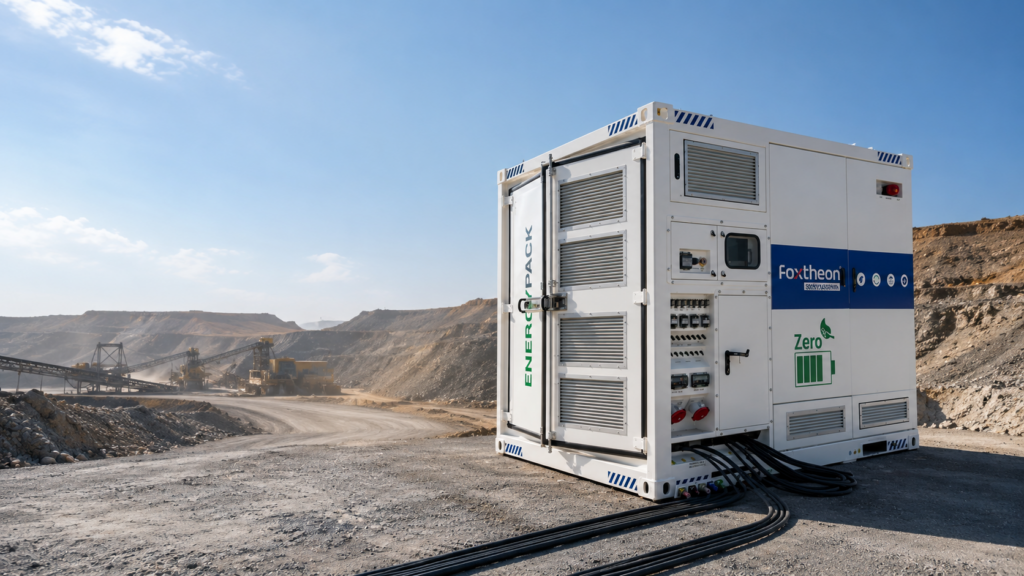
In remote industrial sites, mining operations, or islanded grids, power generation is often dependent on diesel generators. While diesel generators are reliable for continuous base loads, they run inefficiently at low load factors and respond slowly to sudden load step-changes. Integrating a battery storage asset into these microgrids creates a hybrid topology. Specialized manufacturers, such as Foxtheon, utilize advanced control software to allow storage systems to handle rapid load fluctuations, permitting diesel assets to operate at their optimal fuel efficiency curves.
Grid Services and Ancillary Market Participation
Where regulatory frameworks allow, commercial energy storage assets can participate in ancillary services markets. This includes providing fast frequency response (FFR), operating reserves, and demand response capacity to the transmission system operator (TSO). These grid services require high-speed response capabilities that electrochemical storage can deliver much faster than thermal generation assets.
4. Technical Specifications and Sourcing Standards for B2B Procurement
Procuring utility-grade energy storage systems involves verifying specific technical metrics, manufacturing certifications, and system integration standards to ensure long-term reliability.
Thermal Management Systems
The degradation rate of lithium-ion cells increases when operating outside the optimal temperature window of 15°C to 35°C. When evaluating a potential bess battery system for purchase, the thermal management design must be scrutinized:
- Forced Air Cooling: Simpler and lower cost, but can result in temperature gradients across large battery racks, leading to uneven cell degradation.
- Liquid Cooling: Utilizes a closed-loop coolant distribution plate system in direct contact with cell surfaces. This design provides uniform heat dissipation, reducing temperature differentials between cells to less than 2°C, which extends the operating life of the cells and allows for higher C-rate charge and discharge cycles.
Regulatory Compliance and Safety Certifications
Industrial installations must meet strict safety guidelines to manage thermal runaway risks and secure municipal construction and operating permits. Key certifications include:
- UL 9540: The standard for safety of energy storage systems and equipment, evaluating the interaction between the BMS, PCS, and battery racks.
- UL 9540A: Test method for evaluating thermal runaway fire propagation in battery energy storage systems, certifying that a fire event at the cell level will not cascade to adjacent modules or racks.
- IEC 62619: Safety requirements for secondary lithium cells and batteries for use in industrial applications.
- IEEE 1547: Standard for interconnecting distributed resources with electric power systems, establishing baseline requirements for grid-interactive functions.
Supplier Verification and System Engineering Support
Because battery integration requires close synchronization between chemical, electrical, and software domains, choosing qualified suppliers is a key step in project development. Qualified vendors must provide comprehensive system-level design verification, including factory acceptance testing (FAT) data and detailed hardware-in-the-loop (HIL) simulation results. Technical support from established engineering partners like Foxtheon mitigates risk during the commissioning phase by ensuring that communication protocols between the EMS, local switchgear, and utility meters are fully compatible and validated prior to site deployment.
Frequently Asked Questions
Q1: How does a modern bess battery system manage thermal stability?
A1: Modern systems manage thermal stability through a multi-layered safety design. At the cell level, materials with high thermal decomposition thresholds, such as Lithium Iron Phosphate (LFP), are utilized. At the system level, closed-loop liquid cooling systems maintain uniform temperature profiles across all modules. This is coupled with a multi-tier BMS that monitors real-time voltage and temperature parameters, initiating safety disconnections before thermal boundaries are exceeded.
Q2: What is the difference between active and passive cell balancing in a BMS?
A2: Passive cell balancing uses simple shunt resistors to dissipate excess energy as heat from cells with higher voltage levels, aligning them with the lowest-performing cells in the module. Active cell balancing utilizes bi-directional DC-DC converters to transfer energy from stronger cells to weaker ones. This minimizes energy waste and maximizes the usable capacity of the battery pack, though it introduces additional control circuit complexity.
Q3: How do liquid cooling systems compare to air cooling in C&I energy storage?
A3: Liquid cooling provides significantly higher heat transfer coefficients compared to forced air cooling, allowing the system to maintain cell-to-cell temperature differentials within a tight window (often less than 2°C). This level of control reduces localized cell degradation and prevents hot spots, making it highly effective for high-power, high-cycle-rate applications. Air cooling systems have a simpler mechanical footprint and lower initial complexity, but they are less efficient at managing high thermal loads in dense packaging configurations.
Q4: What are the key grid-connection standards required for industrial microgrids?
A4: Grid-connected systems must comply with local grid codes, which are typically governed by standards such as IEEE 1547 in North America and EN 50549 in Europe. These standards define the performance requirements for voltage and frequency ride-through, active and reactive power control, anti-islanding protection, and dynamic grid support during transient disturbances.
Q5: How does the energy storage system interface with existing commercial backup generators?
A5: The system interfaces with existing generator networks through a centralized Energy Management System (EMS). The EMS monitors site load and generator performance, utilizing Modbus TCP/IP, CAN bus, or DNP3 communication protocols. By managing battery charge and discharge profiles, the system coordinates with the generator controllers to manage high transient loads, allowing the generator to run at its optimal operating point.