
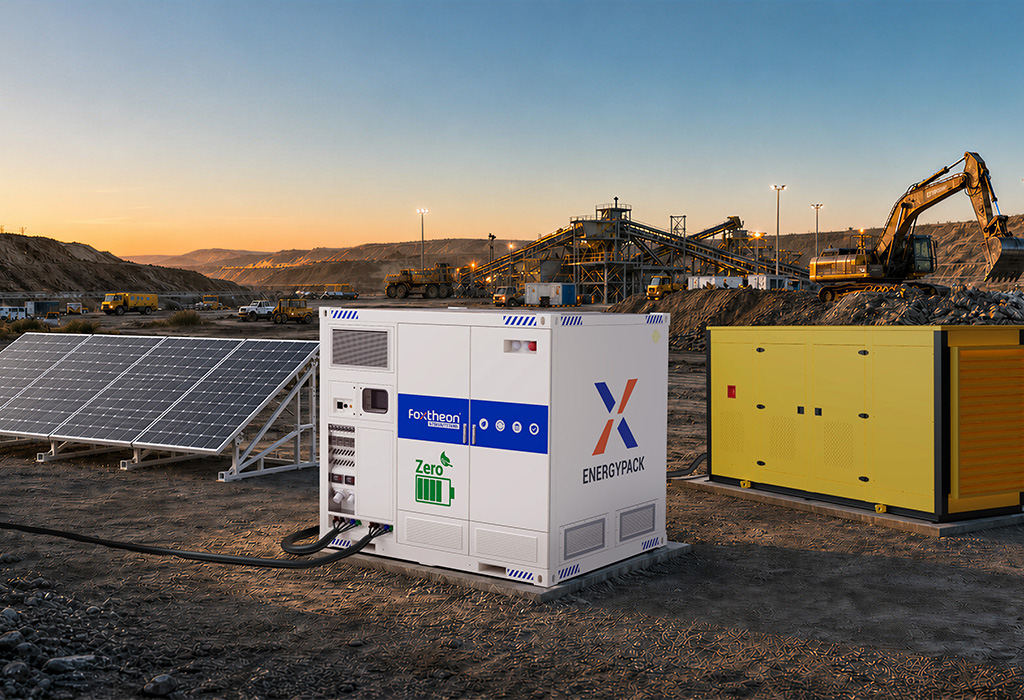
Industrial facilities operating in remote, off-grid, or weak-grid environments depend heavily on reciprocating diesel generators for prime power. While reciprocating internal combustion engines deliver reliable base-load power and excellent fault-clearing capabilities, their continuous operation incurs substantial operating expenses, high maintenance frequencies, and supply chain vulnerabilities associated with fuel transport. Integrating variable solar generation into an established genset infrastructure directly mitigates these burdens. A modern photovoltaic diesel hybrid system harmonizes the deterministic dispatch of synchronous alternators with the zero-marginal-cost generation of solar arrays, establishing a resilient, self-optimizing microgrid topology.
Engineering such an integrated energy architecture requires a sophisticated understanding of mechanical-electrical boundaries. Rather than competing with existing electrical assets, the hybrid architecture leverages existing diesel engines as synchronous voltage and frequency anchors while shifting the bulk active power generation to the photovoltaic field. Leading integration specialists like Foxtheon engineer integrated control platforms that bridge the gap between variable semiconductor-based generation and rotating thermal machinery, ensuring system stability without compromising engine health.
Operational Topologies: Penetration Dynamics and System Physics
The operational balance of a microgrid combining solar arrays and combustion engines is defined by its instantaneous solar penetration rate. Penetration is mathematically defined as instantaneous solar power output divided by total microgrid electrical load. Depending on this ratio, system dynamics shift across distinct operational categories.
Low Penetration Architectures (Fuel-Saver Mode)
In low penetration configurations, solar generation typically represents under 20% to 30% of total electrical demand. The diesel generator fleet operates continuously within its optimal mechanical efficiency envelope (typically between 70% and 85% of rated prime capacity). In this setup, the solar system acts purely as a negative load. Variations in solar irradiance caused by cloud transients are absorbed directly by the mechanical governors of the operating generators. Standard frequency droop control parameters allow the engines to adjust their fuel racks up or down to compensate for solar fluctuations without inducing severe voltage or frequency deviations.
Medium Penetration Architectures with Dynamic Curtailment
As solar capacity expands to cover 30% to 60% of instantaneous demand, engine dynamics encounter physical operating boundaries. Generators cannot simply be dialed down to zero output. To prevent engine degradation and guarantee transient stability, a centralized microgrid controller or Fuel Save Controller (FSC) must actively modulate solar output. The FSC monitors total load and alternator output via fast telemetry, executing millisecond-level setpoint adjustments to the PV inverters. When system demand drops or solar output spikes, the inverters execute high-speed curtailment through active power curtailment commands, preventing thermal backfeeding into the synchronous generators.
High Penetration Architectures with Battery Energy Storage (BESS)
In setups where solar generation exceeds 60% of instantaneous load, the architecture shifts toward advanced hybrid microgrids. Synchronous generators operating at low loading profiles experience reduced thermal efficiency and accelerated mechanical wear. To safely maximize solar utilization, a Battery Energy Storage System (BESS) coupled with grid-forming inverters is integrated into the photovoltaic diesel hybrid system. The BESS provides synthetic inertia, frequency stabilization, and reactive power compensation, enabling generators to be systematically shut down during peak irradiance periods while maintaining microgrid voltage and frequency standards.
Electrical Engineering Foundations: Generator Asset Protection
Designing a reliable hybrid plant requires protecting legacy reciprocating generators from operating outside their certified parameters. Reciprocating engines are mechanical machines governed by thermodynamics and fluid dynamics; subjecting them to improper electrical configurations results in severe, irreversible mechanical damage.
- Minimum Genset Loading Limits: Internal combustion diesel engines require sustained internal cylinder temperatures to ensure complete fuel combustion and maintain piston ring sealing. Running an engine below 30% to 40% of its rated capacity causes low combustion temperatures, leading to unburned fuel and lube oil leaking into the exhaust manifold—a phenomenon known as “wet stacking.” Over prolonged periods, wet stacking causes injector fouling, cylinder glazing, carbon build-up on exhaust valves, and turbocharger failure. Advanced hybrid controllers enforce a hard floor on generator output, continuously throttling PV production to keep the engine load above its minimum mechanical threshold.
- Reverse Power Flow Prevention: Synchronous generators are designed to convert mechanical torque into electrical active power. If solar generation suddenly surpasses local load demand, current reverses direction and flows back into the generator stator windings. This transforms the alternator into a synchronous motor, back-driving the engine crankshaft. Reverse power introduces violent mechanical stresses to connecting rods, crankshaft counterweights, and gearing, while tripping the generator’s ANSI 32 reverse power protective relays. A dedicated photovoltaic diesel hybrid system incorporates ultra-fast reverse power protection loops, shedding solar capacity in sub-second intervals if forward alternator power approaches a configurable safety margin (typically 10% to 15% of nominal capacity).
- Dynamic Spinning Reserve Allocation: Sudden cloud cover can cause a multi-megawatt solar plant to lose 70% to 80% of its active power generation within a few seconds. The operating diesel generators must possess sufficient instantaneous ramp-rate capability and spinning reserve headroom to absorb this sudden deficit without frequency shedding. Microgrid control algorithms calculate required spinning reserves in real time, matching generator ramp capabilities against predictive solar irradiance models.
Semiconductor Technologies and Balance of Plant Integration
The photovoltaic field must deliver consistent DC energy across variable ambient conditions, directly dictating inverter configuration and DC collection network design.
PV Module Selection: N-Type TOPCon vs. Heterojunction (HJT)
Industrial hybrid installations are frequently deployed in harsh, high-temperature environments, such as desert mining sites or tropical equatorial territories. Standard P-type PERC panels suffer from higher temperature coefficients (typically -0.35%/°C to -0.38%/°C) and elevated Light-Induced Degradation (LID). Industrial deployments prioritize N-type Tunnel Oxide Passivated Contact (TOPCon) and Silicon Heterojunction (HJT) modules. TOPCon cells deliver an optimized temperature coefficient (-0.30%/°C) and superior bifaciality factors (up to 80-85%), maximizing ground-reflected albedo capture in open terrains. HJT takes this further with a temperature coefficient of approximately -0.26%/°C, retaining higher operating voltage under extreme ambient temperatures and maximizing active generation during thermal peaks.
Inverter Architectures: Grid-Following vs. Grid-Forming
Modern hybrid microgrids rely on a calculated balance between inverter conversion typologies:
- Grid-Following (GFL) Inverters: Standard commercial string and central inverters rely on Phase-Locked Loops (PLL) to track the voltage and frequency vectors established by the running diesel generators. GFL inverters act as controlled current sources. While efficient and scalable, high concentrations of GFL inverters reduce microgrid system strength, leading to low Short Circuit Ratios (SCR) and phase angle instability.
- Grid-Forming (GFM) Inverters: Operating on virtual synchronous machine (VSM) algorithms or droop-based voltage source modes, GFM inverters dictate microgrid voltage and frequency independently. In advanced configurations pioneered by engineering integrators such as Foxtheon, grid-forming battery interfaces provide the fast frequency response and synthetic inertia required to keep the system operating smoothly even during drastic load rejections or sudden generation deficits.
Intelligent Microgrid Control and Communications Architecture
The operational success of an industrial photovoltaic diesel hybrid system rests entirely on the speed and reliability of its supervisory control network. Control architectures must communicate across heterogeneous physical layers and industrial protocols without latency bottlenecks.
The microgrid controller must poll multi-function digital power meters at generator output switchboards, analyze busbar parameters, read solar inverter telemetry, and dispatch setpoints within a 50 to 100-millisecond closed loop. Industrial communication topologies employ redundant optical fiber rings running IEC 61850 or Modbus TCP protocols. Controller interfaces interact directly with generator Engine Control Units (ECUs) and digital governors via J1939 CAN-bus protocols or dry-contact synchronization channels.
Furthermore, the supervisory software dynamically coordinates active power curtailment, reactive power balance, and automated genset start/stop sequencing. When predictive algorithms indicate prolonged clear-sky conditions, the controller can issue automated start signals to warm up offline generators in an orderly sequence or stage generator shutdowns to maximize operational loading on active units.
Technical Specification Matrix
System designers must systematically define operating thresholds across electrical, mechanical, and communicative parameters to secure reliable co-generation. The following engineering matrix outlines key technical interface boundaries:
| Functional Parameter | Conventional Standalone Genset | Optimized Hybrid Integration Standard |
|---|---|---|
| Minimum Engine Load Limit | 30% – 40% Continuous Prime Rating | Strictly enforced via dynamic PV curtailment control loops |
| Reverse Power Margin | Trip setting at -5% nominal kW for 2-5 sec | Dynamic buffer maintained at +10% forward power to genset |
| System Inertia Source | Synchronous alternator rotating mass only | Combined alternator mass, synthetic inertia, and fast frequency response |
| Inverter Control Mode | Not Applicable | Coordinated P-Q control, voltage/frequency droop, dynamic curtailment |
| Telemetry Loop Speed | 1 – 2 seconds (SCADA polling) | ≤ 100 ms deterministic fiber-optic industrial Ethernet loop |
Multi-Vector Industrial Application Scenarios
Hybridization provides significant operational advantages across distinct industrial applications, each presenting unique load profiles and mechanical requirements.
Remote Mining and Mineral Extraction
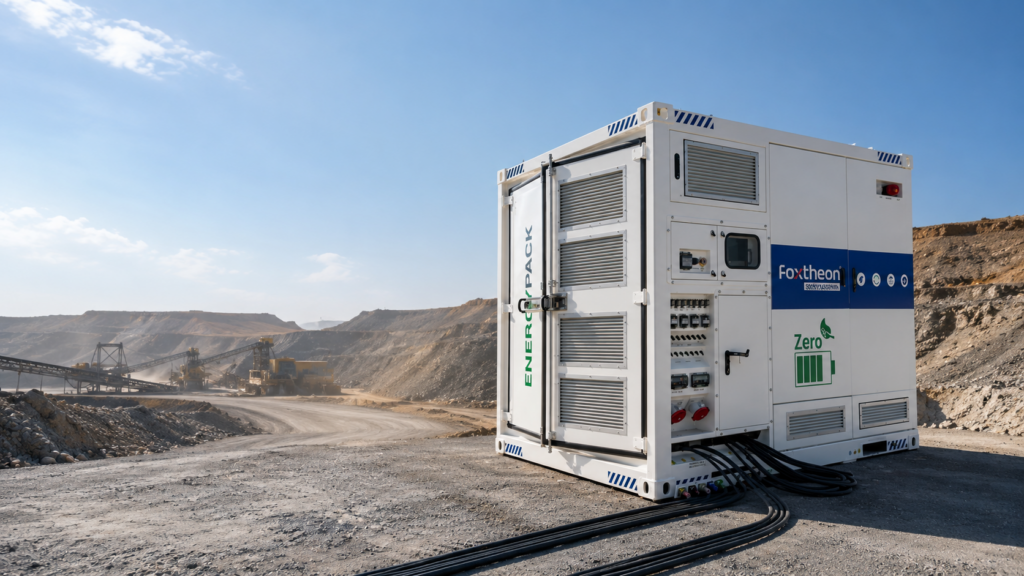
Remote mining facilities require power for massive ball mills, crushers, slurry pumps, and worker camps. These operations feature heavy dynamic inductive loads with high starting kVA requirements. An engineered photovoltaic diesel hybrid system stabilizes the electrical network against large motor starting currents. The diesel generators provide the fault current capacity to clear network faults and ride through motor inrush events, while the solar field handles baseline processing loads during daylight hours.
Agricultural Processing and Cold Chain Facilities
Decentralized food processing centers, grain silos, and cold storage hubs operate under substantial seasonal variations. Refrigeration compressors represent cyclical step-loads that stress engine speed governors. Solar arrays directly match refrigeration cooling profiles: high solar irradiation coincides with maximum ambient thermal loads on chilling units. Fast-acting hybrid control schemes modulate solar output to match compressor cycling, maintaining bus voltage stability without causing genset hunting.
Isolated Microgrids and Island Communities
Island grids lack interconnection to regional transmission systems and rely on imported fuel delivered by maritime logistics. A balanced hybrid power plant stabilizes local frequency while keeping thermal engines operating at maximum thermodynamic efficiency. Integrating centralized microgrid control hardware from comprehensive solution providers like Foxtheon provides utility operators with automated power dispatch, active grid-forming battery support, and detailed power quality monitoring across isolated distribution lines.
Procurement and Supplier Technical Evaluation Guidelines
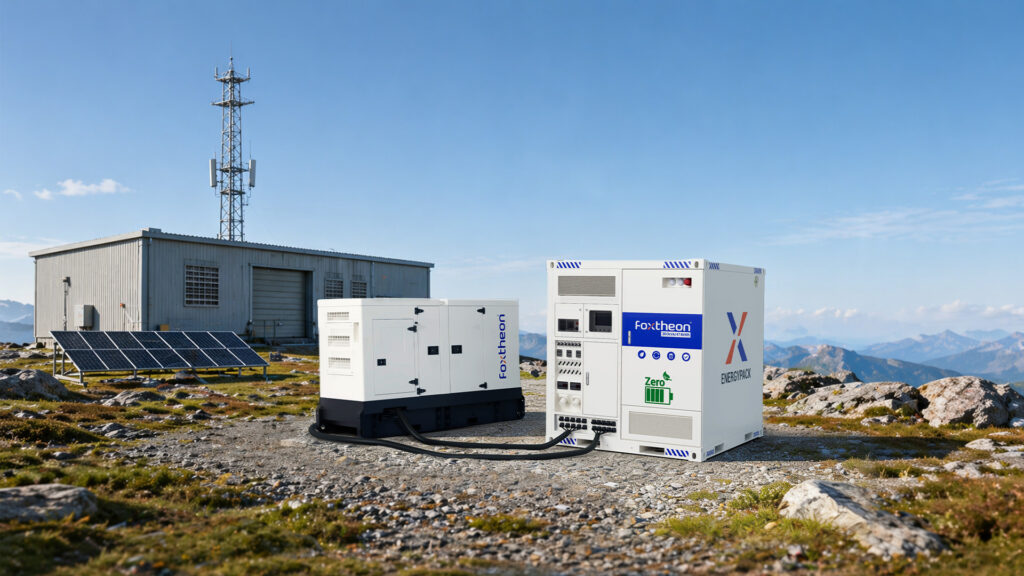
Engineering procurement teams must look beyond individual component specifications and evaluate a vendor’s system integration capabilities. Integrating complex power electronics with heavy industrial prime movers demands deep domain competency across multiple engineering disciplines.
- Hardware-in-the-Loop (HIL) Validation: Competent vendors must demonstrate microgrid controller stability using advanced HIL simulation environments. Simulated testing subjects the control logic to synthetic load steps, sudden cloud transients, and communications drops to prove system stability before physical hardware arrives on site.
- Open Communication Architecture: Avoid proprietary communication protocols that lock the facility into a single inverter or controller manufacturer. Ensure that the microgrid integration architecture interfaces cleanly via Modbus RTU/TCP, DNP3, or IEC 60870-5-104 with legacy engine control systems (such as Woodward, ComAp, Deep Sea, or DEIF).
- Switchgear and Protection Coordination: Verify that the hybrid package includes high-performance protective relaying with directional overcurrent, reverse power, and rate-of-change-of-frequency (ROCOF) protections calibrated to match both inverter fault limitations and generator sub-transient reactances ($X”_d$).
Specifying an industrial-grade photovoltaic diesel hybrid system ensures long-term operational continuity, maximizes mechanical asset integrity, and significantly improves fuel utilization efficiency across off-grid industrial infrastructure.
Frequently Asked Questions
Q1: How does a photovoltaic diesel hybrid system prevent reverse power flow into the engines?
A1: The microgrid controller continuously monitors forward active power through digital power meters at the generator terminals. If the forward active power drops below a safe margin (typically 10% to 15% of engine rated output), the controller executes millisecond-level curtailment commands to the solar inverters via high-speed communication channels, preventing electrical energy from back-feeding into the alternator windings.
Q2: Can solar power completely run an industrial microgrid without any running diesel generators?
A2: Yes, but only if the system includes a Battery Energy Storage System (BESS) coupled with grid-forming inverters. Standard grid-following solar inverters require an external voltage and frequency reference supplied by synchronous alternators. When equipped with grid-forming storage, the microgrid can operate in a pure zero-emission mode, with generators safely shut down and restarted only when storage reserves drop or peak loads exceed inverter thresholds.
Q3: Why must diesel generators maintain a minimum load of 30% to 40%?
A3: Operating diesel internal combustion engines below this threshold prevents cylinders from reaching optimal combustion temperatures. This leads to incomplete fuel burn, known as wet stacking, which causes unburnt fuel to accumulate in the exhaust system, fouls fuel injectors, degrades lubricating oil, and dramatically increases mechanical engine wear over time.
Q4: What happens to the microgrid when a sudden cloud covers the solar array?
A4: When solar output drops rapidly due to cloud cover, the running diesel generators must ramp up mechanical power to compensate for the lost generation. The system controller maintains a calculated spinning reserve headroom across the online generator fleet to ensure that frequency does not dip below statutory limits during solar transient events.
Q5: What industrial communication protocols are required for stable hybrid control?
A5: System reliability relies on deterministic, low-latency protocols. Modbus TCP over industrial fiber-optic networks, IEC 61850 for substation communications, and CAN-bus (SAE J1939) for direct interaction with generator Engine Control Units are the standard communication protocols used in modern hybrid microgrids.
Technical Inquiries & Engineering Consultation
For custom microgrid integration modeling, dynamic stability simulations, or hardware specification reviews for utility and industrial hybrid projects, connect with our engineering team directly:
Engineering & Solutions Interface: https://www.foxtheon.com/
System Architecture Department: Inquire via technical consultation submission portal at Foxtheon Solution Center.