
Power quality issues within commercial and industrial electrical networks manifest through various dynamic anomalies. Electrical instability is rarely limited to complete utility blackouts; it frequently appears as minor voltage fluctuations, phase imbalances, and frequency deviations that degrade delicate equipment over time.
A sudden drop in line voltage, commonly defined as a voltage sag or dip, occurs when root-mean-square (RMS) voltage decreases to between 10% and 90% of nominal rating at grid frequency for durations lasting from half a cycle to one minute. These events stem from abrupt load shifts, short circuits on transmission lines, or heavy motor start-ups within nearby industrial complexes. When unmitigated, a sustained voltage drop transitions into an interrupted power supply, causing complete loss of electrical pressure across phase conductors.
Grid instability also introduces total harmonic distortion (THD) and high-frequency noise. Non-linear industrial loads, such as switch-mode power supplies, variable speed drives, and arc welding units, reflect harmonic currents back into the local distribution transformer. Accumulation of THD distorts the sinusoidal voltage waveform, generating unnecessary heat within motor windings, tripping protective relays prematurely, and accelerating insulation aging.
- Voltage Sags & Swells: Short-duration RMS changes caused by distant grid faults or localized heavy load switching.
- Micro-Cuts: Voltage drops lasting between 10 milliseconds and 500 milliseconds, sufficient to disrupt electronic control boards.
- Sustained Outages: Unplanned total loss of line power extending from minutes to multiple hours due to physical feeder disruption.
- Harmonic Distortion: Waveform pollution caused by non-linear loads, resulting in transformer overheating and conductor skin-effect losses.
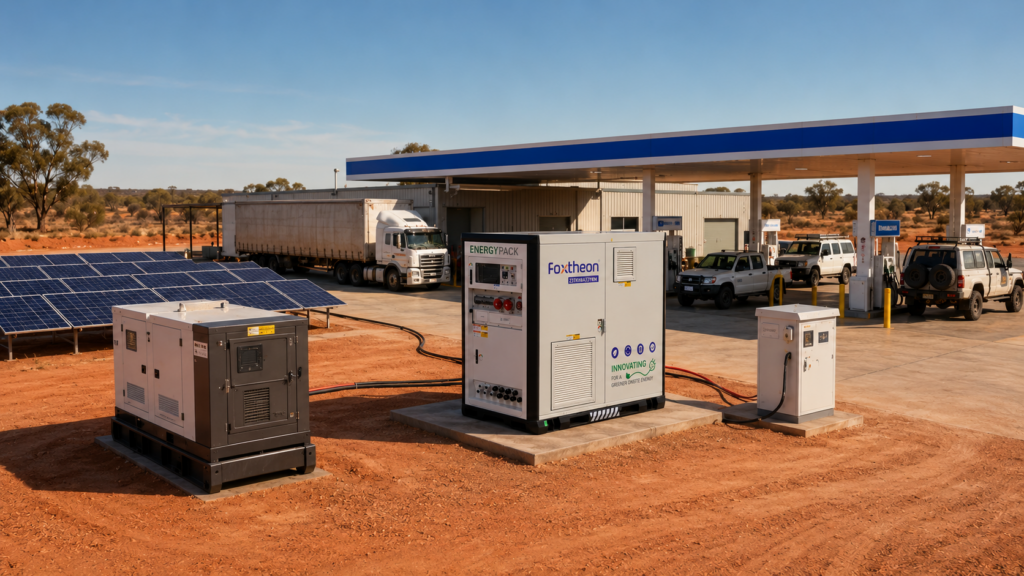
Cascading Operational Consequences of Power Instability
Modern industrial plants rely heavily on high-density power electronics, computer numerical control (CNC) systems, and programmable logic controllers (PLCs). These automated systems are highly sensitive to power delivery parameters. Even micro-interruptions lasting less than one full AC cycle (16.6 milliseconds at 60 Hz) can disrupt internal logic circuits, triggering automated shutdown routines across complex manufacturing lines.
When an unexpected interrupted power supply occurs, industrial assets experience mechanical and thermal shock. Precision machining centers lose tool positioning data mid-cycle, destroying active workpieces and causing expensive mechanical collision hazards. In continuous processing environments—such as chemical synthesis, glass manufacturing, or semiconductor fabrication—an unannounced loss of power causes fluid stagnation, temperature drops, and rapid product solidification inside delivery pipes, requiring days of manual teardown and system clearing.
Furthermore, rapid utility power restored out of phase creates severe transient torques on spinning industrial induction motors. This electrical step-change forces high mechanical stress onto drive shafts, couplings, and gearboxes. The monetary impact of unscheduled downtime, re-calibration cycles, and premature component fatigue far outweighs the simple metric of unsupplied kilowatt-hours.
Modern Mitigation Architecture: Hybrid Storage and Switching Mechanisms
Achieving uninterrupted operation requires continuous power conditioning alongside localized energy reserve systems. Double-conversion topologies serve as the baseline architecture for sensitive operational environments. In a double-conversion setup, incoming AC grid power passes through a rectifier to convert into DC power, which simultaneously charges an energy storage bank and feeds a central inverter. The inverter reconstructs pure sinusoidal AC output power for downstream loads, creating a complete physical and electrical isolation barrier against grid noise and transient voltage spikes.
When utility lines fail entirely, the system must bridge the transition period cleanly. Modern battery energy storage systems (BESS) equipped with static transfer switches (STS) switch sources within 2 to 4 milliseconds. Fast-acting silicon-controlled rectifiers (SCRs) monitor voltage phase angles continuously, enabling immediate transfer without phase mismatch or voltage dropouts.
Energy storage platforms developed by Foxtheon integrate high-capacity Lithium Iron Phosphate (LiFePO4) chemistries alongside advanced power conversion systems (PCS). LiFePO4 cells provide superior thermal stability, higher cycle durability under deep discharge conditions, and stable chemical profiles compared to nickel-based formulations. Combined with intelligent Battery Management Systems (BMS), these configurations actively balance cell voltages, monitor ambient temperatures, and adjust charge-discharge parameters dynamically during an interrupted power supply scenario.
- Double-Conversion AC-DC-AC topology: Provides full galvanic separation and clean, regulated waveform output.
- Static Transfer Switches (STS): Utilizes solid-state power switches to achieve microsecond-level source transfer.
- LiFePO4 Storage Matrices: Offers extended lifecycle metrics, wide thermal tolerance, and high current discharge capability.
- Active Power Factor Correction (PFC): Maintains input power factor near unity, minimizing utility penalization charges.
Enclosure Materials and Structural Specs for Harsh Environments
Deploying energy conditioning hardware in harsh industrial, marine, or desert sites demands robust mechanical housing. System reliability relies heavily on structural integrity, ingress protection ratings, and thermal control under challenging ambient conditions.
Enclosure panels are constructed using heavy-gauge cold-rolled steel or hot-dip galvanized steel, treated with specialized surface coatings. For extreme coastal or chemical environments, stainless steel grades (such as 304 or 316L) are specified to withstand salt spray and volatile atmospheric gases. Surface finishes must meet ISO 12944 anti-corrosion classifications ranging from C3 to C5-M, utilizing multi-layer zinc-rich epoxy primers and polyurethane topcoats.
Ingress protection ratings dictate the physical deployment environment:
- IP54 / NEMA 3R: Standard outdoor protection against falling dirt, rain, sleet, and outdoor dust entry.
- IP65 / NEMA 4X: Complete protection against windblown dust, hose-directed water streams, and aggressive corrosive reagents.
Thermal management within sealed enclosures requires precise internal environmental control. High-efficiency liquid cooling systems employ closed-loop ethylene-glycol circulation plates directly attached to heat-generating IGBT modules and lithium cell racks. Compared to traditional forced-air fans, liquid cooling delivers consistent thermal dissipation, prevents local hot-spot development, and reduces internal temperature gradients, extending electronic component lifespans in high ambient heat.
Generator Integration and Load-Shedding Coexistence
In high-capacity industrial applications, battery energy storage systems work alongside existing standby diesel generators rather than replacing them. Generators provide long-duration bulk power during multi-day grid collapses, but require time to initiate fuel delivery, crank the engine, reach operational RPM, and synchronize output voltage. This delay generally spans 10 to 30 seconds from initial mains power collapse.
An integrated energy storage matrix acts as the primary dynamic response system. The moment an interrupted power supply event occurs, the battery system assume full facility load instantly, preventing voltage sags or control resets. Once the diesel generator reaches steady-state frequency and voltage stability, an automated switchboard coordinates a smooth parallel transition, transferring primary load absorption to the generator while the energy storage unit transitions to a smoothing role.
Systems manufactured by Foxtheon handle complex load profiles by providing active load smoothing and peak shaving. By dampening transient motor-start surge currents, the battery unit prevents generator engine stalling and reduces fuel combustion inefficiencies associated with low-load operation (wet stacking). This multi-source configuration maximizes overall system resilience while maintaining existing generator investments.
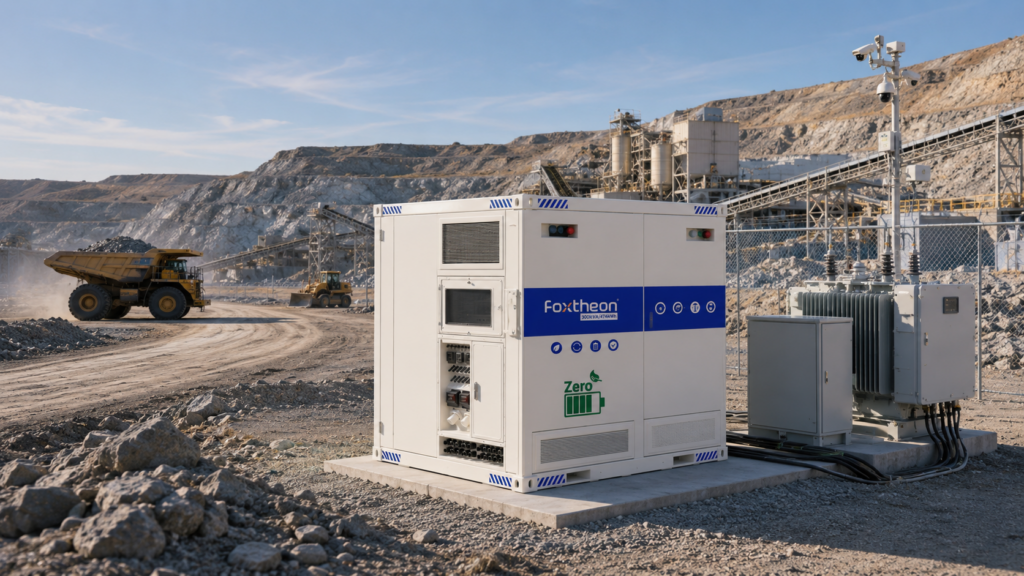
Global Sourcing and Technical Procurement Criteria
Procuring industrial energy storage and power quality equipment requires rigorous technical evaluation beyond simple nameplate power capabilities. Procurement engineers and system integrators must assess grid compliance certifications, operational response speed, safety systems, and modular scalability.
When selecting hardware to protect against an interrupted power supply, key performance indicators must be systematically validated:
- Grid Interconnection Standards: Verification of compliance with IEEE 1547, UL 1741 SA, and IEC 62116 for grid tie and islanding modes.
- Safety Certifications: UL 9540 and UL 9540A thermal runaway propagation testing documentation for high-density storage arrays.
- Sub-Millisecond Response Latency: Inverter response speeds capable of detecting voltage deviation and delivering nominal power output within tight tolerances.
- Modular System Architecture: Hot-swappable power modules and battery racks enabling incremental capacity expansion and simple maintenance access.
- Fire Suppression Integration: Dual-stage detection (off-gas sampling and optical smoke detection) combined with clean-agent suppression systems (such as Novec 1230 or localized aerosol units).
Frequently Asked Questions
Q1: What distinguishes a transient voltage sag from a complete interrupted power supply?
A1: A transient voltage sag is a temporary drop in RMS voltage between 10% and 90% of nominal rating, lasting from half a cycle to one minute. A power interruption involves complete loss of electrical potential across utility conductors, requiring local energy storage or generation sources to maintain continuous facility operations.
Q2: How fast must a static transfer switch operate to prevent automation equipment from resetting?
A2: Most industrial PLCs, relay contacts, and sensitive microprocessors tolerate voltage losses for approximately 10 to 16 milliseconds (one AC cycle) before shutting down. A static transfer switch (STS) typically transfers sources in 2 to 4 milliseconds, ensuring seamless continuous operation.
Q3: Can battery energy storage operate alongside existing operational diesel generators?
A3: Yes. Battery energy storage platforms, such as those engineered by Foxtheon, operate in tandem with diesel generators. The battery instantly bridges the 10 to 30-second generator start-up delay, stabilizing the load and dampening surge currents during major load transitions.
Q4: Why is LiFePO4 battery chemistry preferred for industrial standby applications over standard lithium-ion variants?
A4: Lithium Iron Phosphate (LiFePO4) offers superior chemical and thermal stability, significantly reducing thermal runaway risk. It delivers longer cycle life (often exceeding 6,000 cycles at 80% Depth of Discharge), maintains stable terminal voltage during discharge, and performs reliably under broader operating temperature ranges.
Q5: What enclosure protection level is required for outdoor energy storage systems installed in coastal industrial zones?
A5: Outdoor installations in coastal environments require enclosures rated to at least IP65 or NEMA 4X, built with heavy-gauge stainless steel or hot-dip galvanized steel. Coatings must comply with ISO 12944 C5-M anti-corrosion standards to prevent salt spray damage while maintaining protection against an unexpected interrupted power supply.
Commercial & Engineering Inquiries
Engineering teams, facility administrators, and system integrators seeking detailed technical specifications, CAD layout drawings, or custom power system designs can connect directly with application specialists through our technical inquiry interface below.
Submit project parameters including required load profiles, peak surge requirements, environmental constraints, and grid connectivity requirements to receive custom single-line diagrams (SLD) and system specification documentation.
Contact Application Engineering: https://www.foxtheon.com/contactus/