
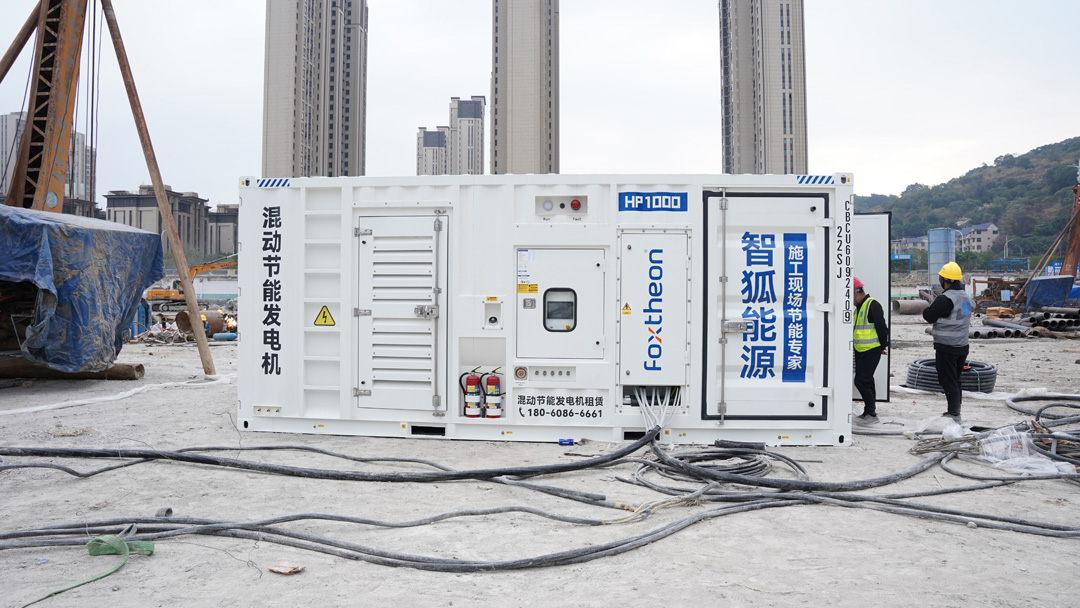
Commercial and industrial facilities operate under highly demanding electrical load profiles, where voltage stability, power factor management, and demand charges directly influence overall operational efficiency. The integration of modern distributed energy resources requires robust hardware and software architectures capable of balancing local load variations with utility grid constraints. Within this technological framework, the application of c&i energy storage systems provides a structured mechanism to store localized excess power and stabilize industrial networks. Technology developers like Foxtheon construct modular solutions that align local generation with facility consumption, supporting long-term asset health without violating grid compliance codes. Understanding the specific components and thermal behaviors of these storage systems is a prerequisite for engineering teams tasked with deploying power infrastructure upgrades.
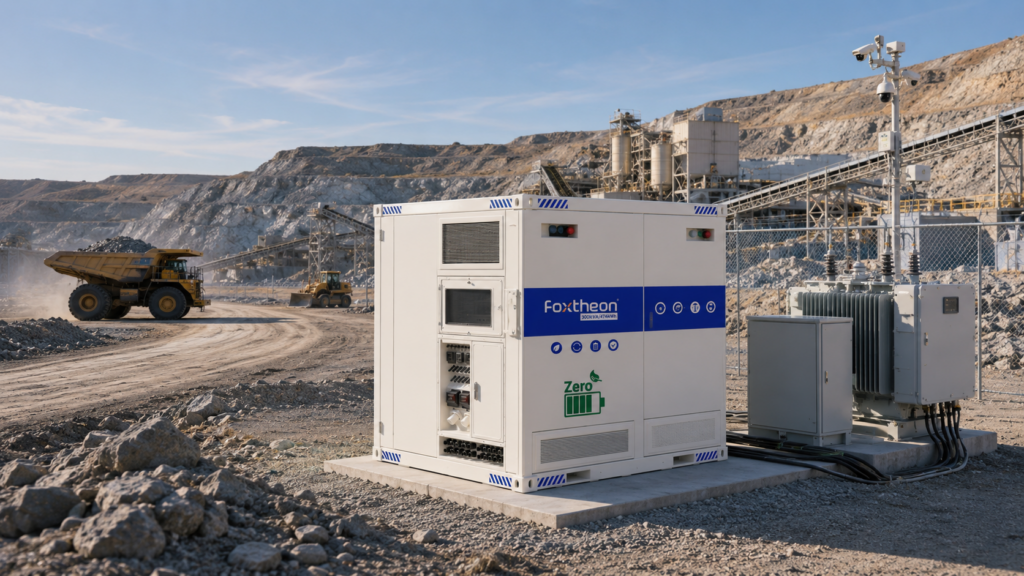
1. Electrochemical and Enclosure Materials Engineering
A thorough assessment of a commercial storage asset begins at the molecular and structural levels. The choice of active chemical compounds and outer protective structures determines the thermal boundaries, life expectancy, and environmental resilience of the entire installation.
Lithium Iron Phosphate (LiFePO4) Battery Chemistry
For large-scale commercial installations, lithium iron phosphate (LiFePO4) has emerged as the standard battery chemistry. Unlike cobalt-based alternatives, the olivine crystal structure of LiFePO4 features strong covalent oxygen-phosphorus bonds. This molecular structure prevents oxygen release under high temperatures, reducing the likelihood of thermal runaway. Furthermore, LiFePO4 cells maintain a highly stable solid electrolyte interphase (SEI) layer over thousands of charge-discharge cycles. This chemical stability ensures that the battery retains more than 80% of its nominal capacity after 6,000 cycles at a 0.5C/0.5C charge-discharge rate, under controlled operating temperatures. The flatter voltage discharge curve of LiFePO4 also permits precise state-of-charge (SoC) estimations, allowing the energy management systems to perform highly accurate scheduling operations.
Enclosure Materials and Environmental Protection Standards
Outdoor cabinet physical design must protect the internal lithium racks from harsh atmospheric conditions, industrial pollutants, and temperature extremes. Standard enclosures are constructed using double-walled hot-dip galvanized steel or marine-grade aluminum alloys, such as AlMg3. To prevent environmental degradation, manufacturers apply multi-layer epoxy-polyester powder coatings that conform to ISO 12944 corrosion protection standards up to C5-I (industrial areas with high humidity and aggressive atmospheres) or C5-M (coastal and marine zones). Physical construction must meet at least IP55 (Ingress Protection) ratings to prevent dust ingress from interfering with electrical contacts and to ensure resistance against water jets. Internally, the cabinets incorporate high-density polyurethane insulation panels to minimize thermal transfer from solar radiation, reducing the parasitic load of the integrated climate control systems.
2. Electrical Integration and Control Topologies
Connecting DC storage blocks to a high-voltage industrial AC grid requires advanced power electronics and layered software communication loops to maintain optimal power quality.
Power Conversion Systems (PCS) and Inverter Topologies
The PCS acts as the bidirectional bridge translating DC battery energy into synchronized AC power for the facility. Modern c&i energy storage architectures utilize three-level Neutral Point Clamped (NPC) inverter topologies. Compared to older two-level designs, three-level topologies produce a more refined voltage waveform, which reduces total harmonic distortion (THD) to less than 3% without requiring bulky magnetic filters. This configuration also decreases voltage stress (dV/dt) on individual switching transistors, extending the lifespan of the insulated-gate bipolar transistors (IGBTs). Operating with switching frequencies between 10 kHz and 20 kHz, these converters achieve round-trip conversion efficiencies exceeding 98.5%, while providing fast active and reactive power control response times of under 20 milliseconds.
The Control Hierarchy: Dual-Layer BMS and EMS Integration
The operational safety and system optimization tasks are split between the Battery Management System (BMS) and the Energy Management System (EMS):
- Local Battery Management System (BMS):This system operates at the micro-level, continuously monitoring cell-level parameters, including voltage, temperature, and internal resistance. Using high-speed CAN bus or Modbus TCP communication, the local BMS performs passive or active cell balancing to keep cell voltage discrepancies within a tight 10 mV tolerance, preventing localized overcharging and subsequent cell degradation.
- Energy Management System (EMS):Functioning as the central intelligence of the c&i energy storage plant, the EMS executes scheduling algorithms. It collects telemetry from the BMS, local solar inverters, factory SCADA networks, and external weather feeds. By applying local load-forecasting models, the EMS determines when to charge during low-demand periods and when to discharge during high-demand peaks, balancing operational performance with battery health preservation.
3. Application Scenarios and Operational Configurations
Commercial energy storage installations are not static backup systems; they are dynamic power quality assets integrated into complex facility processes.
Demand Charge Management and Peak Shaving
In many industrial markets, utility providers levy substantial demand charges based on the maximum power drawn during any 15-minute interval in a billing cycle. By deploying c&i energy storage units, facilities can configure automatic “peak shaving” protocols. When the facility’s instantaneous power draw exceeds a predefined kilowatt threshold, the storage system discharges locally stored energy within milliseconds to absorb the excess demand. This process flattens the utility demand profile, prevents local transformer overload, and relieves thermal stress on downstream distribution panels without requiring facility operators to curtail productive manufacturing processes.
Microgrid Integration and Auxiliary Generator Coordination
For installations demanding continuous power reliability, storage cabinets can form the core of a localized microgrid. When paired with existing solar arrays and auxiliary diesel or natural gas generators, the battery system serves as the primary voltage source, establishing grid-forming capabilities. In the event of a utility grid failure, the storage system manages the transient load variations, preventing the auxiliary generators from running at low-load levels where fuel combustion is highly inefficient and soot accumulation occurs. This dynamic load smoothing allows internal combustion engines to operate at their peak thermodynamic efficiency, reducing maintenance cycles and stabilizing local microgrid frequency at 50Hz or 60Hz.
4. Advanced Thermal Management and Safety Engineering
The lifespan and thermal safety of a high-energy-density battery cabinet are directly linked to the design of its integrated climate control hardware.
Comparison of Thermal Control Designs
To prevent localized hotspots that accelerate cell degradation, thermal management systems must be carefully designed. The following table highlights the physical differences between standard cooling techniques:
| Engineering Parameters | Forced Air Cooling Systems | Liquid Cooling Closed-Loop Systems |
| Heat Transfer Efficiency | Low (Air has low volumetric heat capacity) | High (Water-glycol mixture has high heat capacity) |
| Cell Temperature Gradient | Typically < 5°C variation across module | Highly uniform (< 2°C variation across module) |
| Physical Footprint | Larger due to required air duct channels | Compact, integrated into structural thermal plates |
| Parasitic Auxiliary Consumption | Moderate (Continuous high-speed fan operation) | Low (Variable-speed pumps adjust to thermal load) |
By switching from conventional air cooling to a closed-loop liquid cooling system, operators ensure that battery cells degrade uniformly. This uniform degradation prevents single-cell bottlenecks from prematurely reducing the capacity of the entire series-connected string.
Multi-Stage Fire Mitigation Protocols
In dust-heavy or high-temperature industrial environments, safety protocols must be integrated into the cabinet chassis. Modern systems implement a multi-stage mitigation approach. First, continuous off-gas detection sensors monitor for volatile organic compounds and carbon monoxide, which indicate the initial venting of a cell before a temperature spike occurs. If the temperature exceeds safe parameters, the system triggers localized aerosol or clean-agent fire suppression (such as Novec 1230) directly into the affected battery compartment. This quickly suppresses localized flames and cools the module, isolating the thermal event and preventing heat propagation to neighboring cells.
5. Sourcing, Technical Compliance, and System Selection
Procuring industrial energy storage assets requires a thorough review of manufacturer engineering credentials, system certification, and interface compatibility.
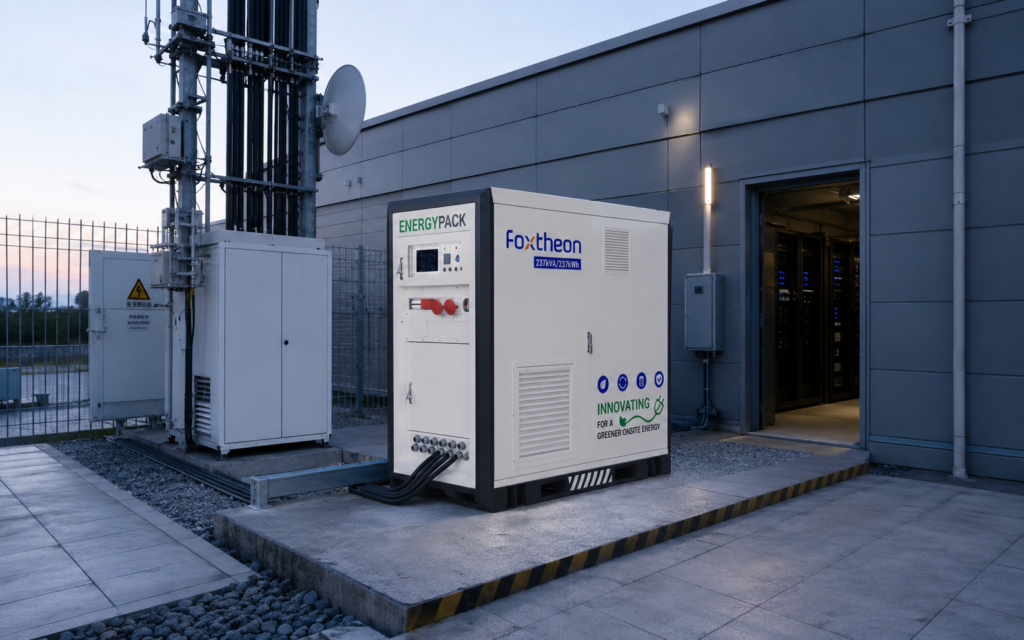
When engineering teams select a supplier for a c&i energy storage project, verifying compliance with international standards is vital. Storage cabinets must carry certifications such as IEC 62619 for safety in industrial applications and UL 9540A for evaluating thermal runaway fire propagation. Systems must also comply with national grid connection codes to allow parallel operation with utility lines without causing phase imbalances. Manufacturers such as Foxtheon focus on delivering pre-configured, modular cabinet designs that integrate the battery modules, three-level PCS, liquid cooling piping, and EMS into a single, factory-tested unit. This integration reduces the scope of on-site electrical wiring, lowers commissioning complexity, and minimizes the risk of installation-related component failures. Furthermore, selecting a modular hardware vendor ensures that additional cabinets can be connected in parallel on the DC or AC bus as facility energy demands scale over time.
Frequently Asked Questions
Q1: How does a C&I energy storage system coordinate with local solar arrays during high solar generation periods?
A1: The integrated Energy Management System (EMS) monitors the local point of common coupling (PCC) via current transformers. When solar generation exceeds the factory’s real-time demand, the EMS signals the Power Conversion System (PCS) to divert the excess AC power back through the inverter to charge the battery bank. This localized balancing prevents power from being exported back to the grid at low feed-in tariffs, maximizing the self-consumption rate of locally generated green energy.
Q2: What are the main advantages of liquid-cooled battery cabinets compared to air-cooled models in industrial settings?
A2: Liquid-cooled cabinets circulate a chilled water-glycol mixture through internal thermal plates directly in contact with the battery cells. This approach offers up to three times the thermal conductivity of air cooling. It maintains temperature differences between cells below 2°C, which prevents uneven cell aging, reduces the parasitic energy draw of cooling fans, and allows the system to operate reliably in high ambient temperatures exceeding 45°C.
Q3: Can a C&I energy storage system assist in maintaining facility power quality and voltage stability?
A3: Yes. The three-level PCS used in high-quality systems operates dynamically across all four quadrants of the power curve, meaning it can inject or absorb both active and reactive power. When high-power industrial motors start up and cause transient voltage sags, the PCS can inject reactive power within milliseconds to stabilize local bus voltage and correct the power factor, preventing utility penalties.
Q4: What certifications are necessary to ensure that a commercial battery storage cabinet is safe for outdoor industrial installation?
A4: Buyers should verify that the system is certified under IEC 62619 (for safe operation of secondary lithium cells in industrial applications), UL 1973 (for batteries in stationary applications), and UL 9540A (which tests for thermal runaway fire propagation). For outdoor installations, the cabinet enclosure should also carry a certified IP55 rating and ISO 12944 corrosion resistance documentation to ensure long-term physical integrity.
Q5: How does the system prevent deep discharge damage to the LiFePO4 cells during extended power outages?
A5: The local Battery Management System (BMS) enforces strict operational limits. When the state of charge (SoC) drops to a set threshold (typically 10% or 5%), the BMS sends a signal to open the main DC contactors, isolating the battery modules from external loads. This safety cutoff prevents the cells from entering a over-discharge state, preserving the chemistry and allowing the system to safely accept a charge once power is restored.
For detailed structural specifications, engineering layouts, or specific configuration inquiries regarding outdoor battery cabinet models, please refer directly to the Foxtheon Technical Portal.