
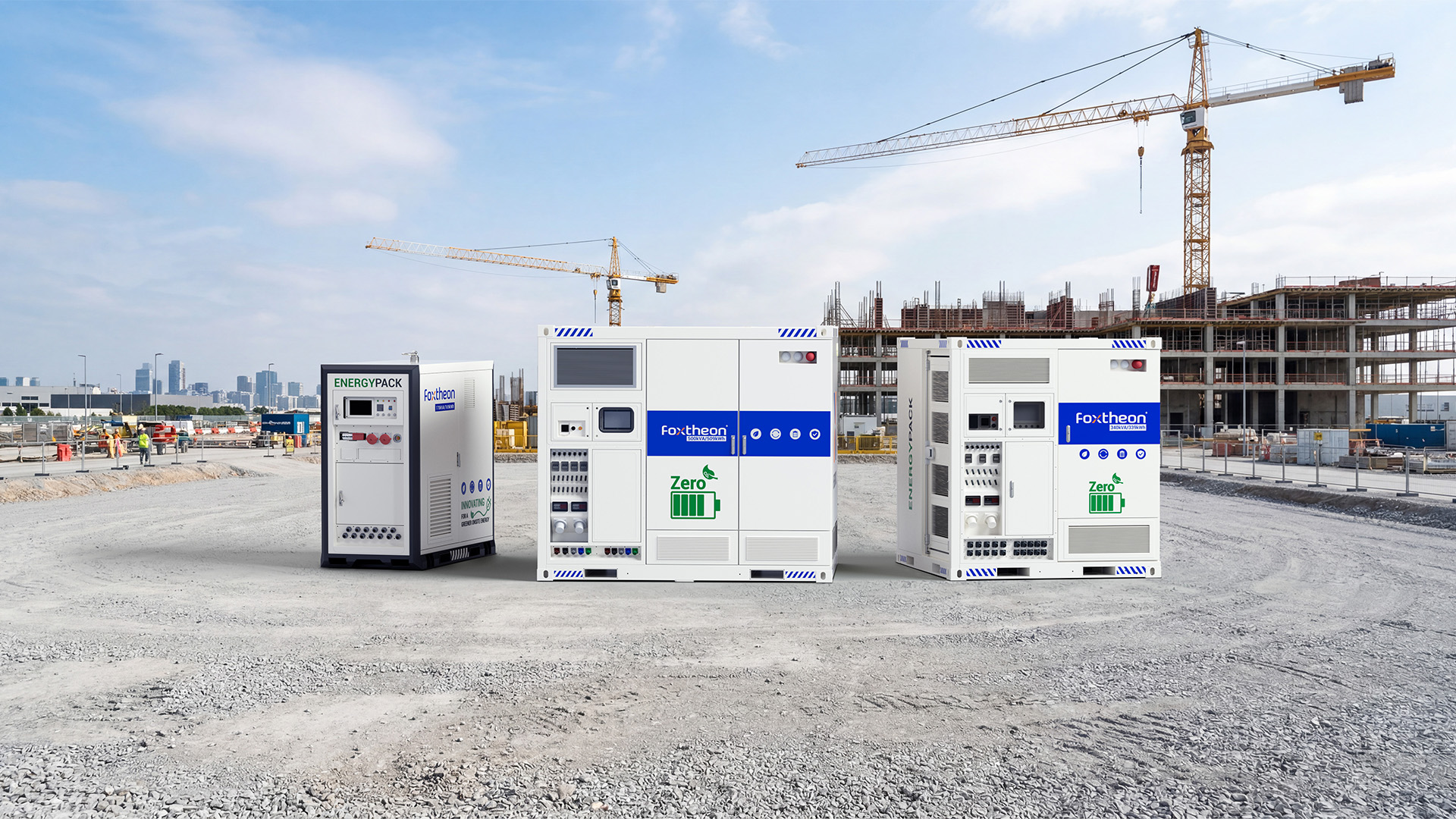
Manufacturing plants, data centers, and critical infrastructure face rising energy costs and grid instability. A properly designed industrial battery storage system enables facilities to shift load, provide backup, and support renewable self-consumption. Unlike small-scale commercial units, industrial storage must handle high charge/discharge rates (C-rates), thermal extremes, and thousands of cycles while maintaining safety. This article examines battery chemistry selection, power conversion systems (PCS), energy management software (EMS), and integration with existing generators. Companies like Foxtheon engineer modular solutions that complement—not replace—existing generator assets, extending fuel supply windows and reducing runtime wear. We focus on measurable reliability and operational flexibility.
1. Core Components of an Industrial Battery Storage System
An industrial industrial battery storage solution comprises three interdependent subsystems:
- Battery array: Lithium iron phosphate (LFP) or nickel manganese cobalt (NMC) cells arranged in racks. LFP dominates industrial settings due to longer cycle life (6000+ cycles at 80% DoD) and thermal runaway resistance.
- Power conversion system (PCS): Bi-directional inverters with grid-forming or grid-following capabilities. PCS must handle peak power (kW) and energy capacity (kWh) ratios accurately.
- Battery management system (BMS): Monitors cell voltage, temperature, and current. Balances cells during charging and disconnects under fault conditions (over/under voltage, short circuit).
- Energy management software (EMS): Forecasts load, optimizes charge/discharge schedules, and responds to utility price signals or demand response events.
Selecting a industrial battery storage configuration requires matching C-rate to application. For peak shaving (1-4 hours duration), 1C to 0.5C batteries suffice. For longer duration (4-8 hours), lower C-rate designs reduce cooling needs. Foxtheon’s EnergyPack series offers modular cabinets from 100kWh to 2MWh, scalable to multi-megawatt containerized solutions.
2. Technical Deep-Dive: Battery Chemistry and Thermal Management
Lithium-ion remains the only chemistry meeting industrial cycle life and energy density demands. However, cell design varies:
2.1 LFP vs. NMC for Industrial Duty
- LFP (LiFePO₄): Flat voltage curve, excellent thermal stability (decomposition >250°C). Typical cycle life: 6000–10000 cycles at 25°C. Lower nominal voltage (3.2V) means more cells in series.
- NMC (LiNiMnCoO₂): Higher energy density (200-250 Wh/kg), but cycle life limited to 3000–5000 cycles. More prone to thermal runaway (onset ~150°C). Preferred for space-constrained retrofits.
Most industrial industrial battery storage projects use prismatic LFP cells due to safety and long calendar life (15+ years). NMC is reserved for high-power mobile applications.
2.2 Liquid vs. Air Cooling
Thermal uniformity directly impacts cell aging. At 45°C, LFP cells lose 30% cycle life compared to 25°C operation. Options:
- Air cooling (forced convection): Simple, lower capital cost, but limited to <0.5C continuous discharge in warm climates. Requires larger cell spacing.
- Liquid cooling (plate or immersion): Maintains cell-to-cell gradient <2°C, enables 1C+ rates. Higher upfront cost but reduces long-term capacity fade. Foxtheon’s liquid-cooled cabinets keep cells below 35°C even at 40°C ambient.
Facilities in hot regions (Middle East, Southeast Asia) must specify liquid cooling; air-cooled systems will derate or need oversized capacity.
3. Grid Integration Modes: Peak Shaving, Load Shifting, and Backup
A flexible industrial battery storage system operates in multiple modes, often switching automatically:
- Peak shaving: Discharges during utility demand peaks (e.g., 2-6 PM) to reduce demand charges. Requires accurate load forecasting and real-time power monitoring.
- Load shifting: Charges during low-rate night hours and discharges during high-rate daytime periods. Arbitrage savings depend on rate differential (>$0.10/kWh).
- Backup power (uninterruptible): Transfers to island mode within <20 ms (with UPS-grade inverters). For longer outages, battery capacity must be sized with generator starting delay in mind.
- Grid support (frequency regulation): Responds to utility signals (<1 second) to absorb or inject real power. Requires certified power control systems.
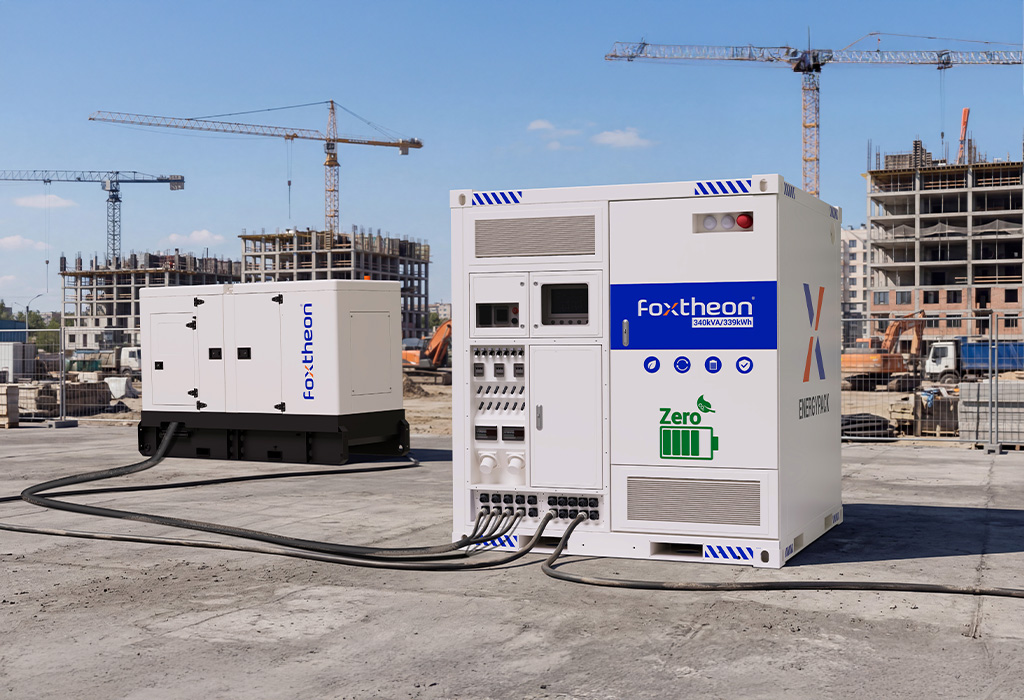
Hybrid operation with existing generators is common: the battery handles short-duration peaks and provides initial ride-through, while the generator covers extended outages. This reduces generator start cycles and fuel consumption without discarding existing assets. Foxtheon’s EMS includes generator co-optimization logic.
4. Engineering Challenges: Cycle Life, Degradation, and Sizing
Industrial users often face mismatched expectations between nameplate capacity and usable energy. Key parameters to specify:
4.1 Depth of Discharge (DoD) and Throughput
Manufacturers rate cells at 80% DoD for cycle life claims. However, operating at 90% DoD can halve cycle life. For peak shaving (daily deep cycles), limit DoD to 70-80% and include buffer. For standby backup, 50% DoD is acceptable.
4.2 Calendar Aging
Even without cycling, lithium cells degrade due to time and temperature. Rule of thumb: 1-2% capacity loss per year at 25°C. At 35°C, loss doubles. Storage systems in unconditioned spaces need active thermal management or capacity derating.
4.3 Sizing for Industrial Loads
Identify the load profile: peak power (kW), energy over peak period (kWh), and ramp rates. A common error is undersizing the inverter relative to battery capacity. For example, a 1MWh battery with a 250kW inverter cannot deliver full energy in <4 hours. Use power/energy ratio (P/E) – typical industrial ratios range 0.25 to 0.5 (e.g., 500kW / 2000kWh).
Foxtheon provides a site survey tool that logs load data for two weeks, then recommends battery and inverter sizing with 15% margin for aging.
5. Safety Standards and Compliance for Industrial Battery Storage
Installations must meet NFPA 855 (US), IEC 62477, or local codes. Requirements include:
- Separation distances: Between battery racks (minimum 0.9m for access) and from building walls.
- Fire suppression: Clean agent (Novec 1230, FM-200) or water mist systems. Lithium battery fires require Class D extinguishers or copious water; avoid CO₂ alone.
- Ventilation: Hydrogen off-gassing during overcharge; sensors and forced ventilation to lower explosive limit (LEL <25%).
- Containment: Secondary spill containment for liquid-cooled systems (coolant leaks).
Third-party certifications (UL 9540A for thermal runaway propagation, UL 1973 for stationary batteries) are mandatory for insurance and permitting. Foxtheon cabinets carry UL9540A tested design and include integrated gas detection.
6. Maintenance and Remote Monitoring
Unlike passive assets, industrial industrial battery storage requires periodic checks:
- Quarterly: Inspect busbars and connectors for torque (re-torque to 10 Nm). Check BMS logs for cell voltage imbalances (>50mV indicates weak cell).
- Bi-annual: Calibrate current and voltage sensors. Run a capacity test (discharge at rated power to min voltage).
- Annual: Thermal imaging of racks to find hot spots. Replace air filters for cooling systems. Update EMS firmware.
Remote monitoring via cloud-based EMS allows predictive alerts: when a cell’s internal resistance rises 20% above baseline, schedule service. Foxtheon’s platform includes automated cycle counting and remaining useful life (RUL) estimates.
Frequently Asked Questions (FAQ) – Industrial Battery Storage
Q1: What is the typical lifespan of an industrial battery storage system?
A1: For LFP chemistry with daily cycling (one full cycle per day), expect 10-15 years or 6000-8000 cycles to 70% remaining capacity. Calendar life often limits before cycles: at 25°C average, 15 years. Cooling and DoD management are key. Industrial battery storage systems from Foxtheon include a 10-year performance warranty (80% capacity retention).
Q2: Can industrial battery storage work alongside my existing diesel generators?
A2: Yes, this is a common hybrid configuration. The battery handles short-duration peaks and momentary load steps, while the generator runs at optimal load (avoiding low-load wet stacking) during longer outages. The EMS coordinates start/stop and load sharing. No need to replace generators; the battery extends generator life and reduces fuel consumption.
Q3: How much floor space is required for a 1MWh industrial battery storage system?
A3: With modern LFP cabinets (like Foxtheon’s 300kWh per 1.2m x 0.6m footprint), 1MWh occupies approximately 5-6 square meters, plus 1m clearance for operation. Add space for inverter (1m²) and HVAC unit. Total ~10-12 m² for 1MWh. Higher density NMC can reduce footprint by 30% but with trade-offs in cycle life and safety.
Q4: What happens to the battery after end-of-life?
A4: Industrial cells at 70-80% remaining capacity can be repurposed for less demanding applications (e.g., solar self-consumption, lighting backup). After second life, certified recyclers recover lithium, cobalt, and copper. Foxtheon operates a take-back program for all installed units, ensuring compliance with local battery disposal regulations.
Q5: Is industrial battery storage safe in high-temperature environments?
A5: Safety depends on thermal management. LFP cells are inherently more stable than NMC. With liquid cooling and active BMS that reduces charge/discharge currents above 45°C, systems operate safely up to 50°C ambient. However, prolonged exposure above 40°C accelerates aging. For desert climates, specify an air-conditioned container or shade structure.
Q6: How does the payback period for peak shaving compare to backup-only use?
A6: Peak shaving typically delivers returns within 3-6 years through demand charge reduction (often $10-20/kW per month). Backup-only applications have no direct savings unless utility offers demand response incentives. Hybrid mode (peak shaving + backup) provides best economics. We avoid specific cost figures here, but advise reviewing your utility tariff structure.
Q7: Can I add battery storage to an existing solar PV system without a new inverter?
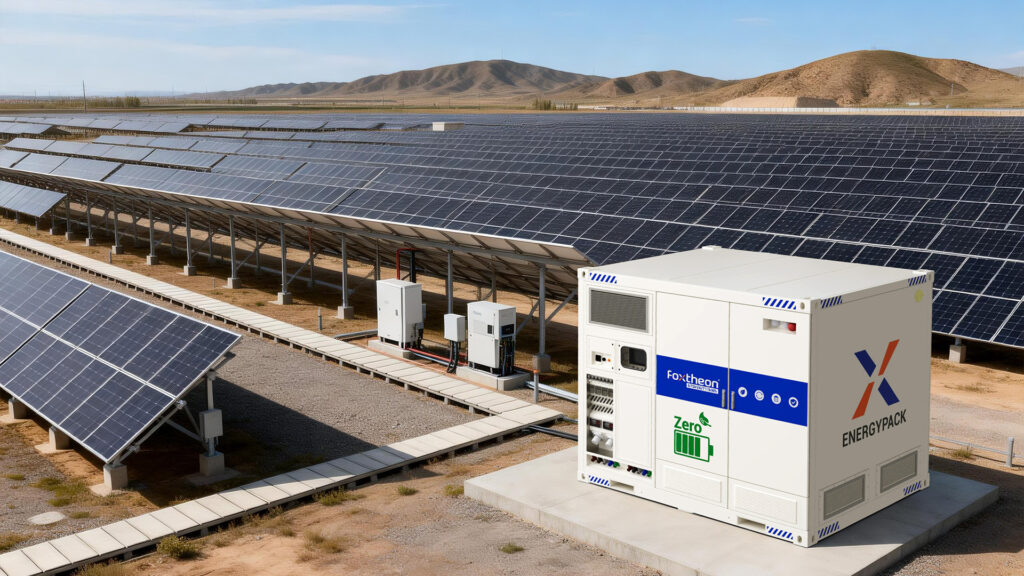
A7: AC-coupled storage (battery with its own bi-directional inverter) is simplest: connect to the same AC bus as the PV inverter. This works with any existing PV system. DC-coupled requires replacing the solar inverter but offers higher round-trip efficiency (92-95% vs 87-90% for AC-coupled). Most industrial retrofits choose AC-coupled for flexibility.
Inquiry: Engineering Consultation for Your Facility
Selecting the right industrial battery storage configuration involves analyzing your load profile, utility rate structure, available space, and existing generator integration. Foxtheon provides a non-binding site assessment that includes:
- Two-week power quality logging (voltage sags, harmonics, peak demand).
- Battery sizing simulation based on your top five load days.
- Hybrid controller logic design for seamless generator handshake.
- UL9540A compliance checklist and permitting support.
Send your inquiry to start the technical discussion:
→ Submit a single-line diagram (if available) or monthly utility bills. Our energy storage engineers will respond with a preliminary design and proposal within 5 business days.
Contact form: https://www.foxtheon.com/contact (or email directly – details on website).