
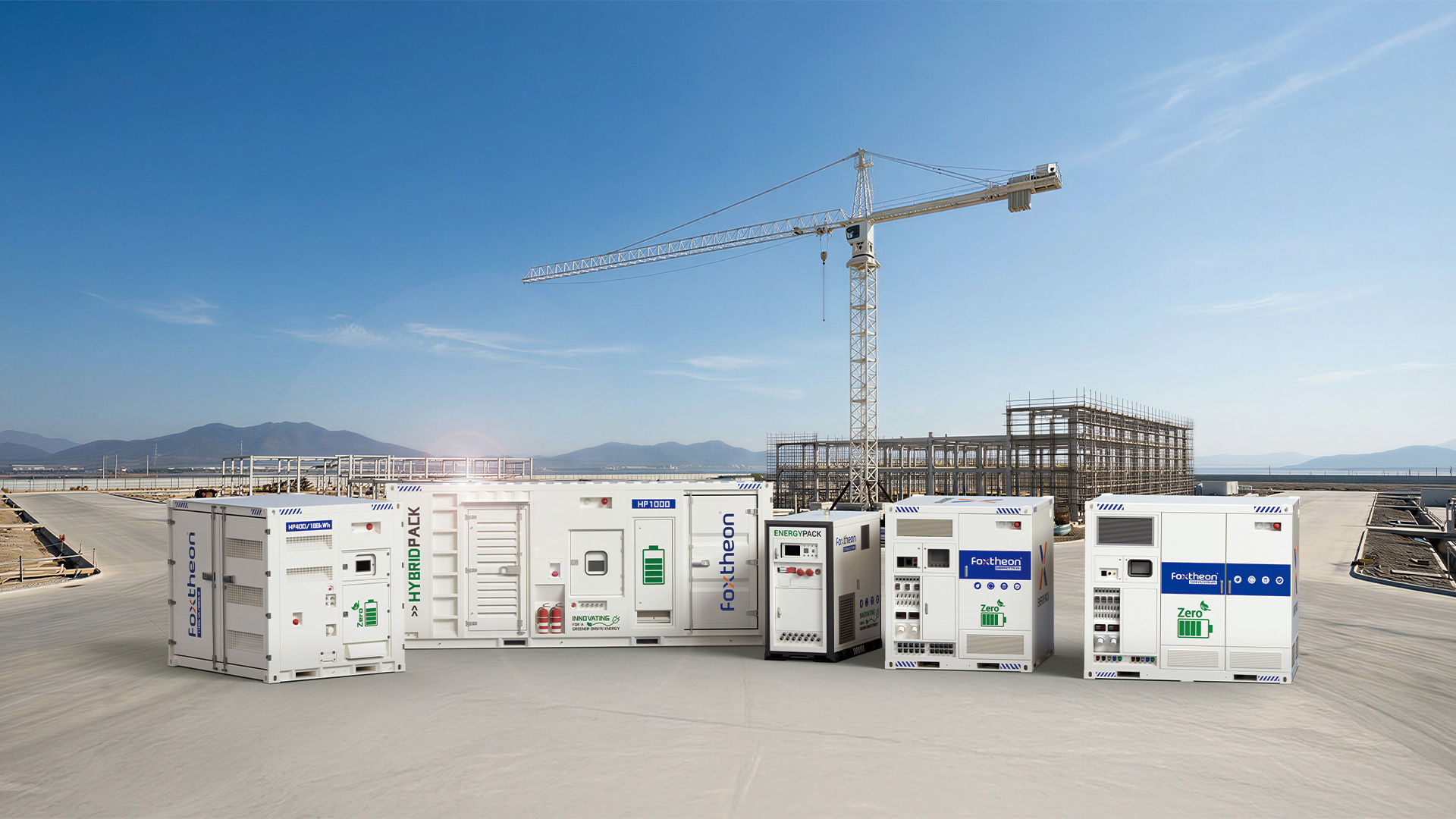
Modern industrial sites, isolated microgrids, and off-grid facilities increasingly rely on multi-source energy architectures to maintain uninterrupted continuous power. Combining photovoltaic generation with thermal combustion engines and battery storage addresses the inherent intermittency of solar energy while optimizing the running parameters of mechanical generators. A properly configured hybrid generator solar plant acts as a flexible, dynamic power station capable of supporting complex industrial loads, mitigating operational stress on mechanical assets, and stabilizing local busbar voltages.
Designing an industrial-grade system requires detailed engineering across several technical disciplines, including power electronics, electrochemical energy storage system (BESS) integration, control automation, and mechanical engine matching. Companies like Foxtheon specialize in developing integrated power hardware that brings these disparate sub-assemblies into a single cohesive control domain, ensuring high system uptime and dynamic load adaptability.
1. Core Subsystems and Hardware Architecture
A fully integrated multi-source power topology relies on seamless interaction between physical power capture, energy buffer mechanisms, and conversion electronics. Understanding the operational tolerances and component chemistry of each sub-tier is primary to specifying a resilient system.
Solar Photovoltaic (PV) Arrays and Panel Materials
The solar conversion subsystem must withstand aggressive environmental conditions while maximizing yield across variable solar irradiance profiles. System designers typically specify N-type TOPCon (Tunnel Oxide Passivated Contact) or Heterojunction (HJT) monocrystalline modules over legacy P-type PERC structures due to lower temperature coefficients (down to -0.30%/°C) and reduced Light-Induced Degradation (LID).
- Mechanical Load and Enclosure Specifications: Panels installed in rugged environments require minimum front-side static load ratings of 5400 Pa and rear-side ratings of 2400 Pa, combined with anti-reflective, high-transmittance tempered glass.
- Ingress Protection and Junction Boxes: Enclosures and junction boxes rated at IP68 prevent ingress from moisture and fine particulates, preventing ground faults in high-humidity or desert regions.
- Bifaciality Gains: Utilizing bifacial modules allows rear-side solar absorption, providing an additional 10% to 25% power yield depending on the ground albedo of the installation site.
Battery Energy Storage Systems (BESS)
The electrochemical storage tier buffers the continuous variance between solar output and site demand. Lithium Iron Phosphate (LiFePO4) has established itself as the standard chemistry for stationary industrial storage due to its chemical stability, resistance to thermal runaway, and extended cycle performance.
- Cell Life Cycle: High-grade LiFePO4 cells deliver over 6,000 to 8,000 charge/discharge cycles at 80% Depth of Discharge (DoD) under nominal operating temperatures (25°C).
- Battery Management System (BMS) Topology: A three-tiered BMS architecture (Cell Level, Module Level, and System Level) continuously monitors cell voltage, state of charge (SoC), state of health (SoH), and internal temperature. The system executes active balancing to eliminate voltage variance across cell strings.
- Thermal Management: Industrial energy storage enclosures feature specialized liquid-cooling or closed-loop HVAC systems to keep internal cell temperatures within the optimal 20°C to 28°C range, mitigating accelerated degradation caused by ambient thermal spikes.
Power Conversion Systems (PCS) and Inverters
The PCS acts as the operational bridge between direct current (DC) solar and battery buses and the alternating current (AC) distribution grid. Modern bi-directional power conversion units utilize insulated-gate bipolar transistors (IGBTs) or Silicon Carbide (SiC) MOSFETs to achieve conversion efficiencies exceeding 98.5%.
These units must support both grid-following (current source) and grid-forming (voltage source) topologies. In grid-forming mode, the hybrid generator solar inverter establishes the baseline reference voltage and frequency for the site, enabling pure off-grid operation without demanding continuous mechanical rotation from external engines.
2. Synchronization Logic and Control Systems
The operational effectiveness of a multi-energy system depends heavily on its Microgrid Controller (MGC) and Energy Management System (EMS). Rather than running independent control loops, these controllers process real-time system metrics via high-speed communication buses (such as Modbus TCP/IP, CAN bus, or IEC 61850) to make automated dispatch decisions.
Preventing Wet Stacking in Thermal Generators
A frequent failure mode in industrial diesel generators operating alongside solar arrays is “wet stacking.” When solar generation covers a vast majority of site demand, the diesel engine may be forced to run below 30% of its nominal rated capacity. Under low-load operations, fuel combustion is incomplete, causing unburned fuel and soot deposits to build up in the exhaust manifold, decreasing engine lifespan and overall fuel efficiency.
An intelligent hybrid generator solar controller dynamically prevents this condition through targeted energy allocation:
- Dynamic Engine Load Management: When site demand drops or solar yield spikes, the system automatically routes excess energy into the BESS, raising the electrical load on the generator to maintain its efficiency sweet spot (typically 70% to 80% nominal load).
- Automated Genset Start/Stop Logic: If the BESS state-of-charge is sufficient to handle baseline consumption and transient starting currents, the EMS sends a dry-contact signal to shut down the thermal generator entirely, shifting the installation to pure zero-emission operation.
- Spinning Reserve Simulation: By using the ultra-fast response time (under 10 milliseconds) of the battery inverter, the system provides virtual spinning reserve. This eliminates the necessity of running a secondary generator idle merely to cover potential motor-starting current surges.
3. Load Profiling and Engineering Sizing Methodology
Accurate system sizing requires analyzing high-resolution load profiles rather than relying on average daily power requirements. Engineers evaluate active power (kW), reactive power (kVAR), peak surge loads, and duty cycle variations over a 24-hour operational window.
The sizing methodology implemented by systems integrators like Foxtheon relies on precise mathematical matching between three dynamic variables: daily solar irradiation profiles (kWh/m²/day), maximum dynamic load step changes, and maximum allowable generator run-hours.
When calculating system capacity, engineers evaluate the parameters defined in the matrix below:
| Subsystem Component | Primary Engineering Metric | Design Tolerance Standard | Operational Purpose |
|---|---|---|---|
| Solar PV Array | Peak Watts ($W_p$), $V_{oc}$, $I_{sc}$ | 1.2x – 1.4x Inverter Over-sizing Ratio | Maximizes output during low-irradiance shoulder hours. |
| Battery Storage (BESS) | Usable Capacity (kWh), C-Rate | 0.5C Continuous / 1C Peak Discharge | Buffers cloud-transient drops and absorbs engine over-generation. |
| Power Conversion (PCS) | Total Harmonic Distortion (THD) | THD < 2% at rated nominal load | Delivers clean sine wave power to sensitive industrial equipment. |
| Thermal Genset Unit | Continuous Output Rating (kVA) | Maintained between 30% – 85% operating window | Provides dependable backup during prolonged low-solar periods. |
4. Industrial and Commercial Application Scenarios
The application of unified multi-energy systems spans diverse sectors where power stability is mandatory, but utility grid connections are either fragile or non-existent.
Mining Operations and Remote Resource Extraction
Remote extraction facilities operate continuously and demand high power quality to run crushers, heavy pumps, and residential camps. Installing an integrated hybrid generator solar topology allows mine operators to significantly reduce fuel logistics footprints over long transportation corridors while stabilizing line voltage against sudden high-torque inductive load starts.
Telecommunications and Infrastructure Arrays
Off-grid telecom base transceiver stations (BTS) require continuous uninterrupted direct current or single-phase alternating current power. Implementing small-scale multi-energy arrays reduces site maintenance visits, prolongs generator oil change intervals from weeks to months, and guarantees stable continuous power delivery to critical transmission equipment.
Infrastructure Projects and Remote Construction Sites
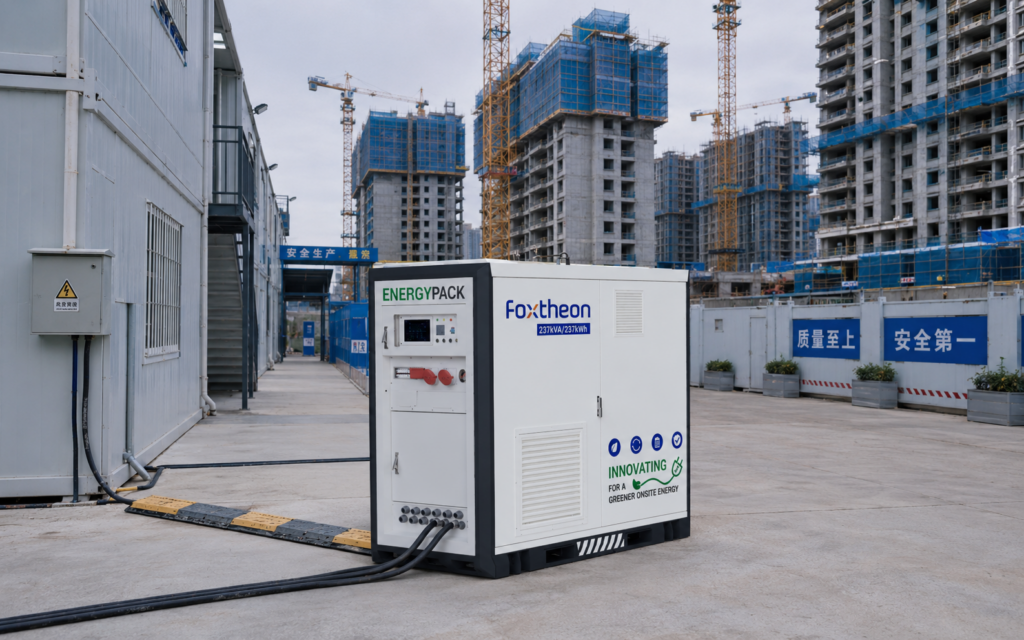
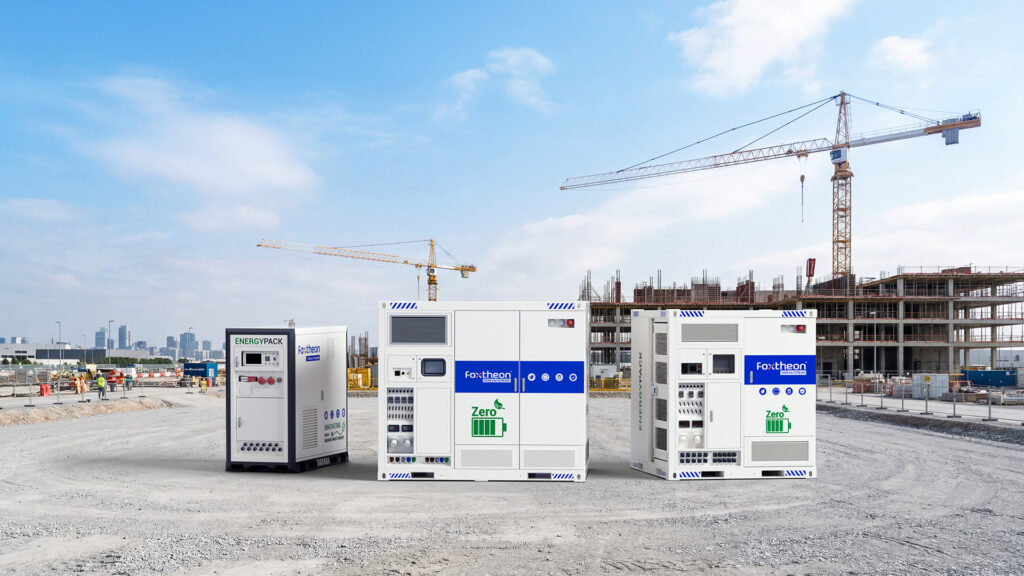
Heavy civil engineering projects (such as tunnel boring, highway construction, and bridge erection) require temporary power plants that can move as project phases progress. Portable containerized solution architectures from Foxtheon provide plug-and-play capability, enabling quick physical deployment, rugged transport resilience, and instant multi-energy synchronization without demanding custom civil site construction.
5. Technical Standards and Sourcing Evaluation
Sourcing engineering equipment for off-grid and industrial projects requires strict evaluation of hardware certifications, manufacturing processes, and vendor compliance profiles. Failure to properly vet components can lead to premature battery degradation, inverter tripping, or unsafe fault clearing.
Manufacturing Standards and Safety Certifications
Engineers and procurement teams must confirm that all subsystems comply with international performance and safety standards:
- Inverter and Grid Standards: IEC 62109-1/-2 for safety of power converters, IEEE 1547 for interconnecting distributed resources, and UL 1741 SA for advanced grid support functions.
- Battery Safety and Transport: UN 38.3 certification for safe transport of lithium batteries, alongside IEC 62619 or UL 1973 for stationary industrial safety compliance.
- Enclosure Protection: Enclosures should feature a minimum of IP54 rating for multi-component cabinets, with C4 or C5 high-durability paint coatings to resist corrosion in coastal or saline atmospheric conditions.
Supplier Engineering Support Capabilities
When selecting a long-term technology partner for a hybrid generator solar installation, project owners must evaluate the supplier’s system-level design capabilities rather than focusing solely on individual component specifications:
- Simulation and Modeling Tools: Reputable system providers must offer high-fidelity microgrid simulations (e.g., localized solar modeling matched with custom operational load curves) to prove power flow performance prior to manufacturing.
- Factory Acceptance Testing (FAT): Suppliers must conduct full load testing, thermal imaging, and short-circuit fault response simulation across the complete integrated power stack at the manufacturing facility prior to shipment.
- Firmware and Telemetry Infrastructure: Ensure the manufacturer supports secure remote telemetry via encrypted protocols (HTTPS, SSH, MQTT), enabling off-site diagnostic capabilities, firmware updates, and real-time operational troubleshooting.
Frequently Asked Questions
Q1: How does a hybrid generator solar control system handle high inductive motor starting currents?
A1: Modern systems utilize the ultra-fast discharge capability of the bi-directional battery inverter alongside the generator’s mechanical inertia. When a high inductive load (such as a large pump or motor) starts, the BESS instantly injects current to satisfy the initial dynamic surge, preventing sudden voltage sags and keeping the thermal engine from stalling.
Q2: What is the benefit of utilizing grid-forming inverter technology in off-grid deployments?
A2: A grid-forming inverter establishes its own AC voltage source and frequency signal without needing an external grid signal or a running mechanical engine. This enables the site to operate on pure solar and battery power, turning off thermal engines completely during periods of sufficient solar yield or stored energy.
Q3: How does solar energy integration affect the life expectancy of existing thermal generators?
A3: By utilizing intelligent control logic, a hybrid generator solar system prevents thermal engines from operating at low-efficiency, low-load states where mechanical wear and carbon build-up occur. Furthermore, shutting down engines during high solar generation hours reduces total accumulated operating hours, extending routine service intervals and overall overhaul schedules.
Q4: Why is LiFePO4 chemistry preferred over NMC for stationary hybrid power systems?
A4: LiFePO4 (Lithium Iron Phosphate) offers superior thermal stability, higher chemical safety margins, and significantly longer cycle life (often exceeding 6,000 cycles) compared to Nickel Manganese Cobalt (NMC) chemistries. These characteristics make it ideal for stationary industrial applications where physical footprint constraints are less severe than in electric vehicles.
Q5: Can an integrated system operate reliably under extreme temperature conditions?
A5: Yes. High-grade systems designed for industrial environments incorporate isolated HVAC or liquid-cooling thermal management loops for battery enclosures and active heat sinks for power electronics. Combined with proper panel derating calculations, these systems maintain stable output in ambient temperatures ranging from -20°C up to +55°C.
Technical Inquiry and Custom System Configuration
Engineering robust, custom-tailored power architectures requires detailed project analysis, including load profiling, environmental modeling, and sub-tier integration planning. To request a formal technical evaluation, submit your site specifications, peak demand profiles, and operational parameters directly to our application engineering team via the form below.