
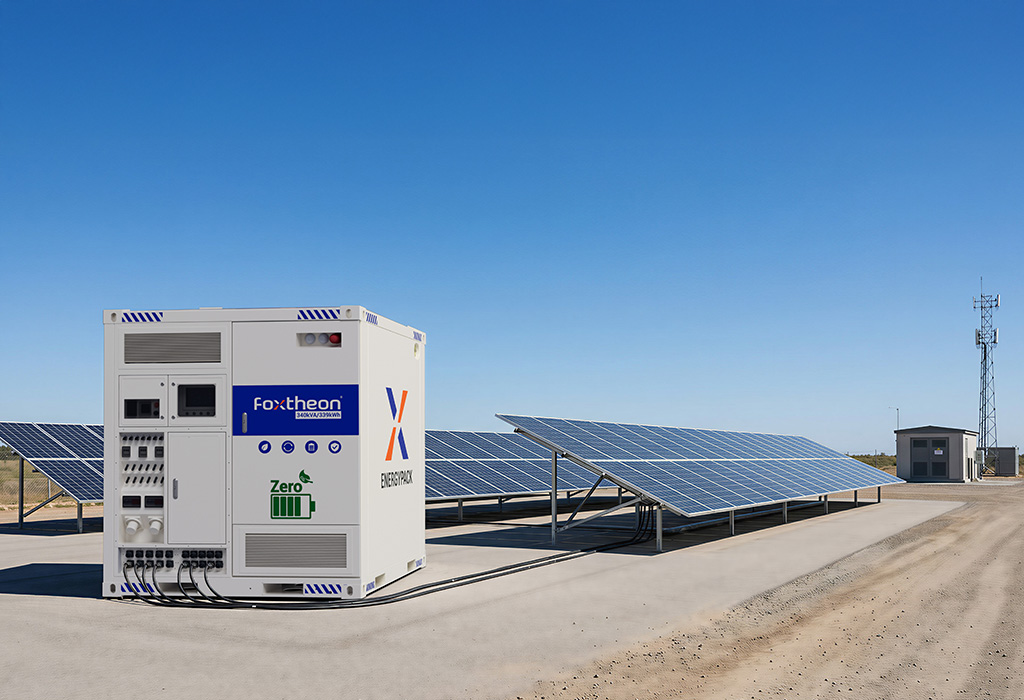
Modern industrial operations, critical infrastructure, and remote facilities face unprecedented electrical reliability challenges. Grid degradation, frequency drift, voltage sags, and the rapid expansion of localized renewable generation require power protection systems that go beyond standard emergency backup. Traditional online double-conversion uninterruptible power supplies protect loads from utility anomalies, but operate as passive, unidirectional assets. The modern hybrid ups system redefines this paradigm by acting as a bidirectional energy control hub. By seamlessly synthesizing solar photovoltaic (PV) input, battery energy storage systems (BESS), utility grid power, and automated diesel or propane generators, a hybrid ups system delivers continuous clean power while actively reducing operational energy expenditures through demand-charge mitigation and optimized energy harvesting.
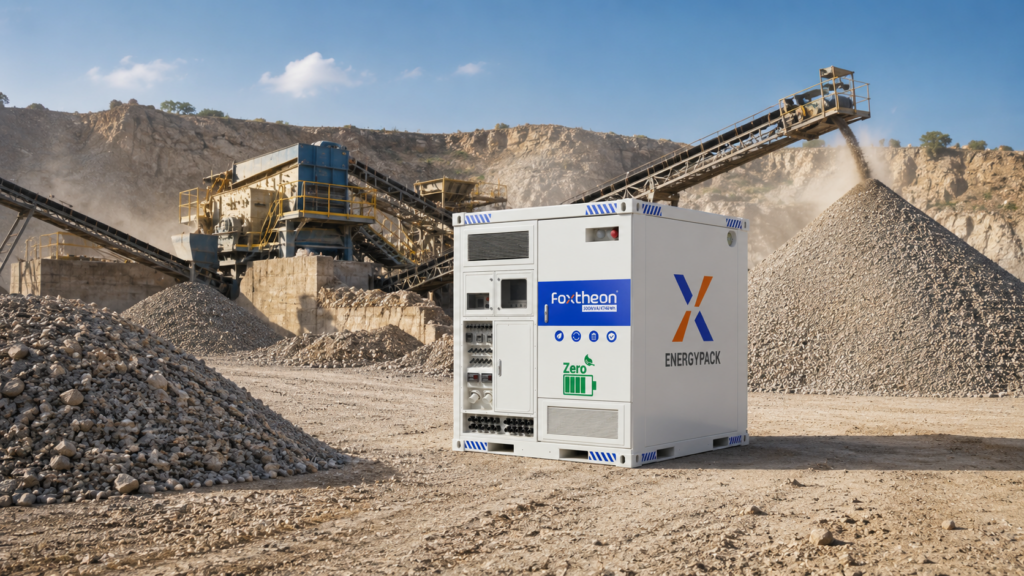
Multi-Source Integration Architecture of a Modern hybrid ups system
The engineering core of a hybrid system centers on multi-source arbitration and dynamic power flow management. Unlike isolated backup configurations, the system integrates a bidirectional converter stage, maximum power point tracking (MPPT) solar charge controllers, and digital control logic to manage concurrent energy inputs without output voltage phase disruption.
Dynamic Power Flow and Source Prioritization
The control firmware inside a hybrid ups system operates on configurable priority matrices tailored to site economics and localized grid reliability profiles:
- Primary Renewable Dispatch: Solar energy harvested through high-efficiency MPPT algorithms directly supplies connected loads. Excess solar power simultaneously feeds the battery bank.
- Secondary Battery Support: When solar irradiance drops or facility demand surges beyond panel capacity, the bidirectional DC-DC stage discharges battery energy to bridge the power deficit without engaging utility AC power.
- Grid Blending and Peak Shaving: During high time-of-use pricing periods, the system draws precise amounts of energy from storage to supplement the grid feed, limiting peak demand charges (kW) registered by utility meters.
- Automated Genset Auxiliary Signaling: If utility power fails during prolonged low-solar periods and battery depth-of-discharge (DoD) reaches predefined safety thresholds, the system issues a dry-contact signal to start a diesel or propane emergency generator, matching voltage and frequency phases before switching or blending power.
Inverter Topologies and Zero-Interruption Switching
High-capacity systems employ three-level Neutral-Point-Clamped (NPC) Insulated Gate Bipolar Transistor (IGBT) inverter architectures operating with pulse-width modulation (PWM) frequencies between 4 kHz and 20 kHz. This configuration yields higher switching efficiency (exceeding 97% in double-conversion mode) and minimizes harmonic distortion without requiring excessively heavy passive magnetic components.
When transitioning from utility-connected mode to islanded mode, high-speed static transfer switches (STS) disconnect the facility from the grid in under 2 milliseconds. This switchover prevents voltage sag propagation to sensitive electronic processing lines, industrial variable frequency drives (VFDs), or server hardware.
Core Component Engineering and Storage Dynamics
Selecting and sizing a system requires evaluating component longevity under varying thermal stress and cyclic duty profiles.
- Advanced Lithium Iron Phosphate (LiFePO4) Integration: Modern hybrid topologies favor LFP chemistry over legacy Valve-Regulated Lead-Acid (VRLA) batteries. LFP offers 3,000 to 5,000 deep cycles at 80% DoD, high energy density, and minimal thermal runaway risk. Integrated Battery Management Systems (BMS) continuously execute state-of-charge (SoC) and state-of-health (SoH) estimations via extended Kalman filtering, balancing individual cell voltages in real time.
- Active Power Conditioning (IEEE 519 Compliance): Active Front-End (AFE) rectifiers enforce input current Total Harmonic Distortion (THD) below 3%. This prevents non-linear industrial loads from reflecting harmonic currents back into upstream distribution transformers or local generator windings.
- Enclosure Protection and Thermal Isolation: Industrial units require ruggedized physical design. Standard indoor units employ IP31 sheet-steel cabinets, whereas harsh process manufacturing, mining, or marine deployments require IP54 or NEMA 3R enclosures featuring dual-chamber liquid cooling or isolated airflow channels to protect power electronics from conductive dust, humidity, and corrosive atmospheric gases.
Mission-Critical Industrial Use Cases
The functional flexibility of a hybrid ups system provides operational advantages across diverse operational environments:
Data Centers and Critical IT Infrastructure
In high-density server environments, energy costs dominate operational overhead. By deploying hybrid architectures, facility engineers utilize stored battery energy to participate in automated demand-response programs without compromising mission-critical availability (Tier III/IV compliance). Redundant N+1 or 2N topologies ensure system availability during maintenance windows.
Automated Manufacturing and Heavy Process Lines
Industrial machinery—such as CNC systems, robotic welding cells, and plastic injection molding machines—creates severe dynamic load fluctuations. A hybrid system absorbs power surges, dampens voltage transients, and prevents immediate line dropouts that cause costly material scrap and equipment recalibration delays.
Remote Off-Grid Microgrids and Harsh Climate Sites
In telecommunications installations, remote pumping stations, or cold-climate research sites, fuel delivery for generators is a major cost driver. Integrating PV arrays with a hybrid power core allows facilities to run primarily on solar energy. Generators operate only during extended low-irradiance periods or to supply winter battery-heating loads, dramatically reducing generator run-time, engine wear, and logistics costs.
Technical Evaluation and Procurement Matrix for Engineering Leads
Engineering leads should evaluate prospective manufacturers using specific technical benchmarks:
- Dynamic Load Performance: Assess output voltage recovery time following a 0% to 100% step-load change. High-performance systems restore steady-state output within 20 milliseconds.
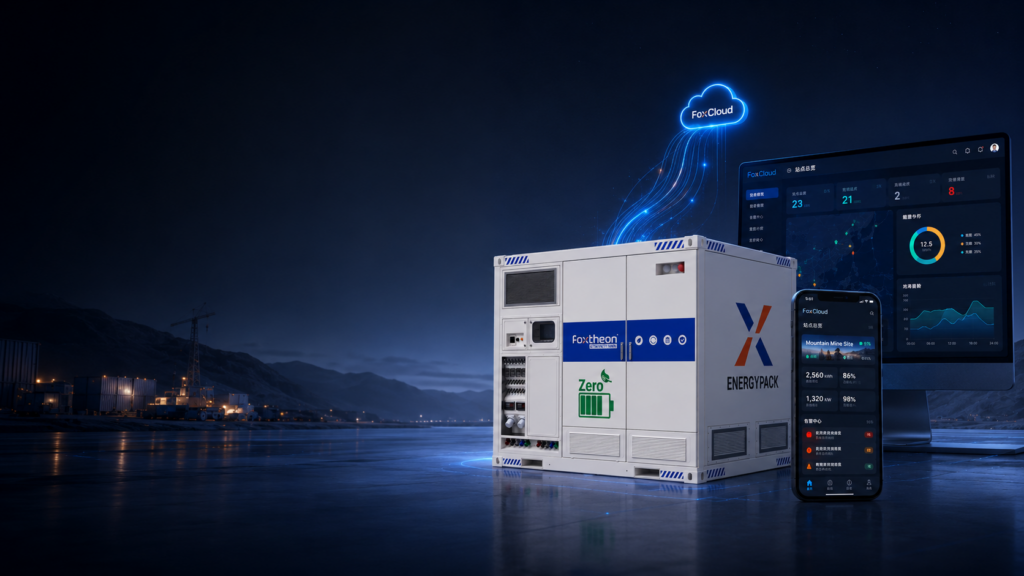
- Protocol Compatibility: Ensure native integration for standard industrial automation protocols including Modbus TCP/IP, BACnet/IP, and SNMPv3 for seamless SCADA and Building Management System (BMS) interfacing.
- Efficiency Across Load Curves: Evaluate partial-load efficiency curves. Because industrial systems rarely run at continuous 100% load, maintaining >95% efficiency down to 25% rated load is essential for achieving quick payback periods.
When selecting deployment partner hardware, vendor engineering expertise and site-commissioning capabilities are paramount. Organizations such as Foxtheon design high-reliability hybrid energy storage and uninterruptible power units engineered for demanding commercial and industrial environments. Factory-backed application engineering ensures optimized battery sizing, protection coordination, and seamless generator-pairing for mission-critical facilities worldwide.
Frequently Asked Questions
Q1: How does a hybrid UPS system differ from a standard solar inverter with battery storage?
A1: Standard solar inverters exhibit measurable transfer times (often 10 to 50 milliseconds) during utility outages, which causes sensitive electronics to reboot. A hybrid system uses double-conversion architecture and static transfer switches to deliver uninterrupted power (zero to under 2 ms transfer time) with precise output voltage and frequency regulation, alongside multi-source management.
Q2: Can a hybrid UPS system operate completely off-grid without utility connection?
A2: Yes. Systems can run in islanded off-grid mode permanently. In this configuration, solar energy and the battery bank serve as the main sources, while an automated generator output connects to the system’s AC input terminals to provide backup during prolonged poor weather.
Q3: What role does MPPT play within the system architecture?
A3: Maximum Power Point Tracking (MPPT) algorithms continuously adjust the electrical operating point of the photovoltaic array to extract maximum power output despite changing environmental parameters such as solar irradiance, ambient temperature, and partial shading.
Q4: How does dynamic peak shaving provide economic payback?
A4: Commercial utility tariffs charge facilities based on peak demand (kW) within specific billing windows. The hybrid system automatically discharges battery power during peak load conditions, capping grid draw below pre-set levels. This lowers monthly utility demand charges without altering facility operations.
Q5: What routine maintenance procedures are required for industrial hybrid UPS deployments?
A5: Quarterly tasks include inspecting ventilation path filters, checking system event logs, and verifying thermal balance across power modules via infrared scans. Semi-annual maintenance involves verifying cell-level BMS telemetry and conducting controlled transfer tests to test generator auto-start integration. Engineering teams from Foxtheon provide dedicated maintenance contracts, firmware management, and site diagnostics to ensure operational continuity over the system life cycle.
Inquire About Industrial Hybrid Energy Solutions
Upgrading facility power architecture requires precise engineering calculation, load profile logging, and tailored hardware selection. Contact the technical team at Foxtheon to request a site evaluation, obtain detailed equipment datasheets, or consult with an application engineer regarding customized power resilience solutions for your enterprise.