
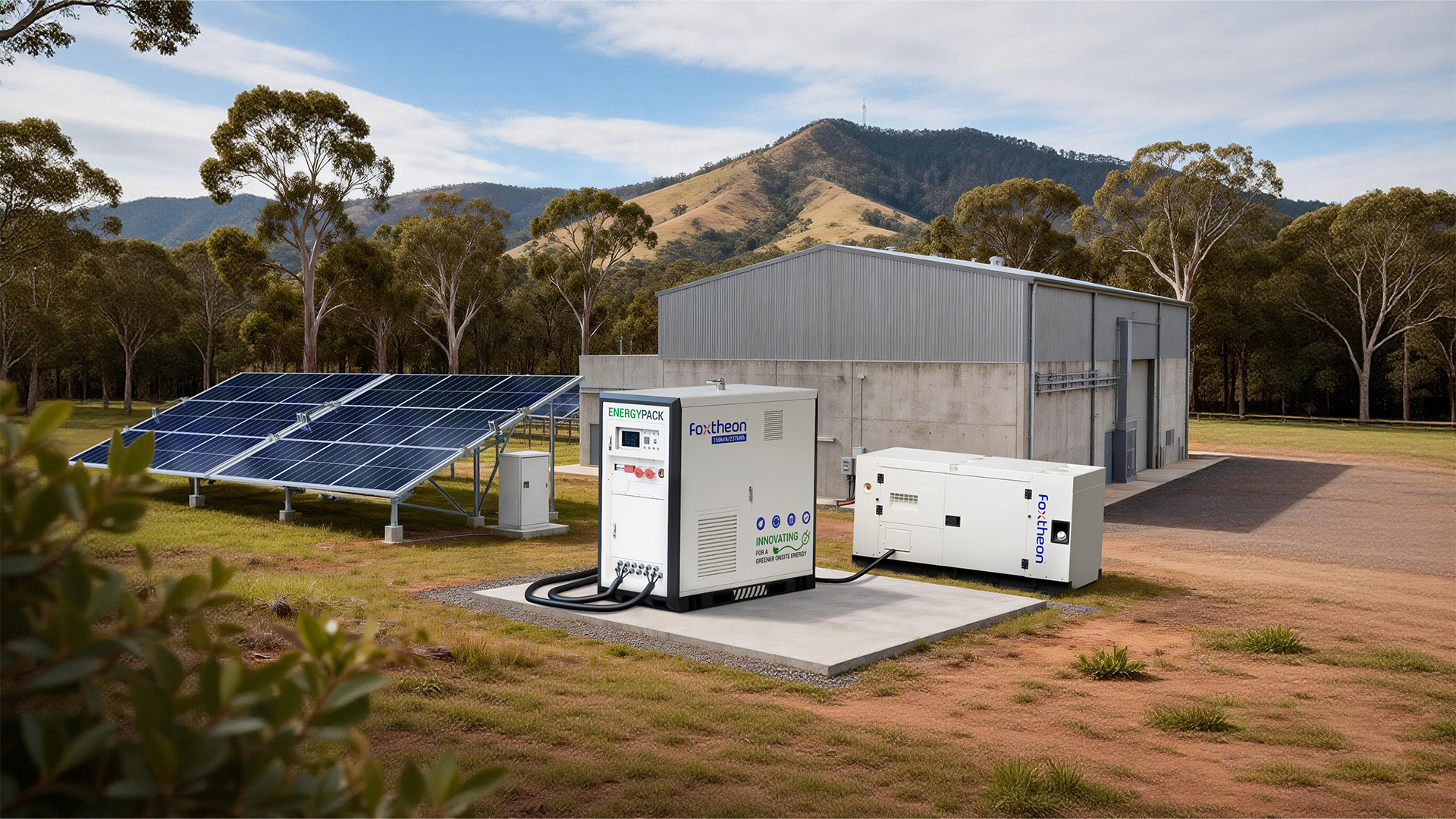
Modern commercial and industrial energy management has evolved beyond passive contingency backup into an active operational strategy. Facilities facing volatile energy rates, utility power quality variations, and expanding automated processes deploy high-capacity electrical power storage assets to regulate internal power distribution. Integrating advanced storage infrastructure stabilizes voltage buses, absorbs dynamic load spikes, and optimizes interaction with both external utility connections and on-site generation assets.
Engineering teams evaluating medium- and high-voltage storage solutions focus on subsystem synchronization, cell degradation mechanics, convertor efficiency topologies, and thermal management strategies. This analysis outlines the architectural design, control methodologies, application models, and technical selection criteria defining stationary energy storage within modern industrial environments.
Electrochemical Foundations and Enclosure Structural Engineering
The primary selection of electrical power storage media dictates the physical footprint, thermal envelope, and cycling durability of the entire site installation. Industrial platforms demand high cycle life, broad thermal tolerance, and high intrinsic safety margins under continuous operation.
LFP Chemistry and Ionic Dynamics
Lithium Iron Phosphate (LiFePO4 or LFP) cathode materials dominate stationary industrial installations due to their robust olivine crystalline structure. The strong covalent bonding between iron, phosphorus, and oxygen atoms prevents thermal breakdown and oxygen liberation at elevated temperatures, with thermal runaway initiation thresholds occurring above 270°C. Compared to layered oxide formulations like Nickel Manganese Cobalt (NMC), LFP exhibits higher structural resistance to volumetric expansion during lithiation and delithiation cycles.
- Cycle Longevity: High-grade LFP cells retain 80% state-of-health (SOH) after 6,000 to 10,000 complete charge-discharge cycles at standard 0.5C to 1C operating rates.
- Impedance Growth Control: Solid-Electrolyte Interphase (SEI) formation on graphite anodes is stabilized through targeted electrolyte additives, such as vinylene carbonate, minimizing capacity fade and internal resistance buildup over extended operational timeframes.
- Voltage Stability: A stable discharge plateau near 3.2V nominal simplifies DC bus regulation for power conversion equipment, keeping inverter modulation indexes stable during standard discharge cycles.
Structural Containment and Environmental Hardening
The external enclosure shields internal battery modules, cooling distribution runs, and control electronics against hostile outdoor and factory environments. Enclosure frames rely on structural cold-rolled steel (SPCC) or hot-dip galvanized steel sections treated with electrostatic powder coatings, achieving corrosion resistance compliant with ISO 12944 C4 or C5 exposure categories.
Internal structural panels often integrate non-combustible insulation, such as dense rockwool or polyurethane cores, reducing thermal transfer from external ambient extremes or direct solar radiation. Protective ratings of IP55 to IP65 prevent dust contamination and ingress from moisture, sustaining internal relative humidity levels within non-condensing operational parameters (0% to 95%).
Control Subsystems: Multi-Tier BMS, Topology-Driven PCS, and EMS Architecture
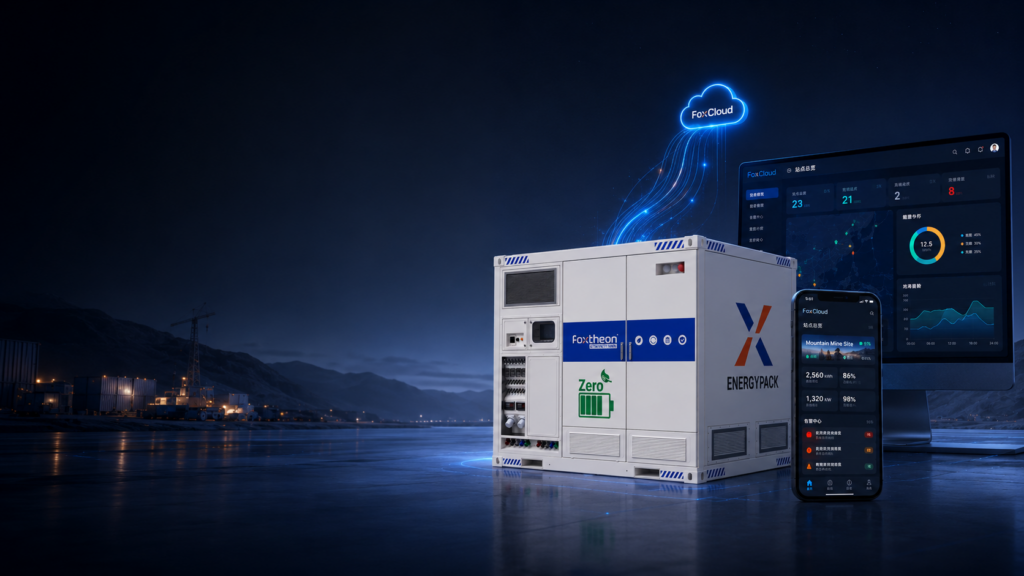
An industrial storage asset functions as a synchronized multi-layer platform. Performance relies on three integrated control layers: the Battery Management System (BMS), the Power Conversion System (PCS), and the Energy Management System (EMS).
Battery Management System (BMS) Multi-Tier Controls
The BMS provides cell-level monitoring and rack-level protection through a hierarchical controller topology:
- Battery Monitoring Units (BMU): Distributed boards monitor individual cell voltages to within +/- 2mV accuracy and track cell surface temperatures using localized thermistors. BMUs perform active or passive balancing to reallocate charge across series-connected cell groups, preventing single-cell voltage divergence from limiting rack capacity.
- Battery Control Units (BCU): Rack-level controllers aggregate BMU telemetry, command high-voltage contactors, and calculate precise state-of-charge (SOC) and state-of-health (SOH) values using extended Kalman filtering algorithms.
- Master System Unit: Coordinates multiple BCUs, providing isolated communication interfaces to site-level automation via high-speed industrial networks.
Power Conversion System (PCS) Engineering
The bi-directional PCS converts direct current from the electrical power storage DC bus into synchronized AC power for the plant’s internal grid. Advanced converter topologies utilize Silicon Carbide (SiC) MOSFETs or low-loss Insulated-Gate Bipolar Transistors (IGBTs) configured in three-level Neutral-Point Clamped (NPC) arrangements.
Three-level NPC designs reduce output voltage step sizes compared to traditional two-level converters. This configuration minimizes harmonic content, keeps total harmonic distortion (THD) below 3% at full load, and lowers filter inductance requirements. DSP-driven control loops execute grid-tied current injection and off-grid voltage synthesis, allowing seamless mode switching in under 20 milliseconds during sudden grid supply dropouts.
Energy Management Systems (EMS) and Industrial Protocols
The EMS executes higher-level dispatch control based on measured site consumption, utility rate schedules, and generation availability. Control algorithms fall into three main implementation categories:
- Rule-Based Logic: Fixed schedule profiles command charge cycles during off-peak rate periods and discharge during defined peak demand windows.
- Model Predictive Control (MPC): Dynamic system modeling predicts facility load profiles and solar/wind generation over a rolling 24-hour horizon. MPC continuously solves quadratic optimization problems to update dispatch points every 5 to 15 minutes.
- Real-Time Adaptive Automation: Dynamic control algorithms adjust local reactive power outputs based on fast voltage fluctuations, protecting internal automated lines from momentary sags.
Supported system communication protocols include Modbus TCP/IP, CANbus, IEC 61850, and OPC UA, facilitating integration into plant supervisory control and data acquisition (SCADA) networks.
Thermal Regulation Engineering: Forced-Air vs. Liquid Cooling Systems
Thermal regulation directly impacts battery lifespan, system safety, and overall operational performance. Cell degradation rates rise exponentially when operating continuously above 35°C, while low temperatures below 5°C increase internal cell resistance and restrict high-rate charging capabilities.
Convective Forced-Air Dynamics
Air-cooled architectures route conditioned air through battery cabinets via variable-speed blower fans. Internal ducting directs airflow across cell module surfaces. Air cooling maintains mechanical simplicity and minimizes fluid leakage considerations; however, dense cell arrangements can yield internal temperature variances of 5°C to 8°C across a single rack during continuous 1C load cycles.
Closed-Loop Liquid Cooling Infrastructure
High-density energy installations increasingly employ closed-loop liquid cooling circuits. Continuous aluminum cold plates sit directly against individual cell faces, bonded with high-conductivity thermal interface materials (TIM). A mixture of water and ethylene glycol circulates through an external chiller block or dry cooler.
- Intra-Rack Temperature Uniformity: Keeps cell-to-cell thermal deviation under 3°C across an entire cabinet, suppressing localized hot spots and maintaining uniform aging rates across series cell strings.
- Parasitic Load Efficiency: Liquid systems require significantly lower auxiliary fan energy, cutting secondary power consumption by up to 30% compared to equivalent high-volume forced-air cooling systems.
- Volumetric Density Improvement: Superior thermal transfer metrics allow cells to be arranged tightly within the enclosure, shrinking overall footprint requirements per megawatt-hour (MWh).
Pre-engineered cooling architectures designed by Foxtheon keep cell operational temperatures strictly within optimal performance bands, even under high C-rate cycling patterns in challenging ambient conditions.
Industrial Operational Applications and Asset Synchronization
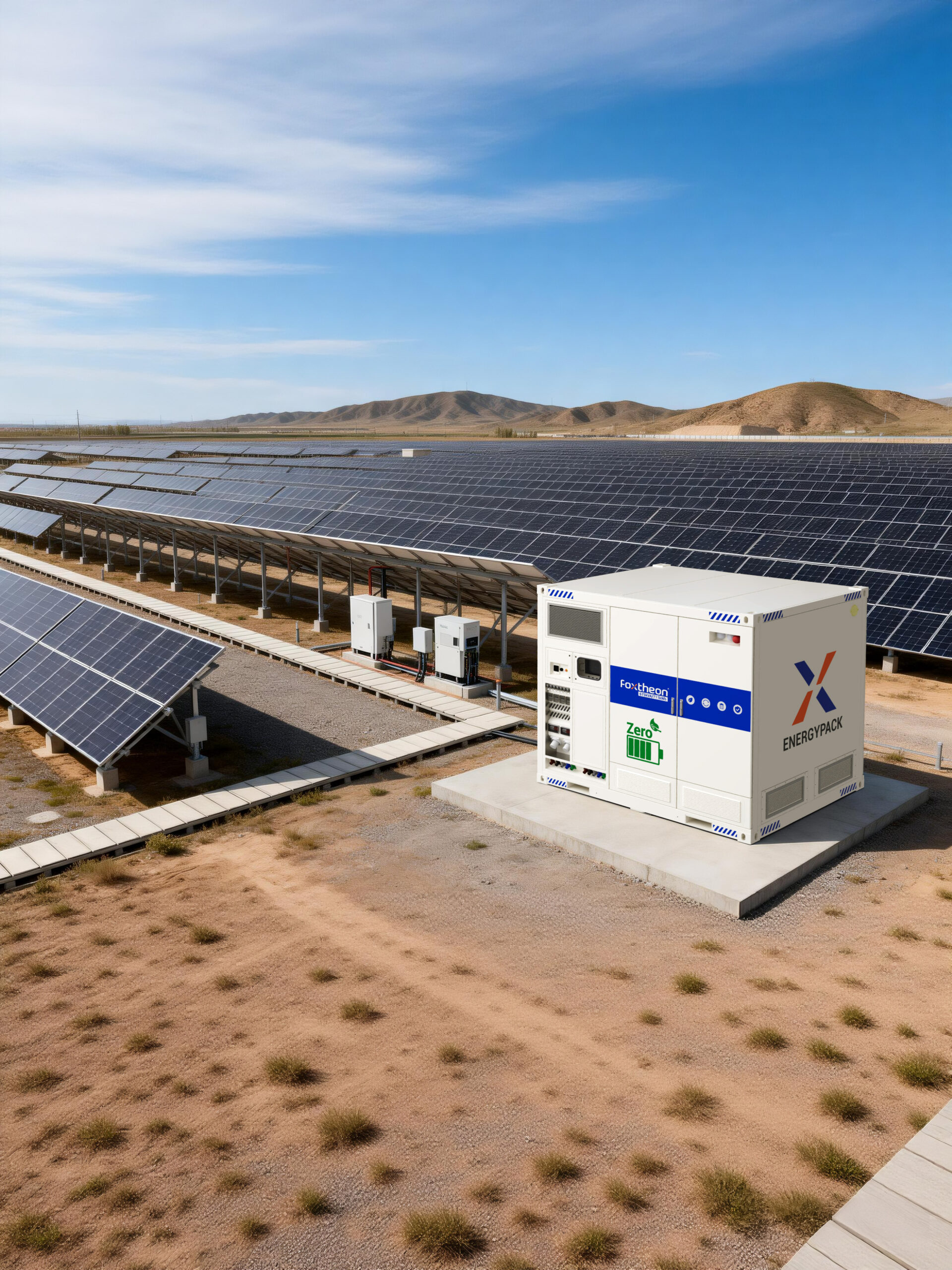
Implementing electrical power storage across commercial platforms delivers tangible benefits by directly addressing localized power quality and capacity constraints.
Dynamic Peak Shaving and Load Profile Smoothing
Industrial facilities operating heavy machinery experience brief demand spikes that drive up monthly utility demand charges. When site power demand exceeds set limits, the storage system discharges energy locally within milliseconds to supply excess load. This smooths the total facility demand curve without requiring adjustments to production schedules or equipment output.
Parallel Generator Fleet Augmentation
Industrial facilities operating on-site diesel or natural gas generators can augment their backup generation infrastructure with battery storage. Storage assets synchronize directly with existing engine-generator buses:
- Transient Load Absorption: Rapid load steps from heavy motor starts are absorbed by the battery inverter, insulating generator mechanical governors from sudden torque changes and frequency drops.
- Engine Operating Point Optimization: Engine-generator sets run continuously within their ideal fuel efficiency zone (typically 70% to 80% prime load), while excess power charges the battery bank.
- Spinning Reserve Management: The storage system acts as an instantaneous reserve source, allowing operators to turn off under-loaded idle generators while maintaining system backup capabilities.
Reactive Power Compensation and Microgrid Isolation
Facilities with extensive inductive loads—such as variable frequency drives, arc welders, and induction motors—often face reactive power fees. The multi-quadrant PCS injects or absorbs reactive power (VARs) on demand, adjusting the localized displacement power factor toward unity.
In islanded microgrid setups, the storage system functions as the voltage-forming grid reference. It maintains nominal 50/60 Hz frequency and bus voltage while dynamically absorbing variable output from rooftop solar panels or localized wind turbines.
Technical Procurement and Hardware Selection Criteria
Engineering procurement specifications for an industrial electrical power storage deployment require structured evaluation of physical, electrical, and control capabilities against operational site parameters.
| Technical Parameter | Standard Forced-Air Cabinet | Advanced Liquid-Cooled Container |
|---|---|---|
| Nominal Volumetric Density | 70 – 90 kWh/m² | 130 – 170 kWh/m² |
| Rack Thermal Delta (ΔT) | < 6°C | < 3°C |
| Round-Trip AC Efficiency (RTE) | 86% – 89% | 90% – 93% |
| Ingress Protection Rating | IP54 / IP55 | IP55 / IP65 |
| Typical Cycle Life (80% SOH) | 6,000 Cycles (0.5C) | 8,000 – 10,000 Cycles (0.5C) |
| Control Interface Options | Modbus RTU / Modbus TCP | Modbus TCP, IEC 61850, OPC UA |
Verification Standards and Compliance Testing
Industrial storage procurement requires verification of international structural and electrical safety standards:
- UL 1973: Evaluates battery module and rack safety under electrical short-circuits, mechanical impacts, and environmental abuse conditions.
- UL 9540 / UL 9540A: Mandates complete system-level safety checks and measures thermal runaway fire propagation characteristics across cell, module, and rack groupings.
- IEC 62619: Specifies safety requirements for secondary lithium cells and battery blocks used in industrial stationary applications.
- NFPA 855: Dictates physical installation rules, including target separation distances, exhaust ventilation criteria, and integrated fire suppression guidelines for stationary installations.
Comprehensive system documentation provided by Foxtheon includes pre-shipment Factory Acceptance Test (FAT) records and Site Acceptance Test (SAT) commissioning protocols, ensuring all deployed hardware matches localized grid code compliance rules.
Frequently Asked Questions
Q1: What is the typical operational lifespan of an industrial electrical power storage unit?
A1: High-grade lithium iron phosphate (LFP) installations operating under controlled ambient conditions typically deliver an operational life of 10 to 12 years. System end-of-life is defined as capacity declining to 70-80% of initial rating. Following proper thermal management guidelines and working within design C-rates helps prevent accelerated calendar aging and capacity loss.
Q2: How do extreme low or high ambient outdoor temperatures influence system operations?
A2: Operation at high ambient temperatures (above 40°C) speeds up internal SEI layer growth and capacity loss, while temperatures below 5°C increase internal cell resistance, reducing available power output and limiting high-rate charging. Integrated liquid cooling systems adjust thermal flows to maintain cell core temperatures between 20°C and 30°C, regardless of external ambient variations.
Q3: Can storage hardware operate safely in combination with existing on-site generator sets?
A3: Yes. Modern bi-directional power conversion systems integrate with legacy generator controls via microgrid controllers. Storage units absorb sudden load increases within milliseconds, stabilizing system frequency and allowing existing engine generators to run efficiently without experiencing severe mechanical shock load.
Q4: What key safety certifications should procurement teams confirm before installation?
A4: Verification teams should confirm system certification to UL 9540 (system safety) and UL 1973 (battery safety), backed by UL 9540A thermal runaway propagation test reports. International sites should also confirm compliance with IEC 62619, UN 38.3 for transport safety, and local grid code compliance standards.
Q5: How fast can a stationary storage system transition from utility supply to islanded backup operation?
A5: Advanced PCS units utilizing DSP-driven digital control loops detect line voltage drops and switch from grid-following to grid-forming mode in under 10 to 20 milliseconds. This rapid response maintains stable bus voltage, preventing unexpected downtime on sensitive automated production lines.
Engineering teams and system integrators seeking detailed site single-line diagrams, tailored sizing models, or comprehensive product datasheets can submit project requirements via our technical portal: Inquiry.