
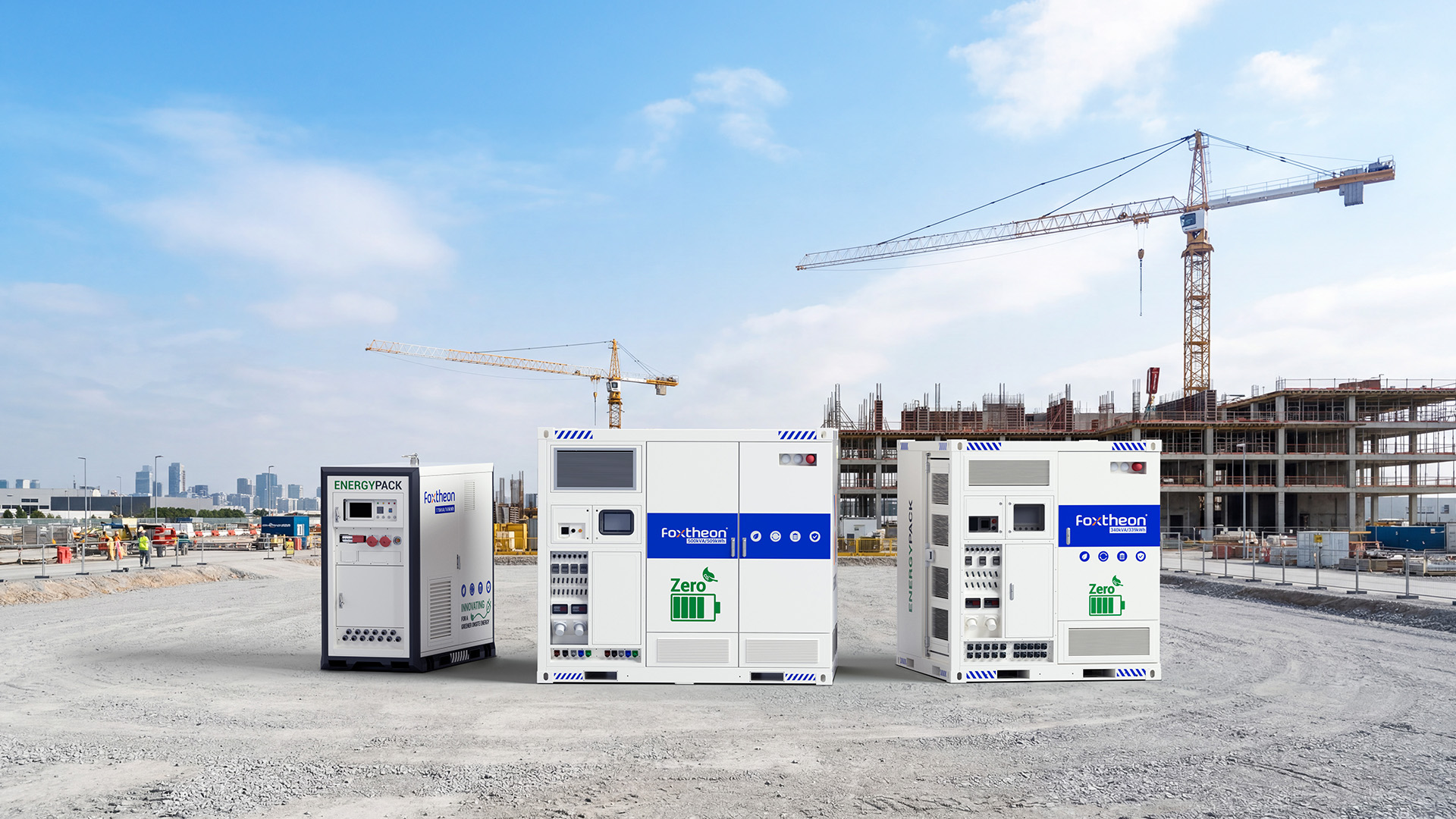
Traditional utility distribution relied on a deterministic operational model: centralized, synchronous generators injected bulk power into unidirectional transmission systems, feeding passive downstream consumers. The rapid integration of distributed energy resources (DERs)—such as commercial rooftop solar arrays, wind generation, and electric vehicle fleets—has dismantled that paradigm. In modern networks, transmission and distribution interfaces experience bi-directional real and reactive power flows, severe intermittency, and a progressive decline in physical rotational inertia.
Operating an electrical network under these dynamic conditions demands advanced smart grid control. Far beyond basic supervisory data acquisition, modern control systems function as a real-time, multi-layered decision engine. They resolve the operational friction between stochastic renewable generation, variable industrial loads, and existing synchronous baseline assets.
The Multi-Layered Architecture of Smart Grid Control
To preserve grid stability across interconnected assets, control architectures operate across distinct temporal and physical domains. Rather than relying on a single centralized dispatch, modern engineering utilizes a three-tier hierarchical control framework:
- Primary Control (Millisecond to Second Domain): Operating autonomously at the device level, primary control handles real-time stabilization without waiting for upstream communication. Grid-forming and grid-following inverters deploy droop control ($\Delta P / \Delta f$ and $\Delta Q / \Delta V$) to manage transient frequency fluctuations and local voltage margins. This layer provides the synthetic inertia essential for networks where retired coal or gas turbines have lowered system inertia.
- Secondary Control (Seconds to Minutes Domain): Acting across substations and localized microgrids, secondary control restores system frequency and voltage setpoints to nominal values ($50/60\text{ Hz}$ and rated kV). It mitigates the operational deviations accumulated during primary response by coordinating local reserves, managing automatic generation control (AGC), and rebalancing feeder loops.
- Tertiary Control (Minutes to Day-Ahead Domain): Managed by Energy Management Systems (EMS) and Distributed Energy Resource Management Systems (DERMS), tertiary control addresses economic optimization, regional market dispatch, state estimation, and long-term storage reserves. It synchronizes bulk power import/export limits with forecasted generation profiles and industrial demand schedules.
Technical Bottlenecks in Modern Smart Grid Control
Deploying distributed generation without robust control infrastructure compromises system reliability. Engineering teams must resolve several systemic failure modes:
1. Bi-Directional Power Flow and Feeder Voltage Rise
Legacy radial distribution lines were sized under the assumption that voltage decreases monotonically from the substation to the end-of-line load. Mid-feeder solar generation can reverse this flow, forcing local voltage levels above statutory thresholds (ANSI C84.1 or regional equivalents). Intelligent control coordinates on-load tap changers (OLTCs), switched capacitor banks, and smart inverters operating in volt-VAR/volt-watt modes to stabilize the feeder voltage profile.
2. Rate of Change of Frequency (RoCoF) Vulnerabilities
Inverter-based resources (IBRs) decouple mechanical generation from electrical output. Consequently, the loss of a major transmission line or generation unit results in a significantly higher RoCoF than observed in traditional thermal fleets. Rapid frequency excursions risk triggering under-frequency load shedding (UFLS) relays prematurely. Control algorithms must dispatch ultra-fast response assets, such as battery energy storage, to arrest frequency drop within milliseconds.
3. Real-Time Telemetry and Latency Constraints
Dynamic line rating and wide-area monitoring depend on continuous data streams from Phasor Measurement Units (PMUs) and Advanced Metering Infrastructure (AMI). Transmitting high-frequency synchrophasor data back to a centralized control room introduces communication latencies ($50\text{–}500\text{ ms}$) that are too slow to resolve localized power quality anomalies. As a result, operational strategies are shifting toward edge computing architectures, where local intelligent electronic devices (IEDs) execute automated switching autonomously.
Advanced Techniques in Smart Grid Control Systems
Managing non-linear networks requires control algorithms that anticipate grid stress rather than merely reacting to threshold breaches:
- Model Predictive Control (MPC): MPC uses real-time state measurements alongside dynamic system models to calculate an optimal sequence of control actions over a defined future horizon. By explicitly accounting for constraints—such as inverter thermal limits, battery state of charge (SoC), and transformer loading—MPC coordinates multi-asset dispatch while preventing equipment degradation.
- Predictive Generation and Load Forecasting: Machine learning algorithms process meteorological models, historical irradiance patterns, and industrial operational schedules to project generation 24 to 48 hours in advance. Control systems leverage these forecasts to balance spinning reserves, schedule maintenance intervals, and minimize curtailment events.
- Dynamic Demand Response (DR): When peak demand threatens transformer thermal headroom, automated demand response systems modulate flexible industrial loads (such as HVAC chillers, continuous electrolytic processes, and EV charging depots) without disrupting underlying business operations.
Bridging Synchronous Assets and Renewables: The Foxtheon Hybrid Control Framework
A resilient energy transition does not involve the abrupt abandonment of existing equipment. Industrial operators, remote microgrids, and regional utilities frequently rely on heavy-duty diesel or natural gas generation sets to maintain base-load reliability. The engineering challenge lies in operating these synchronous machines alongside variable photovoltaics and commercial battery energy storage systems (BESS).
Running legacy generation assets at low loads during peak solar generation causes internal carbonization, wet stacking, thermal inefficiencies, and excessive maintenance cycles. Advanced smart grid control addresses this challenge through hybrid optimization.
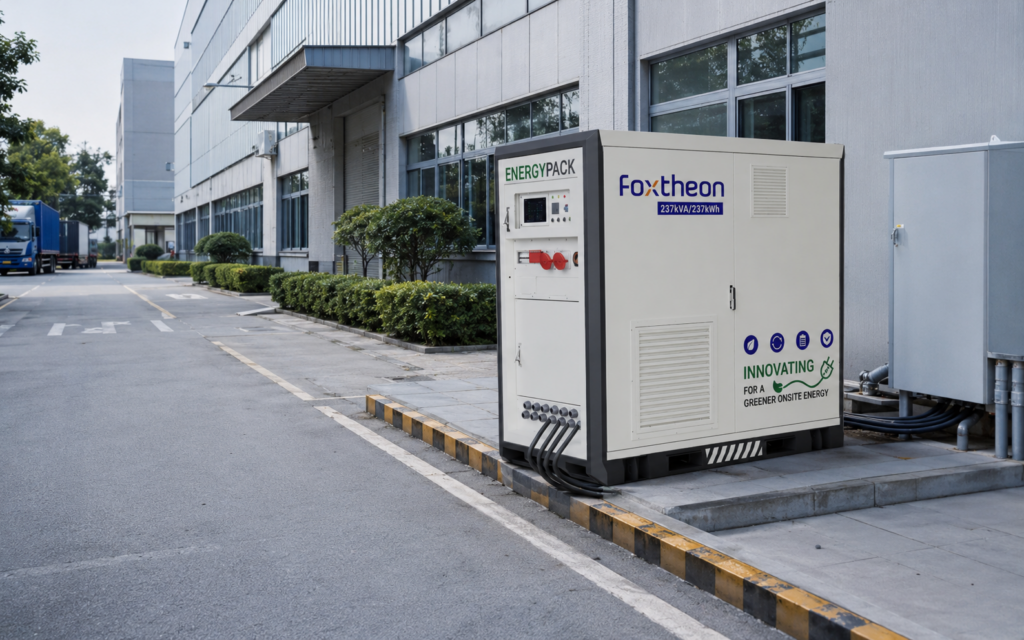
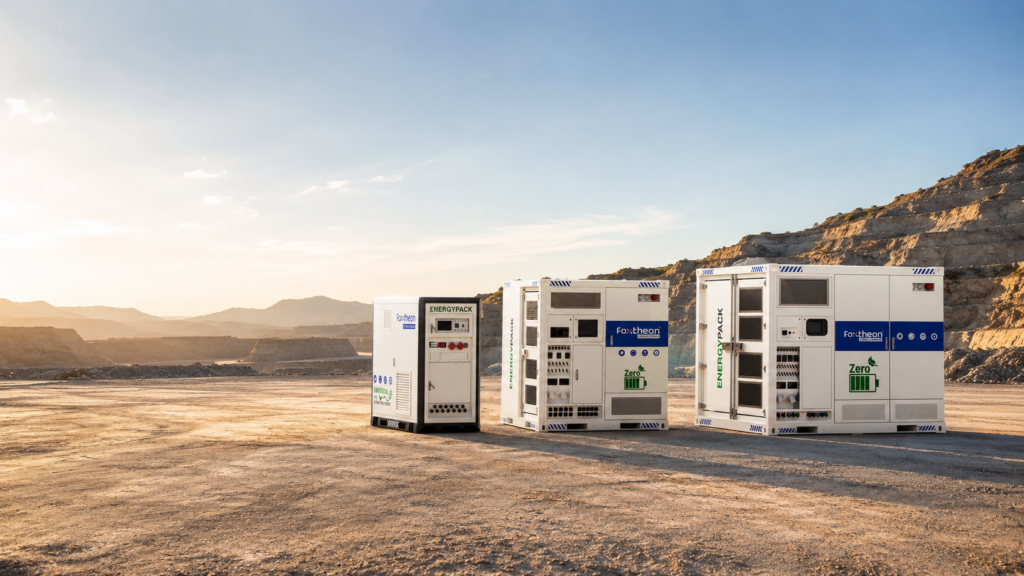
Integrated solutions, such as those engineered by Foxtheon, combine intelligent energy storage platforms with specialized hybrid microgrid controllers. Rather than displacing functional baseload investments, Foxtheon’s control architecture integrates with existing generator controllers and renewable arrays:
- Optimal Loading Strategy: The control platform treats the synchronous generator as an efficient baseload machine, keeping its operating profile within its optimal fuel efficiency curve ($70\%\text{–}85\%$ load factor).
- Dynamic Spinning Reserve Emulation: By utilizing high-response BESS, the control system maintains active power reserves instantaneously, eliminating the operational cost of keeping auxiliary fossil-fueled turbines idling.
- Seamless Islanding and Resynchronization: In the event of an upstream utility outage, Foxtheon control configurations coordinate the primary frequency and voltage references, preventing blackouts and facilitating smooth resynchronization back to the grid upon restoration.
Industrial and Commercial Microgrid Control Applications
For large-scale commercial and industrial (C&I) facilities, smart grid control protects uptime and operational margins. Key industrial implementations include:
- Peak Shaving and Demand Charge Reduction: Industrial tariffs often penalize high 15-minute peak power draws. Automated control algorithms deploy localized energy storage precisely when monitored site demand exceeds contract thresholds, cutting utility demand charges.
- Power Quality Correction: Industrial processes utilize non-linear loads (such as variable frequency drives and arc furnaces) that introduce harmonic distortion and reduce power factor. Advanced smart inverter control provides dynamic harmonic cancellation and power factor correction at the point of common coupling (PCC).
- Multi-Energy Microgrid Coordination: In facilities utilizing combined heat and power (CHP), solar arrays, and energy storage, the control system coordinates thermal and electrical dispatch simultaneously, maximizing overall thermodynamic and financial efficiency.
Frequently Asked Questions (FAQ)
What is the primary difference between a conventional grid and one managed by smart grid control?
A conventional grid functions primarily as a one-way delivery system with passive monitoring and manual, centralized dispatch. A network governed by smart grid control features bi-directional power and communication paths, autonomous device-level regulation, real-time edge processing, and the automated balancing of dynamic distributed energy resources.
How does smart grid control mitigate the intermittency of solar and wind energy?
It leverages a combination of predictive weather-driven generation forecasting, sub-second battery storage dispatch, automated demand response, and intelligent volt-VAR inverter management. These systems absorb rapid generation surges and bridge supply lulls without compromising grid frequency or thermal line capacities.
Can smart grid control integrate with legacy industrial generators?
Yes. Advanced microgrid controllers treat legacy synchronous generators as stable baseline assets. By pairing these generators with responsive energy storage systems and centralized controllers, facilities can maintain generators at their peak efficiency ratings while renewables and battery inverters absorb variable load spikes.
What role does synthetic inertia play in smart grid frequency control?
As conventional synchronous turbines are scaled back, the power system loses physical rotational mass, which historically slowed down frequency drops during generator trips. Synthetic inertia is an algorithmic response deployed by fast-acting grid-forming inverters and energy storage systems to inject active power into the grid within milliseconds of an event, keeping frequency within safe operational limits.
Why is edge computing necessary for modern smart grid operations?
Centralized cloud or SCADA architectures introduce latency across broad communication networks. For critical applications—such as microgrid fault isolation, anti-islanding detection, and instantaneous voltage smoothing—local intelligent electronic devices (IEDs) must process data and trigger physical control actions at the asset level without depending on continuous wide-area connectivity.
Modernize Your Facility’s Energy Infrastructure
Maintaining high power quality and operational resilience alongside evolving utility requirements demands purpose-built control and storage infrastructure. Foxtheon designs advanced commercial and industrial energy storage systems, hybrid microgrid platforms, and intelligent energy management solutions that integrate with your existing power assets.
Contact our engineering team today to discuss technical specifications, conduct a site-specific interconnection analysis, or discover how our integrated storage controllers optimize your site’s energy economics.