
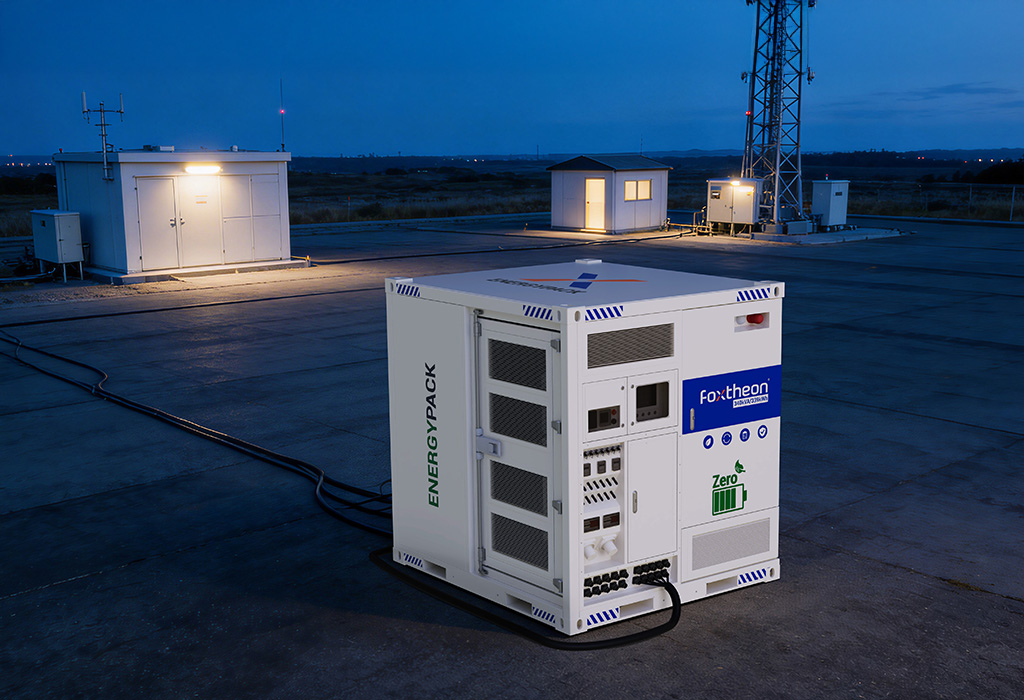
Industrial operations situated beyond utility transmission corridors—ranging from remote mining camps and telecommunications towers to agricultural processing plants and off-shore logistics bases—require continuous electrical power under fluctuating load profiles. Historically, these sites have relied on prime-rated diesel or natural gas generator sets running around the clock to maintain bus voltage and frequency. However, continuous operation across varying demand curves introduces mechanical inefficiency and accelerated component wear. Modern off grid batteries address this engineering challenge by functioning as a dynamic energy buffer alongside existing generation assets and renewable arrays.
Rather than operating in isolation, commercial battery energy storage systems (BESS) integrate with prime-power generators and photovoltaic inverters to form coordinated hybrid microgrids. By decoupling real-time load fluctuations from the mechanical prime mover, storage subsystems allow generators to operate near their peak thermal efficiency window while solar harvesting and battery discharge handle variable demand. Selecting, specifying, and sourcing these storage assemblies requires rigorous evaluation of electrochemical properties, enclosure metallurgy, thermal management systems, and B2B manufacturing standards.
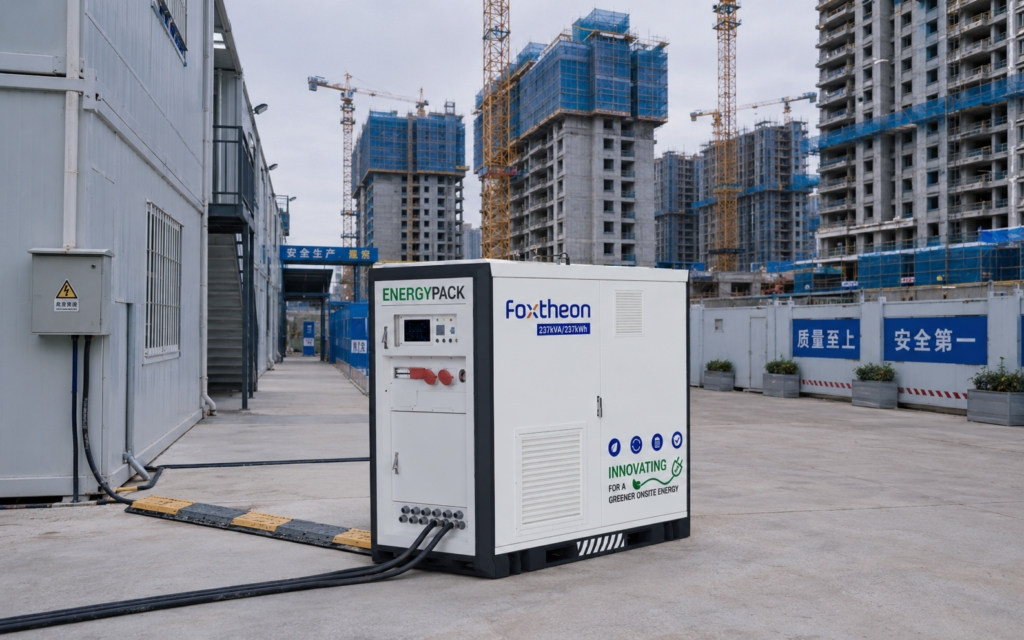
Operational Pain Points in Standalone and Hybrid Power Networks
To specify an industrial storage bank accurately, engineers must first diagnose the electrical and mechanical bottlenecks present in remote power installations. Standalone power networks lack the infinite rotational inertia of a centralized utility grid, meaning every sudden load step directly stresses the local power source.
The primary operational bottleneck in generator-only sites is prolonged low-load operation. Commercial diesel generators are designed to run between 70% and 85% of their rated kVA capacity. When site demand drops overnight to 15% or 25% of rated output—such as powering only camp lighting, security telemetry, and base station cooling—cylinder temperatures drop below optimal combustion thresholds. This phenomenon leads to wet stacking, unburned fuel accumulation in exhaust manifolds, glazed cylinder liners, and shortened oil-change intervals. Integrating off grid batteries eliminates low-load idling by allowing the generator to shut down completely during valley periods while the battery bank supplies silent, clean AC power through a bi-directional inverter.
A secondary challenge emerges when integrating solar photovoltaic arrays into remote sites without adequate storage capacity. Cloud transients cause rapid drops in PV output, forcing spinning generators to absorb steep ramp rates within milliseconds. Without fast-acting DC or AC storage buffers, frequency sags and voltage transients can trip sensitive industrial variable frequency drives (VFDs) or programmable logic controllers (PLCs). Furthermore, remote sites frequently experience severe ambient temperature swings, airborne conductive dust, and high humidity, all of which degrade poorly sealed electrical hardware over short deployment cycles.
Electrochemical Selection and BMS Architecture for off grid batteries
Moving from site diagnostics to internal system design begins with cell chemistry selection. While flooded lead-acid and valve-regulated lead-acid (VRLA) banks served early telecom and backup installations, commercial B2B deployments have standardized on Lithium iron phosphate (LiFePO4 or LFP) prismatic cells due to their structural thermal stability and extended cycle longevity.
The olivine crystal structure of LFP cathodes exhibits strong covalent phosphorus-oxygen bonds, preventing oxygen release at elevated internal temperatures and raising the thermal runaway threshold well above nickel-manganese-cobalt (NMC) formulations. Beyond thermal behavior, LFP delivers superior electrical metrics under deep-cycling off-grid duty:
- Usable Depth of Discharge (DoD): Commercial LFP racks routinely support 80% to 90% DoD without severe capacity degradation, compared to 50% DoD ceilings common in VRLA arrays.
- Cycle Endurance: Automotive-grade prismatic LFP cells rated for stationary storage deliver 6,000 or more full charge-discharge cycles at 25°C and 0.5C rates before reaching 80% State of Health (SoH).
- Round-Trip Efficiency: DC-to-DC round-trip efficiency exceeds 95%, minimizing energy losses during daily solar harvesting and generator-assisted bulk charging cycles.
- High C-Rate Transient Response: Capable of 0.5C continuous operation and 1C to 2C short-duration surge discharge, LFP banks absorb locked-rotor starting currents from submersible pumps, HVAC compressors, and rock crushers.
Cell performance depends directly on the intelligence of the Battery Management System (BMS) governing each rack and string. In commercial multi-rack architectures, a hierarchical three-tier BMS topology—comprising Cell Supervision Circuits (CSC), a Battery Rack Management Unit (BRMU), and a central Master Battery Management Unit (MBMU)—ensures precise telemetry and fault isolation. Advanced BMS firmware employs Extended Kalman Filtering algorithms to calculate real-time State of Charge (SoC) within a 2% margin of error, even under irregular partial-state-of-charge (PSoC) cycling.
Equally important is balancing topology and communication protocol compatibility. Active or high-current passive cell balancing equalizes voltage drift across series-connected cells during top-of-charge states, preventing individual weak cells from throttling total rack capacity. On the system integration layer, industrial engineering teams at Foxtheon configure MBMU interfaces with dual isolated CANbus, RS485, and Modbus TCP ports. This enables closed-loop digital communication with hybrid power conversion systems (PCS) and generator Auto-Start Controllers (AGS), ensuring that charging currents taper smoothly as cells approach 100% SoC.
Structural Materials, Enclosure Metallurgy, and Thermal Management
Because standalone storage installations often operate outdoors without climate-controlled buildings, the physical materials used in cabinet panels, internal barriers, and electrical busbars dictate field durability as much as cell chemistry. Substandard enclosure materials lead to premature corrosion, moisture ingress, and localized thermal hotspots.
External cabinet framing and removable access panels typically rely on either hot-dip galvanized carbon steel (such as SGCC) or marine-grade 5052/6061 aluminum alloys. For inland industrial sites, heavy-gauge galvanized steel treated with zinc-rich primer and an electrostatic polyester powder coat exceeding 80 to 100 microns provides structural rigidity against mechanical impact and vandalism. However, for coastal ports, island microgrids, and offshore platforms exposed to chloride-laden air, 5052-H32 aluminum alloy panels offer superior corrosion resistance under ASTM B117 neutral salt-spray testing standards. Regardless of base metal selection, external fasteners should utilize 316 stainless steel to prevent galvanic corrosion at panel seams.
Environmental sealing relies on continuous compression gaskets molded from EPDM or fluorosilicone elastomers mounted along double-folded door channels. These sealing geometries allow commercial outdoor battery cabinets to achieve IP55 or IP65/IP66 ingress protection ratings, blocking wind-driven sand, conductive mining dust, and heavy rain jets while preserving accessible front-panel serviceability.
Inside the enclosure, material engineering shifts toward electrical conductivity, dielectric isolation, and thermal containment:
- Busbar Metallurgy: High-ampacity DC busbars connecting modular battery packs utilize electrolytic tough-pitch (ETP) copper with electroplated tin or nickel finishes. Tin plating prevents copper oxidation in humid environments and lowers contact resistance across bolted lugs, preventing localized I²R heating under continuous 200A–500A loads.
- Inter-Cell Thermal Barriers: Prismatic cells within each module are compressed using aluminum end-plates and steel strapping, separated by aerogel thermal insulation pads or mica-silicate sheets. These low-thermal-conductivity barriers delay heat transfer between adjacent cells under abnormal fault conditions.
- Flame-Retardant Structural Plastics: Cell holders, wire harnesses, and module front bezels must meet UL 94 V-0 flammability specifications, ensuring self-extinguishing behavior without dripping molten material.
- Sub-Zero Heating Films: Charging lithium-ion cells below 0°C causes metallic lithium plating on the graphite anode, permanently degrading capacity. Cold-climate enclosures incorporate integrated polyimide resistance heating pads bonded to aluminum heat-spreader plates beneath each module, powered automatically by BMS logic prior to initiating charge acceptance.
Active thermal management ties these structural materials together. Standard air-cooled cabinets employ industrial variable-speed DC fans paired with closed-loop cabinet air conditioners (HVAC) to hold internal cell temperatures between 15°C and 35°C. For high-density containerized deployments exceeding 200 kWh per unit, liquid-cooled cold plates circulated with an ethylene-glycol coolant loop maintain cell-to-cell temperature differentials within 3°C, substantially extending uniform calendar life across the entire battery bank.
Hybrid Integration Alongside Existing Generator Fleets
For commercial fleet operators and regional power equipment distributors, battery storage serves as a modular performance multiplier for existing generator assets. Integrating storage into an established diesel or gas infrastructure transforms how prime-mover equipment is dispatched, reducing fuel burn and mechanical wear while protecting the distributor’s core engine business.
In a typical AC-coupled or DC-coupled hybrid topology, the battery bank and bi-directional PCS operate in parallel with the generator bus or manage the load via a grid-forming inverter. When total site load falls below 35% of the generator’s nameplate rating, the energy management controller commands the generator to shut down after an automated cool-down period, shifting the load seamlessly to the off grid batteries. Once battery SoC reaches a programmed lower threshold—typically 20% to 25%—the controller sends an Auto-Start signal to the generator.
During this active recharge window, the generator supplies the live site load while simultaneously pushing surplus power into the battery charger at an optimized 75% to 80% total engine load. Operating at this sweet spot maximizes specific fuel efficiency (liters per kWh generated), achieves clean exhaust temperatures that burn off soot deposits, and slashes total engine runtime hours from 8,760 hours per year to as few as 1,500 to 2,500 hours. As a result, distributors can offer clients extended engine overhaul intervals and lower maintenance frequencies without altering their existing generator product lines.
Furthermore, in peak-shaving configurations, the storage inverter absorbs momentary load spikes that exceed the generator’s single-step load acceptance capability. Instead of over-sizing a diesel generator strictly to handle brief motor startup surges, system integrators can pair a compact prime generator with a high-discharge battery bank, achieving superior voltage stability and transient ride-through across the entire microgrid.
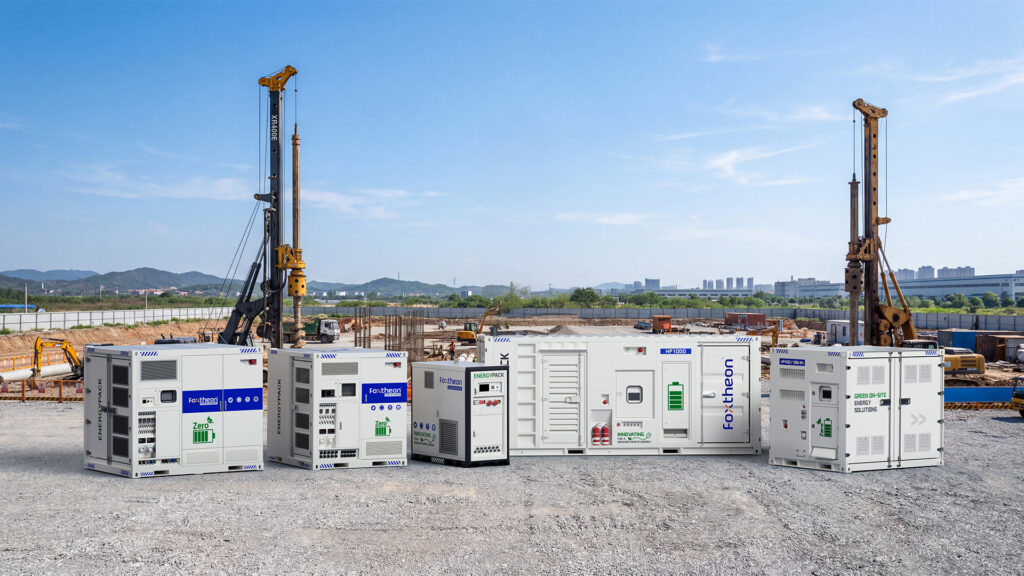
Procurement Criteria, Supplier Qualification, and Pricing Structures
Evaluating B2B suppliers for commercial storage systems requires looking beyond headline kilowatt-hour quotes to examine underlying bill-of-materials (BOM) transparency, factory validation protocols, and international safety certifications. Significant pricing disparities across seemingly identical capacity ratings almost always stem from cell grading, BMS hardware redundancy, and cabinet engineering tolerances.
The single largest determinant of unit pricing is cell provenance and grading. Tier-1 manufacturers supply automotive-grade “Grade A” prismatic LFP cells accompanied by factory capacity, open-circuit voltage (OCV), and internal resistance (IR) matching logs. Within any single battery string, cell-to-cell internal resistance variance should remain below 1% to prevent chronic imbalance over multi-year cycling. Lower-priced assemblies frequently utilize Grade B cells—cells that missed automotive dimensional or capacity tolerances—or mismatched batches that degrade unevenly after 1,000 cycles.
Beyond cell quality, B2B buyers and EPC contractors should audit the following technical and commercial parameters during vendor qualification:
- Safety and Transport Compliance: Commercial systems require third-party test reports confirming compliance with UN 38.3 (safe maritime and air transport of lithium modules), IEC 62619 (safety requirements for industrial stationary secondary lithium cells), UL 1973 (stationary battery safety), and UL 9540A thermal runaway propagation test data for indoor or high-density installations.
- Enclosure Environmental Ratings: Confirm whether IP65/IP66 and C4/C5 anti-corrosion ratings apply to the complete assembled cabinet—including louver vents, cable glands, and HVAC seals—rather than just isolated metal coupons.
- Factory Acceptance Testing (FAT): Reputable manufacturers execute full charge-discharge cycling tests, insulation resistance (hipot) verification, and BMS fault-injection simulations on every serialized unit prior to crating.
- OEM/ODM Engineering Flexibility: Distributors serving regional markets often require custom voltage architectures (such as 48V DC telecom racks versus 400V–800V high-voltage commercial strings), customized Modbus register mapping for third-party inverters, and localized branding on cabinet access panels.
- Warranty Structure and Spare-Part Continuity: Review warranty clauses for throughput energy limits (MWh warranted), ambient operating temperature ceilings, and guaranteed minimum capacity retention (commonly 70% to 80% over 10 years), alongside guaranteed availability of plug-and-play BMS boards and replacement modules.
Working directly with an engineering-led manufacturer such as Foxtheon enables EPCs, system integrators, and power equipment dealers to align technical specifications with regional grid codes, logistic weight limits, and MOQ-tiered pricing brackets for commercial off grid batteries.
Frequently Asked Questions
Q1: Can commercial off grid batteries integrate with existing diesel generators from legacy manufacturers?
A1: Yes. Commercial off grid batteries integrate with nearly any legacy diesel or natural gas generator equipped with a standard two-wire Auto-Start (AGS) dry contact or a digital controller supporting Modbus/J1939 telemetry. The hybrid inverter or Energy Management System (EMS) monitors battery State of Charge and site load, automatically triggering the generator dry contact when charging is required and commanding shutdown once the bank reaches its target upper SoC threshold.
Q2: How do outdoor battery enclosures prevent lithium plating in sub-zero environments?
A2: Charging LiFePO4 cells when internal cell core temperatures fall below 0°C causes metallic lithium to plate onto the anode, permanently reducing capacity. Industrial cold-weather cabinets prevent this by combining closed-cell thermal insulation panels with BMS-controlled polyimide heating films. When ambient temperatures drop, the BMS blocks charge current to the cells and diverts incoming energy to the internal heating pads until cell thermistors confirm temperatures have risen above +5°C.
Q3: When should procurement teams specify 5052 aluminum enclosures instead of galvanized steel?
A3: Galvanized carbon steel (SGCC) with heavy polyester powder coating is well suited for dry, inland industrial environments where mechanical impact resistance and unit pricing efficiency are priorities. Marine-grade 5052 aluminum alloys are recommended for coastal sites, islands, offshore rigs, or high-salinity desert environments where scratches in powder-coated steel could initiate rust creep under prolonged salt-fog exposure.
Q4: What explains major pricing differences between two 100 kWh commercial battery cabinets?
A4: Pricing variations reflect four hidden engineering layers: cell grade (matched Grade A Tier-1 cells versus ungraded or Grade B cells), BMS architecture (isolated dual-bus industrial BMS with active balancing versus basic consumer boards), thermal hardware (closed-loop industrial HVAC or liquid cooling versus simple exhaust fans), and third-party certification testing (UL 1973, IEC 62619, and UL 9540A compliance documentation).
Q5: What certifications are mandatory for international B2B importation and project permitting?
A5: For ocean freight and logistics clearance, UN 38.3 certification and a valid Material Safety Data Sheet (MSDS) Class 9 dangerous goods package are mandatory globally. For project permitting and insurance underwriting at commercial sites, authorities having jurisdiction (AHJs) typically require IEC 62619 or UL 1973 for battery safety, alongside UL 9540A thermal propagation reports for multi-cabinet indoor or containerized installations.
Q6: How are commercial battery strings scaled when site power demand increases over time?
A6: Modular high-voltage and low-voltage battery racks are designed for parallel expansion via a shared DC busbar or multi-input PCS combiner. However, expanding an existing bank after several years requires matching the new strings’ voltage and State of Health through independent DC-DC converters or adding new strings to a dedicated parallel inverter channel so older modules do not throttle the performance of newly installed racks.
Engineering Specifications and B2B Inquiry
For commercial system sizing, OEM/ODM enclosure customization, or distributor pricing schedules on hybrid-ready off grid batteries, submit project engineering parameters directly to the technical team at Foxtheon via https://www.foxtheon.com/. To accelerate preliminary configuration and bill-of-materials quotation, include the following technical inputs in your inquiry:
- Total daily energy demand (kWh) and maximum continuous/surge power load (kW/kVA)
- Existing or planned generator kVA rating, voltage, phase configuration (single-phase or three-phase 400V/480V), and solar PV capacity
- Site ambient temperature extremes (°C), elevation, and environmental classification (inland, dusty, or coastal)
- Required autonomous backup duration and target delivery destination port