
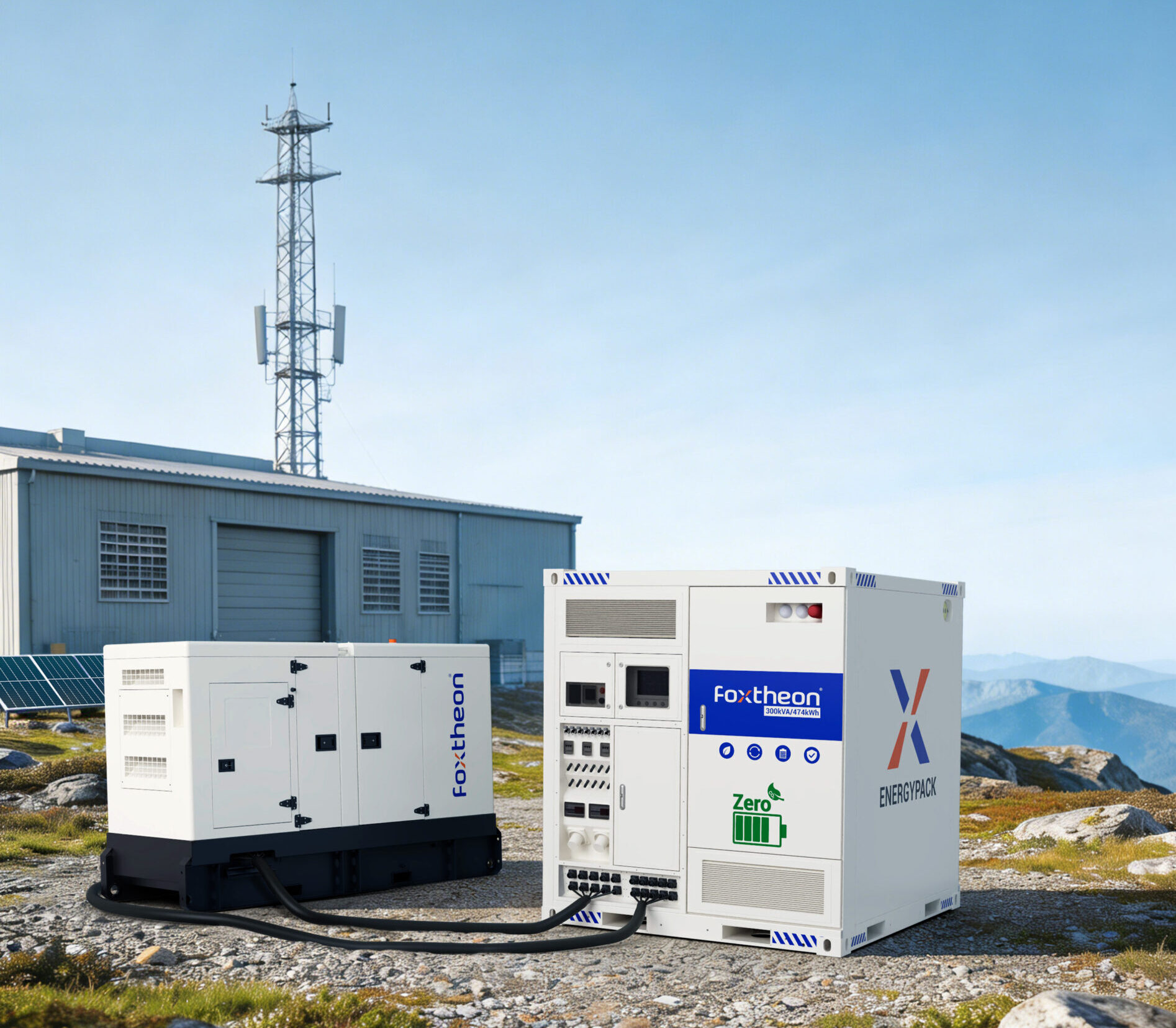
Commercial and industrial energy infrastructures require high system reliability, stable frequency control, and optimized energy delivery. Integrating solar photovoltaics with battery energy storage systems (BESS) and existing thermal power generation creates a multi-source generation profile capable of handling complex dynamic loads. Implementing a hybrid pv system provides facilities with predictable power output, power quality management, and operational resilience under varying grid conditions.
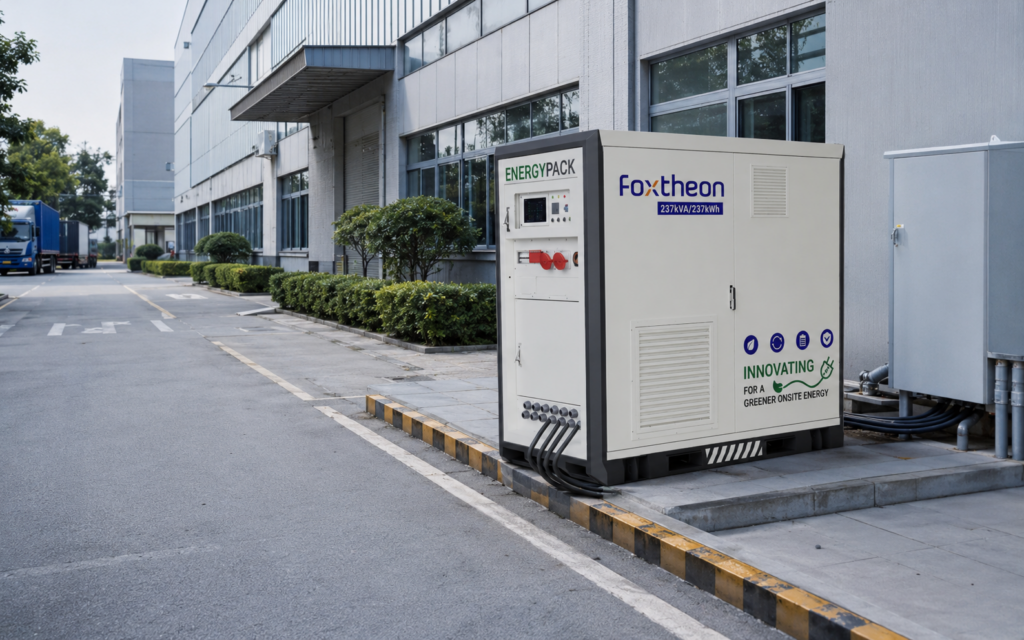
Topology Architectures of Commercial Hybrid PV Systems
The system topology dictates how photovoltaic generators, battery energy storage systems, and thermal generation assets interface with the main AC bus. The choice between alternating current (AC) coupling and direct current (DC) coupling determines system efficiency, conversion losses, and retrofit viability.
DC-Coupled Architecture
In a DC-coupled configuration, the photovoltaic array and the battery system share a common DC bus. Photovoltaic power routes through a high-efficiency Maximum Power Point Tracking (MPPT) charge controller directly into the DC busbar, which feeds the battery storage system or connects to a central bidirectional inverter. This architecture eliminates double conversion losses (DC to AC to DC) when charging the energy storage assets from the solar array. Round-trip efficiency for solar-to-battery charging in DC-coupled designs routinely exceeds 95%.
DC coupling is optimized for greenfield projects where solar generation capacity and battery storage capacity are engineered concurrently. The primary technical requirement involves sizing the central bidirectional inverter to handle total facility demand while maintaining precise DC-bus voltage control during high irradiance surges.
AC-Coupled Architecture
In an AC-coupled topology, the solar array and the battery energy storage system feature independent inverter units connected directly to the facility’s main AC switchboard. The solar array uses standard grid-tied string or central inverters to convert DC to AC. A separate bidirectional storage inverter manages battery charging and discharging by converting power between the AC switchboard and the battery bank.
AC coupling offers significant modularity and simplifies retrofitting existing grid-tied photovoltaic plants. If a facility already operates a solar array, adding a storage retrofitted system requires minimal alterations to the existing solar AC wiring. Equipment designed by technical solution providers like Foxtheon integrates into both AC and DC bus architectures, facilitating flexible synchronization with existing onsite infrastructure.
PV Module Selection Criteria and Semiconductor Physics
Selecting appropriate photovoltaic module technologies impacts the overall energy yield, temperature performance, and long-term linear power degradation of a commercial hybrid pv system.
Monocrystalline TOPCon vs. Heterojunction (HJT) Technologies
Modern utility and industrial solar installations predominantly utilize Tunnel Oxide Passivated Contact (TOPCon) and Heterojunction (HJT) n-type silicon wafers over legacy p-type PERC panels.
- TOPCon Modules: Feature ultra-thin silicon oxide layers combined with polycrystalline silicon, yielding laboratory efficiencies above 25%. They exhibit a low temperature coefficient of power (approximately -0.30%/°C), reducing thermal degradation losses in hot ambient environments. Their bifaciality factor ranges between 80% and 85%, allowing substantial rear-side irradiance capture.
- HJT Modules: Combine crystalline silicon thin-film layers with amorphous silicon passivating layers. HJT modules deliver a superior temperature coefficient (-0.26%/°C) and higher bifaciality factors (up to 90%). However, they demand stringent manufacturing quality assurance to prevent early light-induced degradation (LID).
Degradation Mechanisms and Mechanical Reliability
Long-term asset stability relies on minimizing degradation mechanisms:
- Potential-Induced Degradation (PID): Occurs due to high voltage differentials between the internal cell circuit and the grounded module frame. High-grade modules utilize anti-PID encapsulation materials such as Polyolefin Elastomer (POE) instead of Ethylene Vinyl Acetate (EVA) to block sodium ion migration.
- Light and Elevated Temperature-Induced Degradation (LeTID): Affects cell passivation structures when exposed to high operating temperatures under illumination. Specifying n-type substrate wafers largely mitigates LeTID vulnerabilities.
- Mechanical Stress Ratings: Industrial systems must withstand static mechanical loading (minimum 5400 Pa front load / 2400 Pa rear load) and dynamic wind loads to ensure internal silicon micro-cracking does not compromise module string performance over a 25-year lifespan.
Grid Interconnection, Genset Synchronization, and Microgrid Control
Industrial facilities operating off-grid or on unstable utility grids rely on multi-source microgrids where a hybrid pv system works alongside grid connections or continuous-duty gensets.
Generator Integration without Engine Light-Loading
Combining solar power with continuous diesel or gas generator sets requires advanced energy management system (EMS) controls. Running thermal generators at low loads (typically below 30% of rated capacity) causes incomplete combustion, engine carbon buildup (wet stacking), increased maintenance frequency, and degraded fuel economy.
The control logic of a advanced commercial microgrid utilizes dynamic power spinning reserves. The EMS monitors solar irradiance variations in real time. When solar generation spikes, the storage system absorbs excess PV capacity rather than forcing thermal generators below their baseline operating thresholds. This allows generators to operate within their optimal fuel efficiency curves while the solar array and battery handle transient dynamic loads.
Grid-Forming vs. Grid-Following Inverters
Traditional solar inverters operate in grid-following mode, relying on an established voltage waveform from an active utility grid or synchronous generator to synchronize output phase and frequency. In contrast, grid-forming inverters act as voltage sources. Using virtual synchronous machine (VSM) algorithms, grid-forming storage inverters establish voltage amplitude and frequency within an isolated network.
When the main grid drops offline, grid-forming inverters provide instantaneous inertia response, executing a smooth transition to islanded operation. Advanced hybrid solutions engineered by Foxtheon provide high grid-forming capability, maintaining uninterrupted voltage stability for heavy industrial motor loads and variable frequency drives (VFDs) during grid supply transitions.
Industrial Application Scenarios and System Engineering
Deploying a commercial hybrid pv system requires custom system sizing tailored to load profiles, site conditions, and operational objectives.
Commercial and Industrial Facilities with High Peak Loads
Manufacturing plants, cold storage facilities, and data centers frequently face substantial demand charges based on maximum power draw over short intervals. The microgrid control system mitigates these spikes through peak shaving algorithms.
When plant demand exceeds a set threshold, the battery system injects power into the facility AC switchboard within milliseconds, flattening the peak demand profile pulled from the grid. Simultaneously, the solar array covers baseload demands during daylight operating hours.
Remote Mining and Natural Resource Operations
Off-grid extraction sites often depend on long fuel supply chains. Integrating a robust high-penetration hybrid pv system significantly reduces overall thermal fuel consumption without risking supply stability.
High-penetration systems—where instantaneous solar power exceeds 100% of total load—store surplus generation in high-density Lithium Iron Phosphate (LFP) battery systems. The energy management system handles automated starting and stopping sequences for auxiliary thermal generators, ensuring power continuity across multi-megawatt operational footprints.
Agricultural Processing and Cold Chain Facilities
Seasonal operations with high inductive motor starting currents demand systems with robust surge capacity. Inverters integrated into the microgrid architecture must support high short-term overload capabilities (typically 150% to 200% of rated capacity for up to 10 seconds) to absorb the starting inrush current of large refrigeration compressors and pump systems.
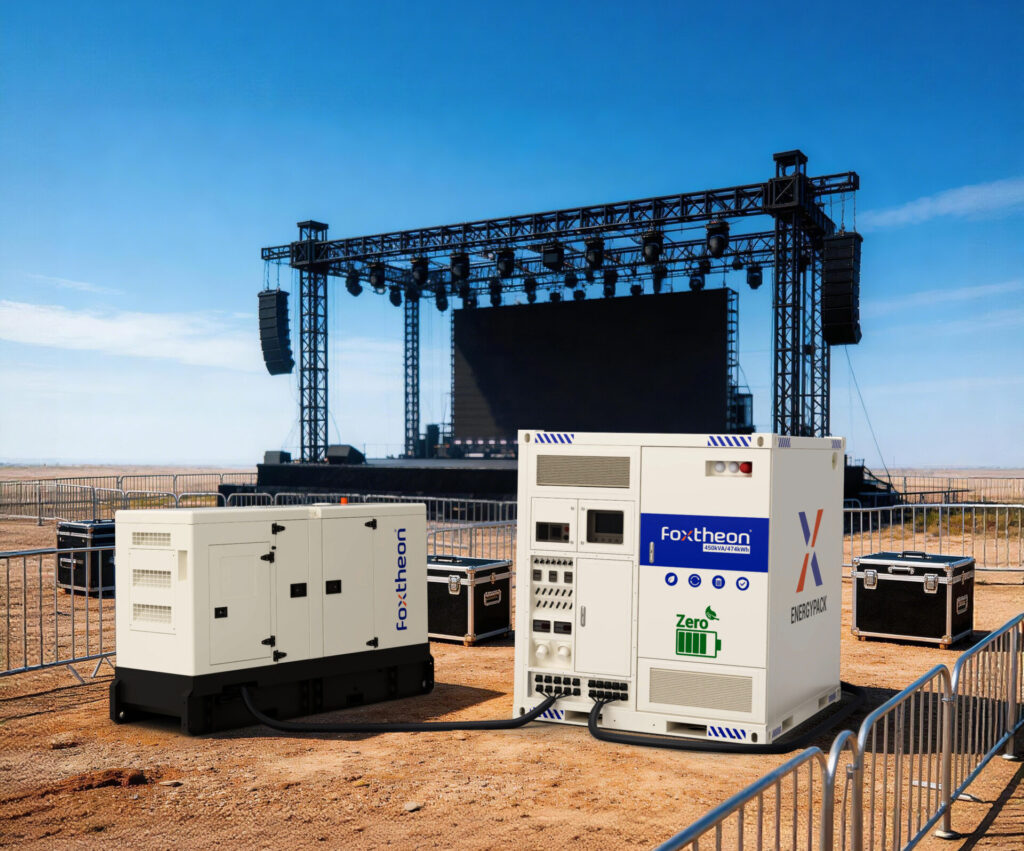
Sourcing and Evaluation Framework for EPCs and System Integrators
Procuring industrial energy hardware requires rigorous technical evaluation to ensure component compatibility, safety compliance, and robust long-term operation.
Hardware Standards and Safety Certification Compliance
Engineering, Procurement, and Construction (EPC) contractors must ensure that all balance of system (BOS) components adhere to international electro-technical specifications:
- Inverters: Must comply with IEC 62109-1/2 for safety, IEC 61000 series for electromagnetic compatibility (EMC), and UL 1741 SA/SB standards for advanced grid support functionalities.
- Battery Energy Storage Systems: Must conform to UL 9540A thermal runaway propagation test standards, along with IEC 62619 for industrial lithium cell safety.
- Enclosure Protection Ratings: Outdoor power electronics must possess minimum IP65 / NEMA 4X ingress protection, along with C5-M anti-corrosion coatings for installation in coastal or highly corrosive industrial environments.
Evaluation Criteria for System Integration Partners
Selecting an integrated technology provider involves evaluating hardware scalability, software control responsiveness, and factory acceptance testing protocols. Complete energy architecture from established vendors like Foxtheon standardizes communications protocols using standard Modbus TCP/RTU and CANbus interfaces, preventing integration bottlenecks between the primary inverter hardware, energy management controllers, and facility SCADA systems.
Suppliers should provide transparent datasheets covering round-trip efficiency (RTE), thermal management specifications (liquid cooling vs. forced air), and detailed battery chemistry degradation curves under ambient operational limits.
Frequently Asked Questions
Q1: What is the technical difference between an AC-coupled and a DC-coupled hybrid PV system architecture?
A1: A DC-coupled system routes power from the solar array to the battery bank via a shared DC bus using an MPPT controller, maximizing solar-to-battery charging efficiency. An AC-coupled system connects separate solar and battery inverters to a common AC switchboard, offering modularity and simpler installation for retrofitting existing photovoltaic systems.
Q2: How does a hybrid PV system interact with existing thermal generators without causing engine light-loading?
A2: The integrated energy management system (EMS) dynamically balances load demands. When solar output peak occurs, surplus power is diverted to charge the battery system rather than forcing thermal generators to operate below their recommended minimum operating capacities (typically 30%), preventing carbon accumulation and engine wear.
Q3: Why is LFP chemistry preferred over NMC for commercial energy storage applications?
A3: Lithium Iron Phosphate (LFP) offers superior thermal stability, lower risk of thermal runaway, and a longer lifecycle—often exceeding 6,000 to 8,000 deep cycles at 80% Depth of Discharge (DoD)—compared to Nickel Manganese Cobalt (NMC) chemistries, making it highly reliable for continuous industrial operations.
Q4: What is the function of grid-forming inverters in isolated industrial microgrids?
A4: Grid-forming inverters establish an independent AC voltage waveform with fixed frequency and amplitude, operating as a voltage source. This allows the system to support islanded microgrid operations, supply virtual inertia, and handle sudden load step changes without relying on a external grid signal.
Q5: What IP and corrosion ratings are required for outdoor industrial energy storage enclosures?
A5: Outdoor installations require an ingress protection rating of at least IP65 (or NEMA 4X equivalent) to prevent dust and moisture ingress. Additionally, installations in coastal or chemically aggressive industrial environments require C5-M level anti-corrosion surface treatments.
Technical Project Inquiry and Engineering Consultation
System integrators, EPC developers, and commercial facility operators seeking custom technical specifications, single-line diagrams (SLD), or microgrid control solutions for a commercial hybrid pv system are invited to submit their project parameters directly to our engineering team.
Direct technical inquiries, load profiles, and system requirements to: info@foxtheon.com